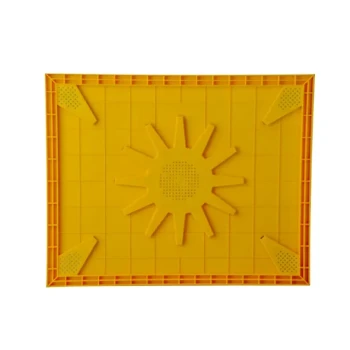
Integrated Pest Management (IPM) sticky boards act as the primary data collection interface for tracking Varroa mite populations over time. Placed directly beneath a screened bottom board, these adhesive sheets capture mites that fall naturally or are groomed off by bees, allowing you to calculate a daily drop rate and establish a longitudinal assessment of the colony's parasite load.
By converting the passive mechanical action of a screened bottom board into quantifiable data, sticky boards allow you to monitor population dynamics rather than just detecting presence. They provide the necessary baseline to judge whether anti-robbing equipment or chemical treatments are actually working.
The Mechanics of Accurate Data Collection
The Synergy with Screened Bottom Boards
Sticky boards are designed to function in tandem with screened bottom boards.
The screen mesh acts as a mechanical filter, allowing mites to fall through while keeping bees inside. Without the board beneath it, these mites might simply fall to the ground; with the board, they become data points.
Ensuring Retention through Adhesion
The defining feature of these boards is their adhesive surface, often created using specific glues or coatings like Vaseline.
This "physical adhesive force" is critical because hives are environments with high airflow and vibration. The sticky layer prevents mites from being blown away by wind or hive ventilation, ensuring that every dislodged mite remains available for counting.
Preventing Re-infestation
Beyond monitoring, the sticky board serves a containment role.
Once a mite falls through the screen and contacts the adhesive, it is permanently trapped. This prevents the parasite from crawling back up into the colony to re-infest a host bee, effectively removing it from the reproductive population.
Generating Dynamic Longitudinal Data
Calculating the Daily Drop Rate
The primary metric derived from sticky boards is the "daily drop rate."
By counting the mites accumulated over a specific period (often 24 hours), you calculate a standardized number that reflects the intensity of the infestation. This natural drop is a proxy for the total ambulatory mite population within the hive.
Tracking Trends Over Time
The term "dynamic" monitoring refers to the ability to see changes over time.
A single count provides a snapshot, but regular use of sticky boards generates longitudinal data. This allows you to plot the growth or decline of the mite population, identifying seasonal spikes or unexpected surges before they become critical.
Evaluating Treatment Efficacy
Sticky boards are the verification tool for your management interventions.
Whether you are testing anti-robbing equipment or applying medicinal treatments, the board provides the physical proof of mortality. A spike in the drop rate immediately following a treatment confirms that the protocol is actively killing mites.
Understanding the Trade-offs
Passive vs. Active Sampling
Sticky boards measure "natural fall," which correlates with the total population but is not a direct census.
It is a passive monitoring tool. Unlike active sampling methods that might kill bees to count mites, sticky boards are non-invasive but may require interpretation to estimate the exact total infestation level accurately.
Debris Interference
The adhesive surface is indiscriminate.
It captures pollen, wax cappings, and other hive debris alongside the mites. High levels of debris can complicate the visual identification process, requiring careful inspection—often aided by the board's white background—to distinguish mites from trash.
Making the Right Choice for Your Goal
To get the most value from IPM sticky boards, align their usage with your specific management objectives:
- If your primary focus is Long-Term Health Monitoring: Establish a regular schedule for inserting boards to track the natural daily drop rate and identify population spikes early.
- If your primary focus is Treatment Verification: Insert a sticky board immediately before and after applying a treatment to mathematically calculate the mortality rate and efficacy.
- If your primary focus is Mechanical Control: Ensure the sticky board remains in place continuously (cleaned regularly) to permanently trap mites that fall through the screen, preventing re-infestation.
Data without analysis is just noise; use the sticky board to turn biological processes into actionable management decisions.
Summary Table:
| Feature | Function in IPM | Key Benefit |
|---|---|---|
| Adhesive Surface | Traps falling mites securely | Prevents re-infestation & data loss |
| Grid Pattern | Facilitates organized counting | Increases accuracy of mite density data |
| Screen Synergy | Works with screened bottom boards | Acts as a mechanical filter for parasites |
| Longitudinal Tracking | Records mite drops over time | Identifies population trends & spikes |
| Efficacy Audit | Post-treatment mortality count | Verifies if chemical/mechanical controls worked |
Maximize Your Colony Yield with HONESTBEE Professional Equipment
Effective Varroa management starts with the right tools. At HONESTBEE, we empower commercial apiaries and distributors with high-performance beekeeping solutions designed for scale and precision. From screened bottom boards and IPM sticky boards to advanced honey-filling machines and specialized hive-making hardware, our comprehensive wholesale portfolio covers every industry need.
Partner with us to access professional-grade machinery and essential consumables that streamline your operations and safeguard your bees. Contact HONESTBEE today to discuss your wholesale needs and see how our expertise can grow your beekeeping business.
References
- Kelly Kulhanek, Dennis vanEngelsdorp. Accelerated Varroa destructor population growth in honey bee (Apis mellifera) colonies is associated with visitation from non-natal bees. DOI: 10.1038/s41598-021-86558-8
This article is also based on technical information from HonestBee Knowledge Base .
Related Products
- Langstroth Solid Bottom Board for Beekeeping
- Solid Bottom Board Australian Pine Wood Langstroth Bottom Board for Wholesale
- HONESTBEE AC Powered Wire Embedder with Alligator Clips
- Professional Engraved Round Hive Number Tags for Beekeeping
- Australian Pine Wood Langstroth Screen Bottom Board for Wholesale
People Also Ask
- What are the functions of solid bottom boards for a beehive? Essential Thermal Protection and Winter Survival Tips
- What is the purpose of a solid bottom board for bee hives? Enhance Hive Health and Winter Survival
- How does climate influence the choice between a solid and screened bottom board? Optimize Your Hive for Local Weather
- What is the primary function of a bottom board in a modern modified beehive system? Essential Foundation Guide
- What are the characteristics of a solid bottom board for a beehive? Boost Colony Health and Thermal Insulation