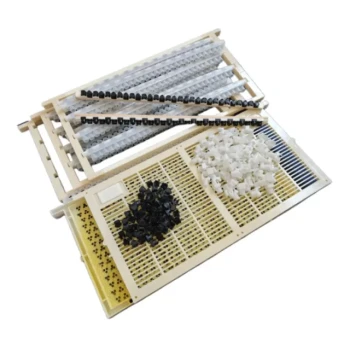
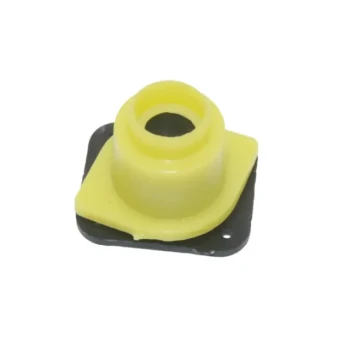
Queen rearing systems act as the primary mechanism for genetic amplification. They enable apiarists to take the desirable traits found in a select few core colonies and replicate them across hundreds of production groups. Through the use of specialized grafting tools, rearing frames, and supporting facilities, these systems bridge the gap between a single superior hive and a high-performance commercial operation.
By standardizing the developmental environment, queen rearing systems ensure that genetic potential translates into biological reality. They allow for the mass production of queens that are not only genetically superior but also fully developed physically, ensuring high egg-laying capacity across the entire apiary.
The Mechanics of Genetic Replication
Scaling from Core to Colony
The fundamental purpose of these systems is large-scale replication. They allow you to isolate superior genetic traits—such as disease resistance or honey production—identified in specific "core colonies."
Once identified, these traits are not limited to a single hive. Using these systems, you can distribute that specific genetic profile to hundreds of production groups efficiently.
Precision Tooling
To achieve this scale, the process relies on specialized equipment. This includes specific grafting tools designed for the delicate transfer of larvae.
It also involves the use of rearing frames, which organize the developing queens for mass management. These tools remove the variability inherent in natural, unmanaged queen replacement.
Optimizing Biological Development
Environmental Control
Genetic potential means little if the queen does not develop properly. Rearing systems provide the infrastructure to strictly control critical environmental factors.
Facilities are designed to maintain precise temperature and humidity levels. This consistency prevents developmental anomalies that can occur in fluctuating natural conditions.
Nutritional Management
Beyond climate, these systems ensure precise control over nutritional supply. Developing queens require specific feeding regimes to reach sexual maturity and physical robustness.
Systematic rearing ensures no candidate queen competes for resources. Every larva receives the nutrition required to become a fully developed reproductive unit.
The Impact on Production
The output of this controlled process is a queen with high egg-laying capacity. A fully developed reproductive system directly correlates to the population density of the hive.
Consequently, this improves the overall production level of the apiary. A system that guarantees better queens yields stronger colonies and higher harvest metrics.
Understanding the Operational Requirements
Infrastructure Dependency
Implementing these systems requires more than just biological knowledge; it requires "supporting facilities." You must be prepared to invest in the physical infrastructure needed to maintain environmental controls.
Equipment Sensitivity
Success is heavily reliant on the quality and use of specialized tools. The mention of specific grafting tools and frames implies that manual dexterity and equipment maintenance are critical variables in the system's success.
Leveraging Systems for Apiary Success
To maximize the value of your genetic stock, align your use of rearing systems with your specific operational goals.
- If your primary focus is scaling operations: Utilize rearing frames and grafting tools to rapidly replicate the genetics of your top core colonies across hundreds of new hives.
- If your primary focus is individual hive performance: Prioritize the environmental control features of the system to ensure every new queen reaches maximum egg-laying capacity.
By controlling the variables of nutrition and environment, you transform queen rearing from a biological lottery into a predictable, high-yield manufacturing process.
Summary Table:
| Key Feature | Functional Role | Impact on Genetic Scaling |
|---|---|---|
| Grafting Tools | Delicate transfer of larvae | Enables mass replication of core colony traits |
| Rearing Frames | Organized mass management | Standardizes developmental stages across hundreds of units |
| Environmental Control | Temperature & humidity regulation | Ensures genetic potential translates to biological health |
| Nutritional Management | Systematic feeding regimes | Maximizes physical robustness and egg-laying capacity |
| Supporting Facilities | Controlled infrastructure | Removes environmental variability from the breeding process |
Elevate Your Commercial Beekeeping with HONESTBEE
To transform your apiary from a biological lottery into a high-yield operation, you need equipment that matches your ambition. HONESTBEE specializes in serving commercial apiaries and distributors with professional-grade solutions.
Our comprehensive wholesale offering includes everything from specialized hardware and hive-making machines to precision grafting tools and honey-filling systems. We empower you to scale genetic quality and operational efficiency across your entire business.
Ready to maximize your production? Contact us today to discover how our premium beekeeping tools and industry consumables can drive your success.
References
- L. Abdullayeva. Genetic Characteristics of honey Bee breeding in the Ganja-Gazakh Region of Azerbaijan. DOI: 10.33619/2414-2948/113/06
This article is also based on technical information from HonestBee Knowledge Base .
Related Products
- No Grafting Queen Rearing Kit: System for Royal Jelly Production and Queen Rearing
- Premium Nicot Style Queen Rearing Kit with Hair Roller Bee Cages
- Nicot Queen Rearing Kit for Beekeeping and Grafting in Nicot System
- JZBZ Langstroth Queen Rearing Frame for Beekeeping
- Premium Nicot Style Cell Bar Holder and Queen Cell Cup Holder System
People Also Ask
- What is the primary function of a queen rearing kit? Eliminate Manual Grafting for Superior Bee Breeding
- How do specialized queen rearing kits and queen management tools improve the success rate of bee colony expansion?
- What are some alternative methods to grafting for queen cell production? Discover Graft-Free Queen Rearing Systems
- Are queen rearing systems generally suitable for all honeybee species? Master Efficient Breeding Methods
- Are queen rearing systems suitable for all beekeepers? Modern Tools for Every Experience Level