Standardized wooden beehive boxes act as the fundamental modular unit of commercial beekeeping logistics. By establishing uniform dimensions, these boxes transform individual biological colonies into stackable, palletized cargo. This uniformity allows operators to utilize industrial forklifts for rapid loading and unloading, enabling the efficient long-distance transport of thousands of hives to meet agricultural pollination demands.
Core Takeaway: In large-scale operations, the beehive is not just a habitat; it is a shipping container. Standardization allows for the transition from manual hive handling to mechanized logistics, making migratory beekeeping and industrial pollination economically viable.
Enabling Migratory Operations
The primary logistical function of standardized boxes is to facilitate mass movement. Without this uniformity, the commercial pollination industry would face insurmountable bottlenecks.
Palletized Compatibility
Standardized boxes are designed to fit precisely onto commercial pallets. This allows beekeepers to secure multiple hives together as a single unit rather than handling them individually. This "unitization" is the key to scaling operations from dozens of hives to thousands.
Mechanized Loading and Unloading
Because hives are palletized, they can be manipulated by industrial-grade forklifts. This replaces manual labor with machine power, drastically reducing the time required to load semi-trucks. Speed is critical when moving live livestock that can overheat or become stressed during transit.
Structural Stability in Transit
Migratory beekeeping involves transporting colonies across vast distances and varying climates. The standardized box provides the necessary structural integrity to withstand the vibrations and physical stresses of highway travel. High-quality construction ensures the hive remains intact, protecting the colony during the journey.
Operational Efficiency and Scalability
Beyond the truck and forklift, standardization streamlines the internal logistics of managing the apiary.
Total Interchangeability
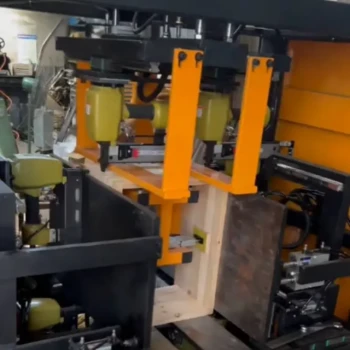
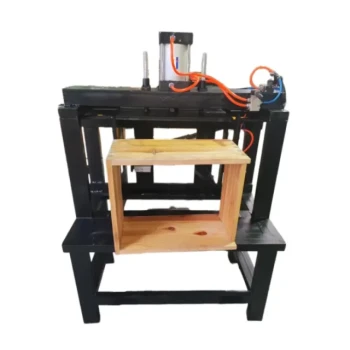
Standardized manufacturing utilizes high-precision tools to ensure every component is identical. A frame from Hive A will fit perfectly into Hive B. This allows beekeepers to move resources (honey, brood, or pollen) between colonies instantly without physical modification.
Modular Expansion
The box system is modular, allowing the beekeeper to adjust the volume of the hive based on colony health. Operators can simply stack additional boxes on top of a growing colony or remove them from a shrinking one. This flexibility is essential for managing population fluctuations efficiently across thousands of units.
Understanding the Trade-offs
While standardization is critical for scale, it introduces specific requirements that must be managed to avoid operational failure.
The Precision Dependency
The system relies entirely on high-precision manufacturing. If components deviate even slightly from the standard dimensions, frames may become stuck or fail to fit, slowing down inspections and damaging the "bee space" required for colony health.
Vulnerability to Equipment Failure
Because the boxes serve as shipping containers, they endure significant wear and tear. A structural failure in a single box during transport can compromise the stability of a stacked pallet. This necessitates rigorous maintenance and the rotation of older woodenware out of the migratory cycle.
Making the Right Choice for Your Goal
To leverage standardization effectively, align your equipment choices with your operational focus.
- If your primary focus is Migratory Pollination: Prioritize structural durability and pallet compatibility to withstand the physical stress of frequent forklift handling and highway transport.
- If your primary focus is Stationary Honey Production: Focus on internal component precision to ensure seamless frame interchangeability and efficient harvesting.
Standardization converts the complex biological variable of a bee colony into a predictable, manageable logistical constant.
Summary Table:
| Logistical Feature | Benefit for Commercial Beekeepers | Impact on Scaling |
|---|---|---|
| Pallet Compatibility | Enables unitization of multiple hives | Rapid bulk loading via forklifts |
| Uniform Dimensions | Complete interchangeability of frames/boxes | Reduced labor and maintenance time |
| Structural Integrity | Withstands vibrations during highway travel | Minimized colony loss during transport |
| Modular Design | Quick volume adjustment for honey/brood | Efficient population management |
Maximize Your Apiary's Logistical Efficiency with HONESTBEE
Transition from manual labor to industrial-scale success. HONESTBEE empowers commercial apiaries and distributors with high-precision, standardized woodenware and specialized machinery designed for the rigors of migratory beekeeping.
Our comprehensive wholesale portfolio includes:
- Durable Standardized Beehive Boxes: Engineered for palletization and long-distance transport.
- Industrial Machinery: From hive-making equipment to honey-filling lines to streamline your operations.
- Essential Consumables: A full spectrum of tools and hardware for high-volume beekeeping.
Whether you are expanding your commercial pollination services or optimizing honey production, our expert team provides the tools you need to scale. Contact HONESTBEE today to discuss your wholesale requirements and see how our hardware can transform your logistics.
References
- Laurent Cilia. The Plight of the Honeybee: A Socioecological Analysis of large‐scale Beekeeping in the United States. DOI: 10.1111/soru.12253
This article is also based on technical information from HonestBee Knowledge Base .
Related Products
- 5 Frame Wooden Nuc Box for Beekeeping
- Wooden Bee Hive Frames for Beekeeping and Wholesale
- Assembled Wooden Bee Frames with Plastic Foundation for Durability and Convenience by HONESTBEE
- Wholesales Dadant Size Wooden Bee Hives for Beekeeping
- HONESTBEE Wired and Assembled Wooden Bee Frames Foundation for a Thriving Hive
People Also Ask
- What are the options for adding frames to a nuc after taking two frames from the parent colony?
- What frames should be moved into the queenless hive when requeening with a nuc? Ensure a Successful Queen Introduction
- What roles do five-frame nucleus boxes and ten-frame Langstroth hive boxes play in colony standardization?
- What is the primary function of five-frame nuclei boxes? Master Early Colony Establishment for Stronger Hives
- What is the typical composition of frames in a nuc? A 5-Frame Blueprint for a Thriving Hive