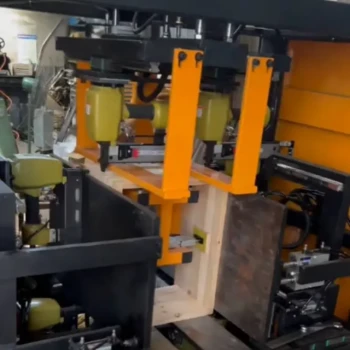
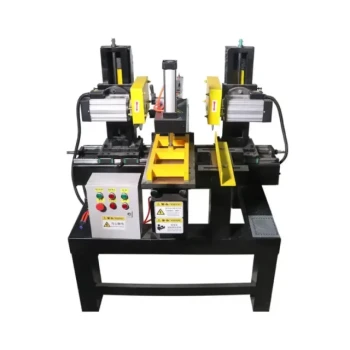
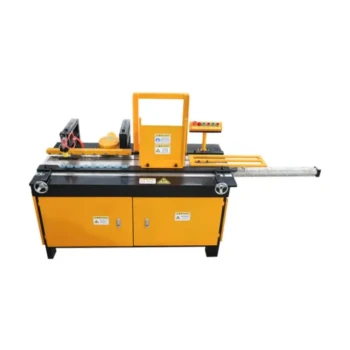
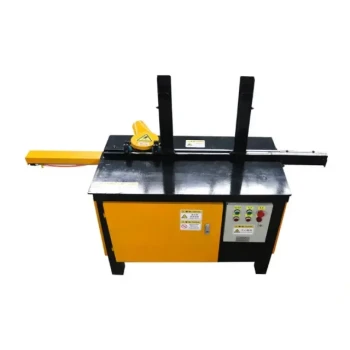
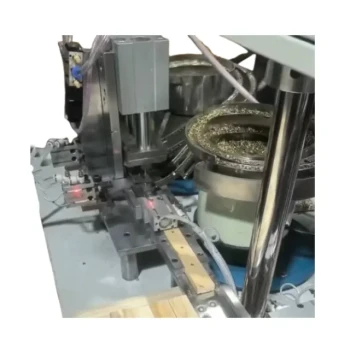
Industrial beehive manufacturing machinery functions as the critical scaling mechanism that translates digital spatial analysis into physical expansion. It allows beekeeping enterprises to rapidly produce the standardized infrastructure necessary to colonize high-value foraging zones identified by data models. By bridging the gap between theoretical planning and operational capacity, this machinery enables apiaries to quickly deploy colonies to areas with optimal resources and low pesticide risks.
Core Takeaway Spatial data analysis provides the "map" for optimal apiary locations, but industrial machinery provides the "vehicle" for expansion. Without the capacity for rapid, standardized hive production, beekeeping operations cannot mobilize quickly enough to capitalize on the transient environmental opportunities identified by data.
Bridging Data and Deployment
Rapid Response to Spatial Insights
Spatial data analysis identifies high-quality pollination areas and alerts apiarists to environmental risks like pesticide application. However, this data is time-sensitive.
Industrial machinery enables high-velocity production of hive bodies and frames. This allows enterprises to instantly ramp up infrastructure capacity to exploit new foraging windows or replace equipment in compromised zones without logistical delays.
Converting Strategy into Infrastructure
Data often reveals the potential for scaling operations into new geographic regions. Traditional manual manufacturing cannot match the speed required for such large-scale deployment.
Mechanized production ensures that the physical foundation of the apiary—the hives themselves—is ready for deployment the moment the data validates a location. This responsiveness turns analytical insights into immediate operational advantages.
The Role of Standardization in Expansion
Facilitating Modular Management
When expanding based on spatial data, apiaries often become distributed across vast distances. Standardization is non-negotiable for managing remote sites efficiently.
Industrial machines produce hive components with precise structural consistency. This uniformity supports modular management, allowing components to be packed, stacked, and transported seamlessly to new sites identified by your data models.
Interchangeability and Efficiency
In a large-scale operation, every frame must fit every box. Professional manufacturing machinery ensures dimensional accuracy that manual construction often lacks.
This interchangeability drastically reduces the time required for field inspections, honey harvesting, and equipment maintenance. When components fit perfectly across different sites, labor costs decrease, and operational speed increases.
Operational Stability at Scale
Structural Integrity and Disease Control
Expanding into new territories brings biological risks. Industrial-grade machinery creates tight wood joints and precise seals that are difficult to achieve consistently by hand.
High-quality construction acts as a physical barrier against robbing bees and parasites. Furthermore, precise dimensions ensure that specialized hardware, such as queen excluders, functions correctly to support Varroa mite control protocols.
Reducing Maintenance Overhead
Data-driven expansion focuses on resource maximization, not equipment repair. Machine-produced hives offer higher durability and lower unit maintenance costs.
By providing a robust physical foundation, these machines allow apiarists to focus their efforts on colony health and resource management rather than constant infrastructure repair.
Understanding the Trade-offs
Capital Intensity vs. Operational Agility
Implementing industrial manufacturing requires a significant upfront capital investment. While it lowers the per-unit cost of hives over time, the initial expenditure is substantial compared to manual methods.
Rigidity of Design
Industrial machinery excels at producing thousands of identical units. However, this creates a rigidity in infrastructure. If spatial data suggests a unique hive configuration is needed for a specific micro-climate, retooling industrial lines is slower and more costly than adapting manual workflows.
Making the Right Choice for Your Goal
To leverage machinery effectively for data-driven expansion, align your equipment choice with your strategic focus:
- If your primary focus is Rapid Colonization: Prioritize machinery with high throughput rates to ensure you never miss a foraging window identified by your data.
- If your primary focus is Remote Management: Prioritize machinery that guarantees extreme dimensional precision to ensure total interchangeability of parts across distant sites.
- If your primary focus is Risk Mitigation: Select machinery known for producing tight, durable joints to minimize the biological risks associated with expanding into unknown territories.
Success in modern apiculture lies in using industrial capacity to turn data-driven potential into biological reality.
Summary Table:
| Feature | Impact on Data-Driven Expansion | Operational Benefit |
|---|---|---|
| High-Velocity Production | Rapidly colonizes zones identified by spatial data | Captures transient foraging windows |
| Dimensional Precision | Ensures 100% interchangeability across remote sites | Reduces maintenance and labor overhead |
| Structural Consistency | Provides superior seals and tight wood joints | Enhances biosecurity and disease control |
| Modular Design | Facilitates seamless logistics and transportation | Simplifies management of distributed apiaries |
| Scalable Output | Converts strategic insights into physical assets | Enables large-scale geographical expansion |
Scale Your Apiary Operations with HONESTBEE Precision
Turning spatial data into a profitable reality requires more than just insights—it requires the industrial capacity to build your future. HONESTBEE specializes in empowering commercial apiaries and distributors with the high-performance machinery needed to dominate the market.
From advanced hive-making machines that ensure perfect interchangeability to automated honey-filling systems and professional-grade beekeeping tools, we provide the full spectrum of equipment to fuel your expansion. Whether you are scaling a commercial operation or supplying the industry as a distributor, our wholesale solutions deliver the durability and efficiency you need to succeed.
Ready to bridge the gap between strategy and infrastructure?
Contact HONESTBEE Today to Discuss Your Wholesale Needs
References
- Anthony C. Robinson, Christina M. Grozinger. Geovisualization for Pollinator Decision Support with Beescape NexGen. DOI: 10.5194/ica-abs-6-212-2023
This article is also based on technical information from HonestBee Knowledge Base .
Related Products
- High-Efficiency Pneumatic Bee Hive Making Machine for Rapid Box Assembly
- HONESTBEE Top Bar & Bottom Bar Forming Machine | Bee Frame Machine
- Automatic High-Speed Bee Hive Box Stapling Machine
- Beehive Machine Double End Saw for Precision Hive Component Manufacturing
- Mini Desktop Bee Hive Frame Forming Making Machine
People Also Ask
- How does the introduction of professional beehive-making machinery benefit sustainable beekeeping? Scale Your Apiary
- Why is specialized beehive-making machinery critical for low-defense breeding? Enhance Selection with Precision Tools
- How does the introduction of specialized beehive making machinery contribute to increasing the scale of regional beekeeping industries?
- What is the importance of specialized beehive making machinery in a circular bio-economy? Build Local Sustainability
- Why is specialized beehive-making machinery essential? Scale Your Apiary with Precision Industrial Standards