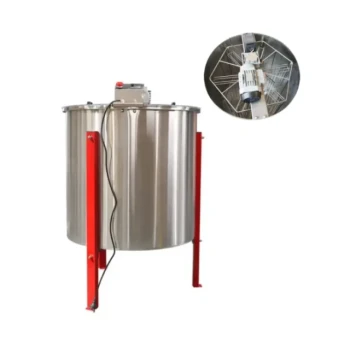
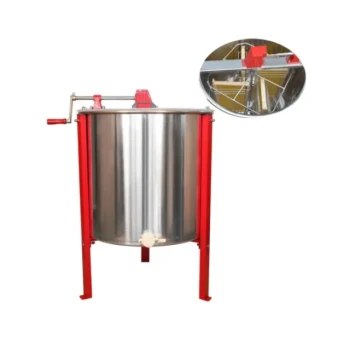
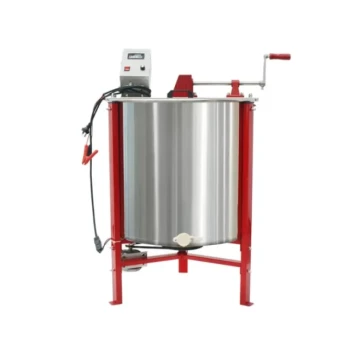
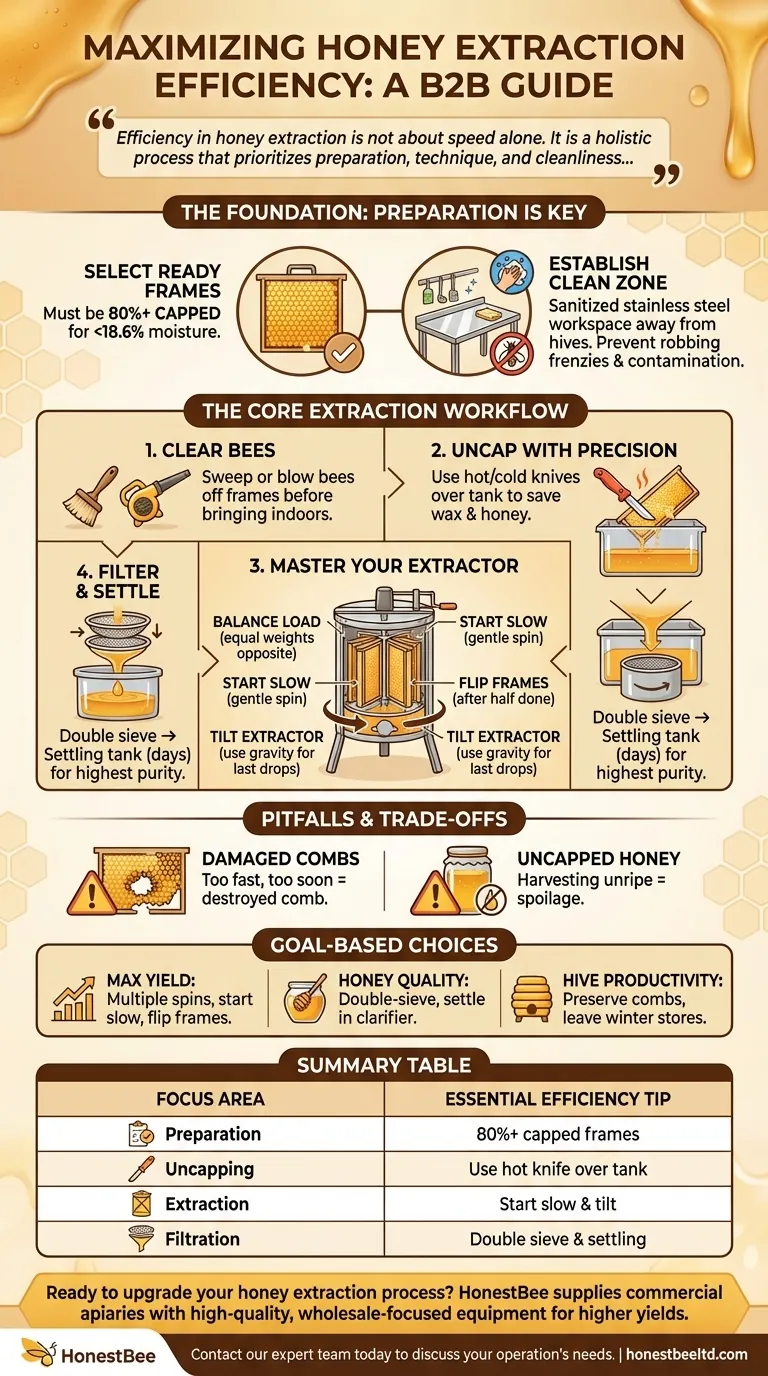
To maximize honey extraction efficiency, you must focus on three core actions: using fully capped frames to ensure the honey is ready, optimizing the speed and rotation of your extractor to prevent comb damage, and using gravity by tilting the frames to get the last drops. A systematic approach that begins before you even remove the frames from the hive is the true key to a smooth, high-yield harvest.
Efficiency in honey extraction is not about speed alone. It is a holistic process that prioritizes preparation, technique, and cleanliness to maximize yield, preserve honey quality, and protect the long-term health of your combs and colony.
The Foundation: Preparing for a Successful Harvest
True efficiency begins long before you turn on the extractor. Setting the stage correctly prevents common problems that waste time, honey, and effort.
Select Only Ready Frames
The single most important factor for both efficiency and quality is harvesting honey at the right time. Your goal is to select frames where the honeycomb cells are at least 80% "capped" with a fresh layer of white beeswax.
This capping is the bees' signal that the honey has been dehydrated to the correct moisture content (below 18.6%). Harvesting uncapped, "wet" honey will lead to fermentation and spoilage, the ultimate inefficiency.
Establish a Clean and Secure Zone
Set up your extraction space away from your apiary. The smell of open honey will quickly attract bees from your hives and the surrounding area, leading to a chaotic and dangerous situation known as a "robbing frenzy."
Ensure your workspace, tools, and containers are meticulously clean and food-safe. Any contamination can ruin your entire harvest, and preventing it is far more efficient than trying to fix it later.
The Core Extraction Workflow: A Step-by-Step Guide
Follow these steps in order to ensure a smooth, methodical, and high-yield extraction process.
Step 1: Clear Bees from the Frames
Before bringing frames indoors, you must remove the bees. A soft bee brush can be used to gently sweep them off, but for larger operations, a bee blower is significantly faster and more efficient.
Step 2: Uncap with Precision
The goal is to remove only the thin wax cappings without damaging the underlying comb structure. A cold serrated knife, an electric hot knife, or an uncapping scratcher are the primary tools for this.
Work over an uncapping tank or a large food-grade tub. This setup catches the valuable wax cappings, which are rich with honey that can be strained out later.
Step 3: Master Your Extractor
This is the heart of the process. Improper technique here can damage combs and leave significant amounts of honey behind.
First, balance the load. Place frames of similar weight directly opposite each other in the extractor basket. An unbalanced extractor will vibrate violently and can easily damage itself.
Next, start the extractor at a very slow speed. This initial spin uses gentle centrifugal force to pull out the heavy honey from the outer side of the combs without causing the delicate wax structure to "blow out" or collapse.
After extracting about half the honey from the first side, stop the extractor. Flip the frames to face the other direction and repeat the process, again starting slow. Once the second side is partially empty, you can increase the speed to finish extracting. For the final spin, you can flip the frames back to the first side and spin at high speed to remove the last remaining honey.
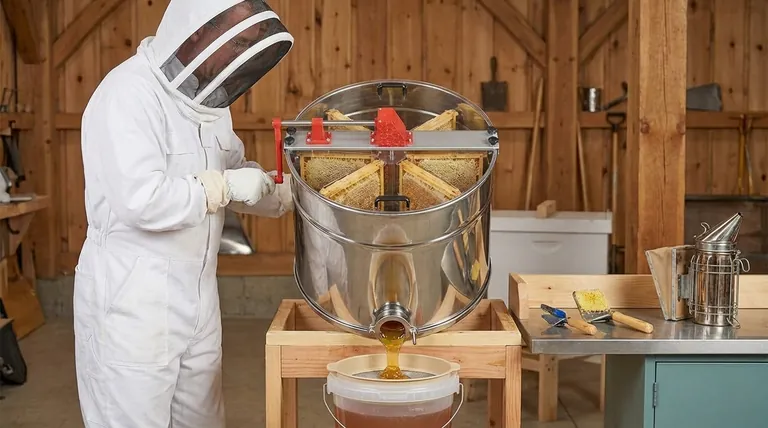
Finally, tilt the extractor toward its honey gate or spout. This simple use of gravity ensures every possible drop flows out for collection.
Step 4: Filter and Settle for Purity
The extracted honey will contain wax particles, bee parts, and other debris. Run the honey through a double sieve or a set of fine mesh filters as it pours into your bottling pail.
For the highest purity, allow the filtered honey to sit in a sealed container, known as a clarifier or settling tank, for several days. This allows microscopic air bubbles and fine particles to rise to the top, where they can be skimmed off before bottling.
Understanding the Trade-offs and Common Pitfalls
An efficient process avoids costly mistakes. Being aware of the common trade-offs and risks is essential.
The Risk of Damaged Combs
The most common mistake is running the extractor too fast, too soon. The weight of the honey in a full frame can easily blow through the wax foundation, destroying the comb. A destroyed comb means the bees must expend immense energy and resources to rebuild it instead of making more honey.
Harvesting Uncapped Honey
It can be tempting to pull frames that aren't fully capped to speed up the harvest. This is a critical error. Honey with high moisture content will ferment and spoil. Always prioritize harvesting ripe, capped honey.
The Crush and Strain Method
For beekeepers without an extractor, the crush and strain method involves crushing the entire comb and letting the honey drip through a filter. While it requires no special equipment, it is far less efficient. It destroys the drawn-out comb, forcing the bees to rebuild it from scratch, and can incorporate more air and debris into the honey.
Making the Right Choice for Your Goal
Your approach to extraction should align with your primary objective.
- If your primary focus is maximum yield: Prioritize spinning frames multiple times, starting slow and increasing speed gradually after flipping them to prevent blowouts.
- If your primary focus is honey quality and purity: Use a double-sieve system and allow your honey to settle in a clarifier for several days before bottling.
- If your primary focus is long-term hive productivity: Be meticulous about not damaging combs in the extractor and always leave sufficient honey stores for the bees to survive the winter.
Ultimately, a patient and methodical approach is the most efficient path to a successful and rewarding honey harvest.
Summary Table:
| Key Focus Area | Essential Tip for Efficiency |
|---|---|
| Preparation | Harvest only frames with 80%+ capped honey to prevent fermentation. |
| Uncapping | Use a hot knife or scratcher over a tank to save wax and honey. |
| Extraction | Start slow, flip frames, and tilt the extractor to get every last drop. |
| Filtration | Use a double sieve and settling tank for the purest, clearest honey. |
Ready to upgrade your honey extraction process?
As HONESTBEE, we supply commercial apiaries and beekeeping equipment distributors with the high-quality, wholesale-focused supplies needed for maximum efficiency. From durable extractors and uncapping tanks to fine mesh filters, our equipment is designed to help you achieve higher yields, superior honey quality, and long-term comb health.
Contact our expert team today to discuss your operation's needs and discover how our products can streamline your harvest for a more profitable season.
Visual Guide
Related Products
- HONESTBEE 72 Frame Industrial Electric Honey Extractor for Beekeeping
- Commercial Electric 12 Frame Honey Extractor Spinner Motorized Honey Extractor
- HONESTBEE 3-Frame Manual Acrylic Honey Extractor
- electric honey extractor honey centrifuge 3 frame honey extractor stainless steel honey frame extractor
- HONESTBEE 6 Frame Self Reversing Electric Honey Extractor for Beekeeping
People Also Ask
- What is the importance of balancing honeycomb frames within a honey extractor? Ensure Stability and Protect Machinery
- How is honey separated from the frames after they are uncapped? Efficient Extraction Methods for High Yields
- What are the main benefits of using a honey extractor? Maximize Yields and Protect Your Honeycomb
- What are the recommended methods for removing honey from the honeycomb? Top Extraction Techniques for Maximum Efficiency
- How do manual honey extractors compare to electric honey extractors? Choosing the Right Tool for Your Apiary Growth