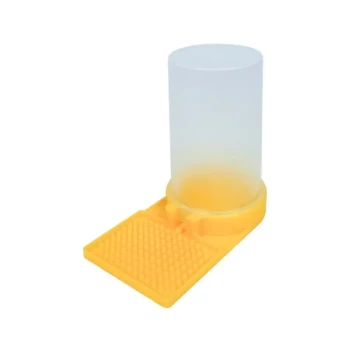
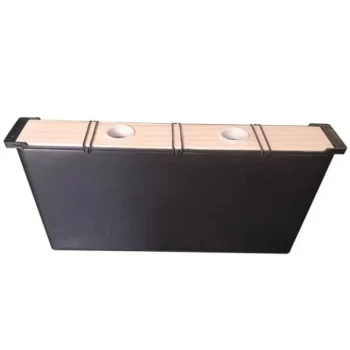
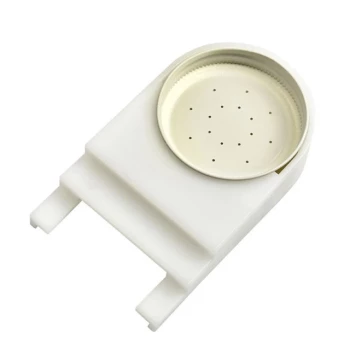
The safest equipment for open feeding consists of devices designed to dispense syrup slowly while restricting the depth of the liquid. To ensure honeybee safety, the most recommended tools are inverted buckets with specifically drilled rims or standard chicken waterers, both of which minimize the risk of drowning.
Open feeding requires equipment that balances easy access with strict flow control. The primary safety objective is to provide a reliable food source without creating deep pools of liquid that can trap and drown foraging bees.
Recommended Feeding Hardware
Inverted Buckets
The most effective purpose-built solution involves using a standard plastic bucket modified for apiary use.
By drilling very small holes along the edge of the bucket's rim, you create a vacuum-sealed dispenser.
When inverted, the syrup fills the rim only to the level of the holes, allowing bees to feed from the perimeter without entering the main reservoir.
Poultry Waterers
Standard chicken waterers are an excellent alternative often found in farm supply stores.
These gravity-fed devices work on the same principle as the inverted bucket, automatically refilling a shallow trough as bees consume the syrup.
The design naturally limits the liquid depth, ensuring bees can stand safely on the edge while feeding.
The Operational Role of Feeding Equipment
Simulating Natural Foraging
Unlike internal hive feeders, open feeding equipment requires bees to leave the hive and fly to the food source.
This simulates a natural nectar flow, which can encourage normal foraging behaviors without over-stimulating brood production.
It also eliminates the labor-intensive process of opening individual hives to replenish supplies.
Advanced Automatic Systems
For more complex management, automatic feeding equipment is available to provide precise nutritional support.
This hardware is particularly useful during periods of scarcity or for delivering medicated syrups to prevent conditions like Nosemosis.
These systems help maintain energy reserves and boost colony immunity with minimal manual intervention.
Understanding the Trade-offs
Energy Expenditure
While open feeding saves beekeeper labor, it requires the bees to expend energy to retrieve the food.
Because the bees must exit the hive to forage, this method is less energy-efficient for the colony than an internal frame feeder.
Weather Dependency
Since the equipment is placed outdoors, the effectiveness of open feeding relies heavily on environmental conditions.
Rain can dilute the syrup in the troughs, and extreme cold may prevent bees from breaking cluster to access the feed.
Making the Right Choice for Your Goal
Select your equipment based on your specific operational needs and the health status of your apiary.
- If your primary focus is labor efficiency: Choose inverted buckets or chicken waterers to feed multiple colonies simultaneously without disrupting individual hives.
- If your primary focus is disease prevention: Utilize automatic feeding equipment to deliver precise dosages of medicated syrup or health additives during nectar dearths.
The right equipment transforms feeding from a high-risk chore into a safe, efficient component of your biosecurity strategy.
Summary Table:
| Equipment Type | Primary Safety Feature | Best Use Case |
|---|---|---|
| Inverted Buckets | Vacuum-sealed rim with tiny holes | Large-scale feeding with minimal drowning risk |
| Poultry Waterers | Gravity-fed shallow trough | Small to medium apiaries; easy access for foragers |
| Automatic Systems | Controlled flow & precise dosing | Delivering medicated syrups or managing large commercial yards |
| Internal Feeders | Enclosed environment | Maximum energy conservation; feeding during cold weather |
Scale Your Apiary Operations with HONESTBEE
Are you looking to optimize your commercial honey production or expand your distribution catalog? HONESTBEE is your premier partner for professional beekeeping solutions. We specialize in catering to commercial apiaries and distributors, providing a comprehensive wholesale range that includes everything from heavy-duty hive-making and honey-filling machinery to essential industry consumables.
By choosing HONESTBEE, you gain access to high-performance hardware designed to enhance colony health and operational efficiency. Whether you need specialized beekeeping tools or honey-themed cultural merchandise to diversify your brand, we deliver the quality and scale your business demands.
Ready to elevate your equipment standards? Contact us today to explore our wholesale catalog!
Related Products
- HONESTBEE Entrance Bee Feeder Efficient Hive Front Liquid Feeding Solution for Beekeeping
- HONESTBEE Professional Entrance Bee Feeder Hive Nutrition Solution
- HONESTBEE Entrance Bee Feeder Professional Hive Nutrition Solution for Beekeeping
- HONESTBEE Round Hive Top Bee Feeder for Syrup
- HONESTBEE Square Top Hive Bee Feeder Top Bee Feeder
People Also Ask
- What types of bee feeders are available for beginners? Start with the Simple Entrance Feeder
- What are the advantages and disadvantages of using an entrance feeder for bees? Balance Convenience and Hive Security.
- What is a bee entrance feeder and what are its drawbacks? Essential Guide to Hive Security and Feeding Efficiency
- How does a bee entrance feeder work? A Simple Guide to Convenient Hive Feeding
- How to make an entrance feeder for bees? A DIY Guide for Safe & Effective Feeding