A healthy honey bee colony can typically provide 40 to 70 pounds of surplus honey per season, with exceptionally productive colonies producing 60 to 80 pounds or more under favorable conditions. Actual yield depends on weather, rainfall, forage availability, colony strength, disease and parasite pressure, swarming, and the amount of drawn comb available for storage. To process and bottle this harvest efficiently, beekeepers need uncapping equipment, a centrifugal honey extractor, fine straining and settling equipment, and a precision honey-filling machine.
Plan around 40 to 70 pounds of surplus honey per strong colony, while treating higher yields as favorable-season potential rather than a guaranteed output. The appropriate processing line should protect honey quality, reuse wax comb, maintain hygienic handling, and scale with the number of hives being harvested.
What Determines Surplus Honey Yield?
Colony strength sets the production ceiling
A productive colony generally requires a large foraging population, often around 40,000 bees or more, with mature colonies potentially reaching approximately 60,000 bees. A stronger workforce can gather and process more nectar during a good nectar flow.
Colony strength alone does not guarantee a harvest. Disease, parasites, recent swarming, poor queen performance, or inadequate nutrition can significantly reduce surplus production.
Forage and weather determine the actual result
Local flowering plants, rainfall, temperature, and the timing of nectar flows all influence yield. Colonies located near abundant and reliable forage have a better opportunity to reach the upper end of the expected range.
For this reason, the 40-to-70-pound range is a practical planning estimate, not a fixed production standard. Strong colonies in excellent conditions may produce 60 to 80 pounds or more, while weaker colonies or poor seasons may produce considerably less.
The colony must retain winter stores
Beekeepers cannot treat all honey in the hive as available inventory. A colony may require approximately 20 to 30 pounds of honey to sustain itself through winter, depending on climate, colony size, and local management practices.
Only honey above the colony's required stores should be considered surplus. Removing too much can compromise colony survival and force the beekeeper to provide supplemental feed.
What Equipment Is Required?
Uncapping tools remove the wax seal
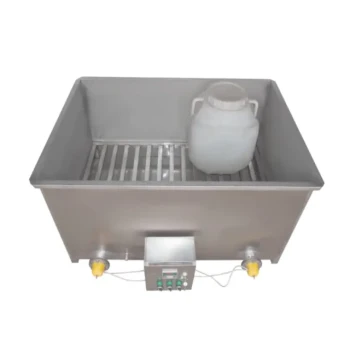
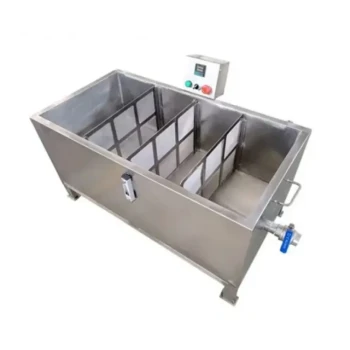
Mature honey is sealed inside the comb with a thin layer of beeswax. Uncapping knives, forks, or dedicated uncapping tanks remove this layer before extraction.
For higher-volume operations, specialized uncapping equipment improves throughput and reduces manual handling. The recovered wax can also be collected for further processing or resale.
A centrifugal extractor removes honey efficiently
A honey extractor uses centrifugal force to spin honey from the uncapped frames. This method allows the wax comb to remain largely intact so that frames can be returned to the hive for reuse.
Extractor capacity should match the apiary's harvest volume. A small manual unit may suit a limited number of hives, while commercial operations benefit from higher-capacity or powered extraction machinery.
Strainers remove comb debris
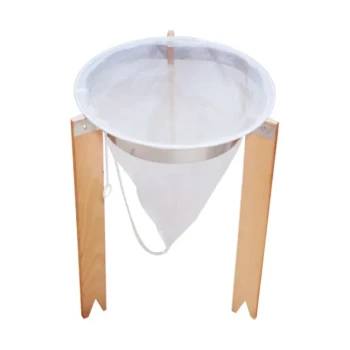
Freshly extracted honey may contain wax particles and other comb debris. Fine mesh strainers or filtration systems help produce a cleaner product before it enters storage or filling equipment.
Straining should remove unwanted solids without unnecessarily altering the honey. Equipment should be selected for food-safe contact and easy cleaning.
Settling tanks improve clarity
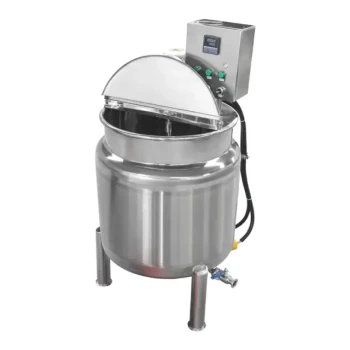
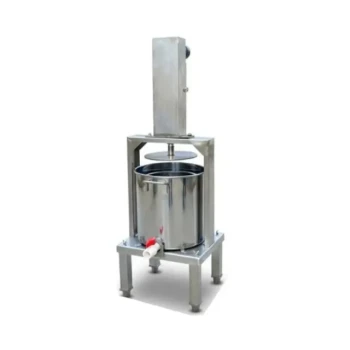
Stainless steel settling tanks allow remaining fine particles and air bubbles to separate from the honey before bottling. These tanks also provide a controlled holding stage between extraction and packaging.
For commercial use, stainless steel construction supports hygienic handling, durability, and efficient cleaning. Tank capacity should accommodate the expected harvest without creating a bottleneck in the extraction line.
Filling machines support accurate bottling
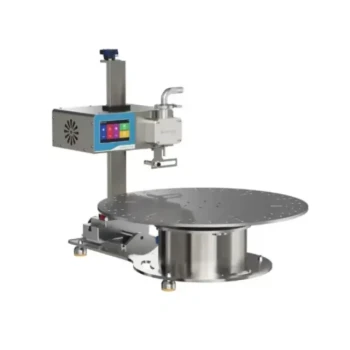
Precision honey-filling machines dispense consistent quantities into retail bottles or other containers. Automated and semi-automated models improve filling speed, reduce product waste, and support repeatable packaging quality.
A filling system is especially valuable for distributors, wholesalers, and private-label operations that require dependable pack sizes and efficient order fulfillment. The machine should be compatible with the honey's viscosity, selected bottle formats, and expected production volume.
How Should Equipment Be Scaled?
Single-hive and small-apiary operations
A beekeeper processing one or a few colonies may need a manual or compact extractor, handheld uncapping tools, strainers, and a small settling tank. Bottling can be performed with a manual or semi-automatic filling system when production volumes are limited.
This configuration reduces the initial equipment requirement while still preserving the essential workflow: uncap, extract, strain, settle, and fill.
Commercial apiaries
Commercial apiaries should evaluate the complete line rather than selecting equipment in isolation. A slow uncapping stage, undersized extractor, or low-capacity filling machine can restrict the throughput of the entire operation.
Higher-volume systems typically require powered extraction, dedicated uncapping equipment, larger stainless steel tanks, fine filtration or straining, and automated or semi-automated filling machinery.
Multi-hive and wholesale production
Apiaries operating many hives may produce several hundred pounds in a harvest, depending on location and conditions. Harvests in the range of 400 to 600 pounds require a coordinated processing setup to avoid extended storage and packaging delays.
For distributors and equipment resellers, this creates demand for scalable product portfolios that cover small institutional hives through commercial apiaries. Rapid equipment availability, technical product knowledge, and compatible machinery packages are important purchasing considerations.
Understanding the Trade-offs
Yield estimates are not production guarantees
Honey production varies substantially between seasons and locations. A figure such as 60 or 80 pounds should be treated as an upper planning scenario for a strong colony under favorable conditions, not as a dependable minimum.
Conservative forecasting helps operators avoid oversizing equipment based on exceptional harvests or promising customers a volume that local conditions cannot consistently support.
Removing surplus can affect colony health
The beekeeper must account for the colony's winter requirements before harvesting. A high-yield season does not eliminate the need to preserve adequate stores for the hive.
Commercial planning should therefore distinguish between total honey collected and honey safely available for extraction and sale.
Automation requires volume to justify the investment
Automated filling and higher-capacity extraction systems can improve consistency and labor efficiency, but they involve greater capital cost and may be unnecessary for a small apiary.
The right choice depends on hive count, harvest frequency, bottle formats, labor availability, and expected sales volume. Modular or semi-automatic equipment can provide a practical progression as demand grows.
Hygiene depends on the entire workflow
A filling machine cannot compensate for poor handling earlier in the process. Uncapping surfaces, extractors, strainers, settling tanks, containers, and filling nozzles all require appropriate food-safe construction, cleaning, and maintenance.
Stainless steel processing equipment is widely suited to commercial honey handling because it is durable, cleanable, and appropriate for food-contact applications.
Making the Right Choice for Your Goal
The most effective equipment package is determined by expected surplus volume, operating scale, labor model, and packaging requirements.
- If your primary focus is small-scale beekeeping: Use manual uncapping tools, a compact centrifugal extractor, fine strainers, a small settling tank, and a manual or semi-automatic filler.
- If your primary focus is commercial apiary production: Select powered or high-capacity extraction equipment, dedicated uncapping machinery, stainless steel settling tanks, and an automated or semi-automated filling line.
- If your primary focus is wholesale or resale supply: Build a product portfolio that covers multiple apiary scales, with compatible harvesting, extraction, filtration, storage, and filling equipment available through a responsive supply channel.
- If your primary focus is consistent retail packaging: Prioritize precision filling machinery that supports repeatable volumes, hygienic handling, and the container formats required by your customers.
With realistic yield planning and properly matched equipment, beekeepers and commercial buyers can turn seasonal surplus honey into a reliable, hygienic, and scalable product line.
Summary Table:
| Factor | Typical Range | Notes |
|---|---|---|
| Surplus honey per colony | 40-70 lbs/season | Up to 80+ lbs in favorable conditions |
| Winter stores required | 20-30 lbs | Must be left for colony survival |
| Key equipment | Uncapping tools, extractor, strainers, settling tanks, filling machine | Match capacity to operation size |
| Operation scale | Manual to automated | Choose based on hive count and volume |
Ready to equip your apiary for maximum efficiency? HONESTBEE offers a complete range of beekeeping equipment, from uncapping knives to precision filling machines. Our dedicated team provides rapid responses, expert advice, and fast delivery to support your harvest. Whether you're a small beekeeper or a large distributor, we help you streamline processing and boost profitability. Contact us today to find the perfect solution for your operation!
Related Products
- Manual Honey Filling Machine Bottling Machine for Honey
- Fully Automatic Honey Filling Packaging Machine for Processing Line
- Double Nozzle Small Honey Filling Machine Honey Sachet Packing Packaging Equipment
- Automatic Honey Filling and Filtering Machine for Beekeeping Bottle Filling
- Honey Gate Valve with Ergonomic Ball Handle Plastic Bee Honey Tap for Beekeeping Bottling and Honey Extractor Equipment
People Also Ask
- What is a manual honey filler and where is it used? The Essential Guide for Small-Scale Honey Bottling
- What is a manual filling machine? The Ultimate Guide for Small-Batch Producers
- What technical advantages do honey filling and packaging machines provide? Optimize Your Large-Scale Production
- What are the benefits of utilizing professional honey filling machines? Scale Your Production with Precision
- What types of filling mechanisms are used in honey filling machines? Find the Best Tech for Your Viscosity