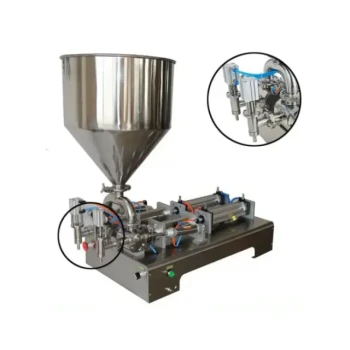
Professional honey filling machines represent the critical shift from artisanal bottling to scalable, standardized industrial processing. These systems deliver immediate value through high-precision volumetric filling that ensures consistent net weights, drastically elevates hygiene standards by minimizing human contact, and increases packaging throughput to meet commercial demands.
The core value of professional filling equipment lies in its ability to decouple production volume from labor intensity. By utilizing closed-system automation, producers can scale operations while simultaneously protecting the honey's delicate biological properties and meeting the rigorous safety standards required by high-end distributors.
Precision and Operational Efficiency
Ensuring Volumetric Consistency
Manual filling is prone to human error, resulting in inconsistent jar weights. Professional machines utilize high-precision metering pumps to ensure the net content of every bottle remains exact. This uniformity is essential for meeting legal labeling requirements and maintaining consumer trust.
Minimizing Material Waste
Honey is a high-value commodity, and spillage represents a direct loss of profit. Specialized filling equipment utilizes quantitative dosage control to eliminate overfilling and reducing the drips or leaks common in manual operations. This precision ensures that raw material yield is maximized.
Increasing Packaging Throughput
To compete in commercial markets, speed is a non-negotiable factor. Automated and semi-automated machines significantly accelerate the packaging cycle compared to manual labor. This allows producers to convert bulk raw honey into retail-ready units rapidly, meeting the demands of large-scale distribution chains.
Hygiene and Product Safety
Eliminating Secondary Contamination
The most significant risk in post-production is contamination during the transfer from storage to bottle. Industrial fillers operate within a closed environment, minimizing the honey's exposure to open air and airborne impurities. This containment creates a sterile barrier that protects the product until it is sealed.
Reducing Human Contact
Manual filling inherently involves frequent human interaction with the product. By automating the process, producers remove the primary vector for biological contamination. This strict hygiene control is often a prerequisite for entering premium markets or achieving organic certification.
Preservation of Honey Integrity
Protecting Nutritional Value
High-quality honey contains volatile compounds, enzymes, and antioxidants that are easily destroyed by heat. Professional machines are designed to facilitate flow without unnecessary secondary heating. This preserves the natural antimicrobial properties and antioxidant activity that define premium honey.
Maintaining Crystalline Structure
For producers of raw or organic honey, texture is a key selling point. Advanced filling systems are engineered to handle the product gently, dispensing it without disrupting the natural crystalline or grain structure. This ensures the consumer receives a product that retains its natural consistency.
Extending Shelf Life
The filling process is inextricably linked to sealing. Professional equipment integrates precise filling with efficient sealing technologies. A standardized, airtight seal stabilizes the product, preventing fermentation or spoilage and extending the shelf life from the factory to the consumer's pantry.
Understanding the Operational Trade-offs
Balancing Complexity and Cost
While automation reduces long-term labor energy requirements, it introduces a need for technical oversight. Shifting to professional machinery requires an upfront capital investment and a commitment to maintenance protocols to keep metering pumps and seals functioning correctly.
Specificity of Equipment
Not all machines handle all honey types equally well. A machine calibrated for highly viscous, raw honey may differ from one designed for pasteurized, free-flowing honey. Producers must select equipment that matches their specific viscosity profile to avoid clogging or texture damage.
Making the Right Choice for Your Production Goals
Selecting the right equipment depends on whether your priority is volume, biological integrity, or labor reduction.
- If your primary focus is Scalability: Prioritize machines with high-speed automated metering pumps to maximize throughput for large-scale commercial distribution.
- If your primary focus is Organic Quality: Select equipment specifically designed to minimize secondary heating and physical shear to preserve antioxidant activity and crystal structure.
- If your primary focus is Cost Efficiency: Look for semi-automated systems that balance the reduction of manual labor costs with a moderate initial equipment investment.
Investing in professional filling technology is ultimately an investment in brand reputation, ensuring every jar sold is safe, consistent, and biologically intact.
Summary Table:
| Key Benefit | Description | Impact on Production |
|---|---|---|
| Volumetric Precision | High-precision metering pumps ensure exact weights. | Reduces waste & meets legal standards. |
| Hygiene Control | Closed-system automation minimizes human contact. | Eliminates contamination & boosts safety. |
| Enhanced Throughput | Automated cycles replace manual labor bottlenecks. | Meets demand for large-scale distribution. |
| Product Integrity | Fills without secondary heating or structural damage. | Preserves enzymes, antioxidants, and texture. |
| Extended Shelf Life | Integrated airtight sealing technology. | Prevents fermentation and spoilage. |
Elevate Your Beekeeping Business with HONESTBEE
Transitioning from artisanal bottling to industrial scale requires the right tools. HONESTBEE specializes in empowering commercial apiaries and distributors with premium beekeeping machinery and essential hardware.
Why partner with us?
- Comprehensive Wholesale Range: From high-precision honey-filling and hive-making machines to essential industry consumables.
- Operational Excellence: Our equipment is designed to maximize your throughput while protecting the delicate biological properties of your honey.
- Tailored Solutions: Whether you are scaling for volume or focusing on organic integrity, we provide the tools to build your brand reputation.
Ready to transform your production efficiency? Contact us today to explore our wholesale equipment solutions!
References
- Ajay Shankar Singh, Phumlani S. Malaza. Analytical Study of Small Scale Beekeeping Farming in Eswatini: A Case Study in Manzini Region, Eswatini. DOI: 10.9734/ajaar/2023/v23i1449
This article is also based on technical information from HonestBee Knowledge Base .
Related Products
- Precision Durable Efficient HONESTBEE Rotary Honey Filling Machine
- Semi Automatic Small Honey Bottle Filling Machine Honey Filler
- Economy Small Honey Filling Machine Honey Bottle Filler Packaging Machine
- Fully Automatic Honey Filling Packaging Machine for Processing Line
- Commercial Rotary Honey Filling Machine for Production
People Also Ask
- What is a key feature of the new generation of the honey filling machine? The Advanced Electronic Control Unit
- What are the common types of bottling machines used for honey? Choosing the Right Solution for Your Apiary
- How do honey filling and processing machines aid native bee product conservation? Boost Value with HONESTBEE Technology
- How do honey filling machines work? Achieve Precision & Speed for Your Apiary
- How do high-precision honey filling machines ensure quality? Optimize Your Commercial Production with HONESTBEE