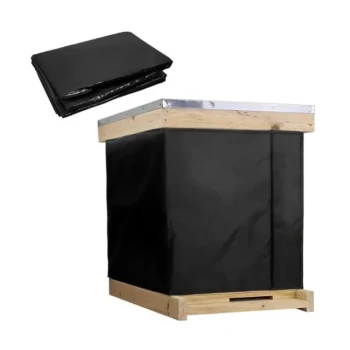
Effective moisture management requires precise timing based on temperature thresholds. In northern climates, you must install the insulated system in mid- to late-fall, specifically when daily temperatures begin to dip below 50 degrees Fahrenheit. In southern regions, the installation strategy shifts to the second hive body to prioritize cross-flow ventilation during the winter months.
The critical factor is not a specific calendar date, but the environmental shift toward consistent cold. Installing the system as temperatures breach the 50°F mark prevents moisture accumulation before it compromises the colony.
Installation Strategy for Northern Climates
The Temperature Benchmark
You should trigger the installation process when ambient temperatures consistently fall below 50 degrees Fahrenheit. This threshold indicates that the colony will soon begin to cluster, making moisture management critical.
Seasonal Alignment
In terms of the calendar, this temperature drop typically aligns with mid- to late-fall. Acting during this window ensures the hive is prepared before the onset of deep winter freezing.
Placement Configuration
For northern regions, the system acts as a primary thermal barrier. It must be installed directly on top of the top hive body.
Installation Strategy for Southern Climates
Adapting to Milder Winters
In southern climates, the installation is still driven by the arrival of local winter temperatures. However, the objective balances heat retention with the need to manage humidity in a less severe freeze cycle.
Structural Placement
Unlike the northern configuration, the recommended placement for southern hives is on the second hive body.
The Ventilation Priority
This specific placement is designed to facilitate cross-flow ventilation. This helps manage internal moisture levels without stifling the hive in variable southern winter conditions.
Understanding the Trade-offs
The Risk of Late Action
Waiting until after temperatures have plunged well below 50°F can be detrimental. Delayed installation exposes the colony to the initial—and often most dangerous—accumulation of condensation before the management system is in place.
Importance of Configuration
It is vital strictly to follow the placement guidelines for your specific region.
Using a northern configuration (top hive body) in a southern climate, or vice versa, may disrupt the necessary airflow or insulation required for that specific environment.
Making the Right Choice for Your Location
Determining the correct setup ensures your colony survives the thermal challenges of your specific region.
- If your primary focus is Northern overwintering: Install the system on the top hive body in mid-to-late fall once temperatures drop below 50°F.
- If your primary focus is Southern overwintering: Install the system on the second hive body to ensure adequate cross-flow ventilation for local winter conditions.
Match your installation timing and placement to your local climate to ensure optimal hive survival.
Summary Table:
| Climate Region | Installation Timing | Recommended Placement | Key Objective |
|---|---|---|---|
| Northern | Temperatures below 50°F (Mid-Late Fall) | Top hive body | Primary thermal barrier & moisture prevention |
| Southern | Local winter arrival | Second hive body | Cross-flow ventilation & humidity management |
Boost Your Colony Survival Rates with HONESTBEE
Protect your investment with professional-grade beekeeping solutions. At HONESTBEE, we specialize in supporting commercial apiaries and distributors with high-quality wholesale equipment. From advanced insulated hive components to honey-filling machinery and specialized beekeeping tools, we provide everything you need to manage your operation efficiently across any climate.
Ready to upgrade your inventory or apiary? Contact our experts today to discuss your wholesale needs and see how our comprehensive range of machinery and industry consumables can drive your success.
Related Products
- Professional Insulated Winter Hive Wrap for Beekeeping
- Professional Insulated Plastic Bee Hives
- Inner Beehive Cover for Beekeeping Bee Hive Inner Cover
- Stainless Steel Round Beehive Air Vents for Ventilation
People Also Ask
- What are the steps to properly wrap a beehive for winter? Ensure Your Colony Survives the Cold
- When is the best time to wrap a beehive for winter? A Guide to Perfect Winterization Timing
- How do professional insulation wraps provide protection for bee colonies? Optimize Winter Survival & Energy Efficiency
- What are the technical benefits of using winter wraps for beehive insulation? Boost Colony Survival & Hive Health
- What are the benefits of using insulated covers for hives? Ensure Colony Survival and Health