The mark is strictly applied to the top of the queen’s thorax. This is the central segment of the bee's body. Specifically, you must target the small, "bald" area located directly between the points where her wings attach to the body.
Precision is vital: a small, 2-3 millimeter dot placed centrally on the thorax ensures easy identification without inhibiting the queen's movement or sensory functions.
The Anatomy of a Safe Mark
Identifying the Target Zone
To mark a queen safely, you must locate the specific "bald spot" on her back.
This smooth area is situated on the thorax, right between the base of her wings. It is the only safe location for paint because it is a rigid, non-flexible part of her exoskeleton.
Sizing the Mark
The dab of paint should be approximately 2-3 millimeters in diameter.
A dot this size is large enough to be seen easily by the beekeeper but small enough to avoid spreading to sensitive areas.
Areas to Strictly Avoid
Under no circumstances should paint touch the queen's head, abdomen, or wings.
Paint on the head can interfere with her sensory organs, while paint on the wings will permanently disable her flight. Marking the abdomen is dangerous because it flexes and moves; dried paint there could restrict her mobility or breathing.
Tools and Application Methods
Industry Standard Markers
Posca pens are widely considered the industry standard for this task.
These pens use water-based, non-toxic paint that is safe for the insect. When applied correctly to the thorax, this paint is durable enough to last for the queen's entire lifetime.
Securing the Queen for Application
There are three main ways to stabilize the queen to ensure you hit the target zone on the thorax.
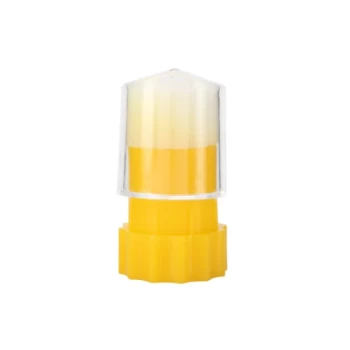
Experienced beekeepers may mark her directly on the frame as she walks, or gently hold her between their thumb and index finger. For those seeking extra stability, a queen catcher or marking tube is highly recommended to restrict her mobility safely during the process.
The Application Technique
Before touching the queen, shake the pen and test it on a separate surface to ensure the paint flows smoothly.
Once she is secured, apply a single, solid dot to the top center of the thorax. This ensures a clean application without the risk of paint running.
Common Pitfalls to Avoid
"Gluing" the Wings
The most critical error is using too much paint or missing the center of the thorax.
If paint spills over onto the wings, they may adhere to the body or each other as the paint dries. This renders the queen unable to fly, which can be fatal if she has not yet mated or needs to swarm.
Toxic Materials
Never use standard permanent markers or oil-based paints unless they are verified as bee-safe.
Toxic solvents can harm the queen's exoskeleton or poison her system. Always adhere to non-toxic, water-based options like the Posca pen.
Ensuring a Successful Application
To ensure the safety and longevity of your queen, choose the method that matches your experience level.
- If your primary focus is safety and stability: Use a marking tube or queen catcher to immobilize the queen, preventing accidental marks on her head or wings.
- If your primary focus is efficiency: Practice the "on the frame" method, but only after you have mastered the manual dexterity required to place the dot instantly on the thorax.
- If your primary focus is equipment reliability: Always test your marker on a leaf or hive tool first to prevent a sudden surge of paint from drowning the target area.
A properly marked thorax allows for rapid identification, saving you time and minimizing disturbance to the hive during inspections.
Summary Table:
| Marking Aspect | Specification/Location | Importance |
|---|---|---|
| Primary Target | Center of the Thorax | Most rigid, non-flexible part for safe paint adhesion. |
| Safe Zone | Bald spot between wing bases | Prevents interference with sensory organs or flight. |
| Dot Size | 2-3 Millimeters | Large enough for visibility; small enough to avoid runoff. |
| Approved Tools | Water-based Posca pens | Non-toxic to the insect and durable over time. |
| Prohibited Areas | Head, wings, and abdomen | Prevents sensory damage, flight loss, or breathing issues. |
Streamline Your Apiary Operations with HONESTBEE
Efficient queen management starts with the right tools. At HONESTBEE, we cater to commercial apiaries and distributors by providing a comprehensive wholesale selection of beekeeping equipment. From high-precision queen-marking tools to specialized hive-making and honey-filling machinery, our portfolio supports every stage of your production.
Why partner with us?
- Full Spectrum Supply: Access everything from essential industry consumables to honey-themed cultural merchandise.
- Commercial Grade Quality: Equipment designed for durability and large-scale efficiency.
- Expert Support: We understand the needs of professional beekeepers and distributors globally.
Ready to elevate your beekeeping business? Contact us today to explore our wholesale offerings!
Related Products
- One Hand Yellow Queen Marking Catcher Tube Cage Beekeeper Tool Accessory for Queen Bee
- Queen Bee Marking Pen POSCA Queen Marking Pens for Beekeeping Bee Markers
- Queen Bee Marking Tube Cage Bottle Catcher Holder with Clear Plastic Plunger Marker
- Plastic Long Marker Device for Catching and Marking Bees Queen Bee Marking Tube and Cage
- Transparent Plastic Bee Catcher Queen Marker Tube Cage Beekeeping Tool Equipment
People Also Ask
- What tools are available to assist in safely marking a queen bee? Essential Gear for Professional Beekeepers
- What equipment is needed to mark a queen bee? A Simple 3-Tool Guide for Every Beekeeper
- Why are high-quality queen bee marking tools essential for pedigree tracking? Master Honey Bee Genetic Integrity
- What are the specific advantages of using international standard marking tools in queen bee production and management?
- What tools are recommended for marking a Queen bee? Ensure a Safe and Successful Mark