The key distinction is host–mite pairing: Apis koschevnikovi is parasitized by Varroa rindereri, while Apis cerana nuluensis is associated with Varroa underwoodi. Varroa rindereri is distinct from Varroa jacobsoni and, according to the reference, does not transfer to co-existing Apis cerana colonies in the same apiary.
Host specificity means that Varroa monitoring cannot rely on a one-size-fits-all assumption. Sampling tools such as sticky boards and alcohol washes may remain useful, but mite identification, infestation thresholds, reproductive models, and treatment decisions must be validated for the bee–mite combination being managed.
Why the Host–Mite Relationship Matters
Apis koschevnikovi and Varroa rindereri
Apis koschevnikovi hosts Varroa rindereri, a parasitic mite species distinct from Varroa jacobsoni. This distinction matters because different Varroa species can differ in host range, reproductive behavior, and epidemiological significance.
The reported absence of crossover to nearby Apis cerana colonies shows that physical proximity alone does not necessarily determine infestation risk. Host compatibility is a major factor in whether a mite population establishes and reproduces.
Apis cerana nuluensis and Varroa underwoodi
Apis cerana nuluensis is parasitized by Varroa underwoodi. This is another example of an Asian honeybee population associated with a particular Varroa species rather than automatically with the mites most commonly discussed in commercial honeybee management.
For beekeepers and suppliers, the bee subspecies or species should therefore be treated as a core purchasing and management specification—not as a minor biological detail.
Why Varroa destructor Should Not Be Assumed
Varroa destructor is an important parasite of honeybees and a major vector of viruses such as Deformed Wing Virus. However, its prominence in commercial beekeeping does not justify assuming that every Asian honeybee colony has the same mite species, infestation pattern, or treatment response.
Correct identification comes before model selection, treatment planning, or inventory decisions.
How Host Specificity Changes Pest Monitoring
Sampling Tools Are Not the Same as Diagnostic Conclusions
Sticky boards, natural mite-drop assessments, and alcohol-wash kits can estimate mite abundance. They do not automatically establish which Varroa species is present or whether a particular infestation threshold applies to the colony.
A mite count is therefore only one part of the diagnosis. The result must be interpreted alongside the host species, brood infestation, mite reproductive status, and local management conditions.
Reproductive Behavior Can Change the Meaning of a Count
Varroa mites can display different reproductive behaviors depending on their host species. Two colonies with similar mite counts may therefore face different future risks if the mites reproduce at different rates or occupy brood differently.
Monitoring programs should use host- and mite-specific predictive assumptions wherever those data are available. Models developed for one bee–mite system should not be transferred uncritically to another.
Identification May Require More Than Field Inspection
Visual inspection can support routine monitoring, but closely related mite species may require specialist confirmation. Depending on the management objective, confirmation may involve expert morphology or validated laboratory identification.
For distributors and professional apiaries, a practical product portfolio should distinguish between:
- Routine abundance tools: sticky boards, mite trays, and alcohol-wash equipment.
- Brood assessment tools: equipment for inspecting capped brood and reproductive cells.
- Identification support: sample containers, labeling systems, microscopy access, or laboratory referral pathways.
- Decision-support records: standardized logs for host species, mite counts, brood status, and treatment history.
Why Monitoring Supports Integrated Pest Management
Counts Guide Intervention Timing
Monitoring data help determine when chemical or biophysical control is justified. This reduces the risk of treating too early, too late, or without evidence of a meaningful infestation.
The same information can also be used after treatment to verify whether mite density has actually declined.
Varroa Control Also Addresses Virus Risk
Varroa mites can weaken developing and adult bees and transmit serious viral pathogens, including Deformed Wing Virus and Acute Bee Paralysis Virus. Reducing mite density can therefore reduce both direct parasitic damage and an important route of pathogen transmission.
Monitoring is not merely an inventory exercise. It is a way to identify rising colony risk before visible symptoms become severe.
Treatment Selection Must Follow Diagnosis
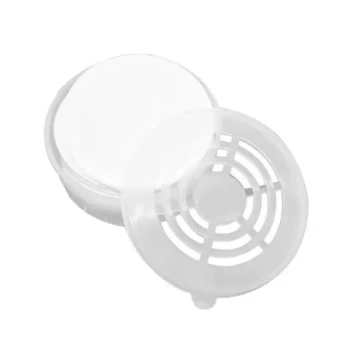
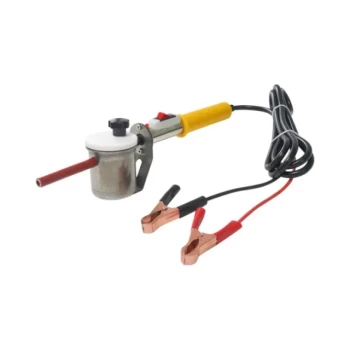
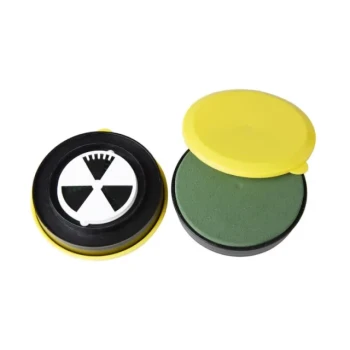
Potential control options include screened bottom boards, precision varroacide applicators, oxalic acid vaporizers, and formic acid dispensers. Their suitability depends on the bee species, mite species, colony condition, season, brood status, and applicable regulations.
No monitoring tool can replace a treatment protocol. Conversely, applying treatment without reliable monitoring makes it difficult to confirm efficacy or identify reinfestation.
Implications for Commercial Sourcing and Distribution
Stock Products by Use Case
A one-stop supply program should not treat all Varroa equipment as interchangeable. Products should be organized around the actual workflow:
- Collect a representative sample.
- Estimate mite abundance.
- Assess brood infestation and reproduction.
- Confirm or investigate mite identity when necessary.
- Apply an appropriate control measure.
- Recheck the colony after intervention.
This approach helps distributors serve both routine beekeepers and specialist operations managing less common Asian honeybee hosts.
Ask for Host Information Before Recommending Equipment
Customer service teams should confirm which Apis species or subspecies the apiary maintains. They should also ask whether the customer needs routine monitoring, species confirmation, treatment verification, or an integrated pest management program.
This information improves product matching and prevents inappropriate transfer of assumptions from Apis mellifera or commonly studied Varroa destructor systems.
Build a Complete, Fast-Response Product Offering
For professional buyers, value lies in more than supplying an individual tool. Reliable fulfillment should cover sampling equipment, brood inspection supplies, treatment applicators, replacement parts, protective equipment, and record-keeping materials.
Rapid response and technical guidance are especially important when an apiary detects an unfamiliar mite pattern and needs to move quickly from sampling to confirmation and control.
Understanding the Trade-offs
Standardized Tools Improve Efficiency
Common tools such as alcohol-wash kits and sticky boards are cost-effective, familiar, and suitable for routine surveillance. Standardization also makes it easier to compare results across colonies and apiaries.
Their limitation is that they measure infestation indirectly or incompletely. They may not reveal species identity, brood-level reproduction, or the future growth rate of the mite population.
Specialized Diagnostics Improve Confidence
Species-aware diagnostics and brood assessments provide more relevant information when host specificity is suspected. They are particularly valuable for research colonies, mixed-species apiaries, breeding programs, and unusual infestation events.
The trade-off is greater cost, training, labor, and potential dependence on laboratory or specialist support. These tools should be targeted where the added certainty changes a management decision.
Treatment Without Monitoring Creates Uncertainty
Routine treatment may appear simpler than repeated sampling. However, it can lead to unnecessary chemical exposure, inadequate control, resistance-management problems, or failure to detect reinfestation.
Monitoring requires time and consistent procedures, but it provides the evidence needed to optimize treatment timing and verify results.
Making the Right Choice for Your Goal
The correct purchasing and monitoring approach depends on the apiary’s host species, operational scale, and tolerance for diagnostic uncertainty.
- If your primary focus is routine colony surveillance: Use standardized mite-drop or alcohol-wash tools, but record the host species and interpret counts using validated thresholds.
- If your primary focus is managing Apis koschevnikovi or Apis cerana nuluensis: Treat Varroa rindereri and Varroa underwoodi as distinct diagnostic possibilities and seek host-specific interpretation rather than assuming a Varroa destructor model.
- If your primary focus is commercial distribution: Offer a complete monitoring-to-treatment portfolio, supported by rapid fulfillment, technical product matching, and clear guidance on host-specific limitations.
- If your primary focus is integrated pest management: Combine adult-bee sampling, capped-brood assessment, treatment verification, and reinfestation monitoring instead of relying on a single mite count.
The most reliable Varroa program begins by identifying the bee–mite relationship, then selecting tools and decisions that match it.
Summary Table:
| Host Species | Mite Species | Monitoring Implications |
|---|---|---|
| Apis koschevnikovi | Varroa rindereri | Distinct mite species; requires host-specific identification and thresholds |
| Apis cerana nuluensis | Varroa underwoodi | Associated with specific mite; similar need for tailored monitoring |
| Other Asian honeybees | Varroa destructor (possible) | Do not assume; confirm actual mite species before treatment |
For distributors and beekeepers, understanding host-specific Varroa is crucial. HONESTBEE offers a comprehensive range of monitoring and control equipment tailored to your apiary's needs. Contact us today for expert guidance and rapid fulfillment – ask us now!
Related Products
- Heavy Duty 12V Oxalic Acid Evaporator Vaporizer for Bee Varroa Mite Treatment Beekeeping Fumigator Atomizer
- Oxalic Acid Vaporizer 12V for Bee Varroa Mite Treatment
- Langstroth Screen Bottom Board for Beekeeping Wholesale
- Varroa Easy Check Mite Tester Kit Counter Alcohol Wash Jar
- Compact Circular Bee Mite Treatment Dispenser
People Also Ask
- How can oxalic acid treatment be applied effectively when capped brood is present? Master the 3-Stage Vapor Protocol
- What are the main advantages of using oxalic acid vaporization for Varroa mite control? Achieve 90%+ Efficacy Safely
- What is the process of using an oxalic acid vaporizer? A Step-by-Step Guide to Safe Varroa Control
- How can oxalic acid vaporization be used effectively in a hive that contains brood? Master Multi-Stage Mite Control
- Why is it necessary to control varroa mite infestations? Protect Your Colony with Oxalic Acid Vaporizers