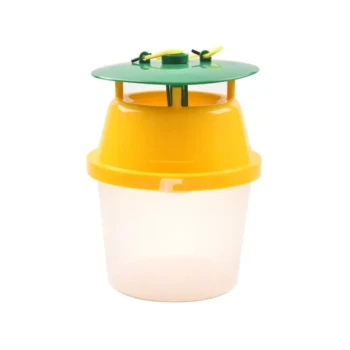
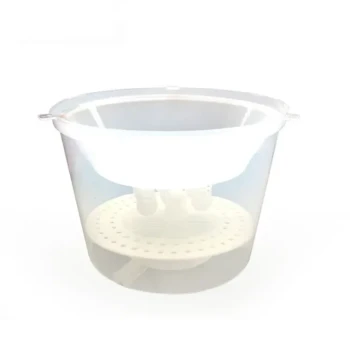
Bottom Traps distinguish themselves from front-mounted options by utilizing the hive's footprint to maximize operational scale. For commercial pollen collection, they are considered advantageous because they provide superior storage capacity and essential ventilation, directly addressing the logistical challenges of high-volume harvesting.
The core advantage of the Bottom Trap lies in its ability to manage volume without sacrificing quality. By leveraging the hive's natural airflow, these traps prevent the moisture buildup that leads to spoilage, making them the most viable option for large-scale operations.
The Mechanics of Commercial Efficiency
To understand why Bottom Traps are preferred for scale, one must look at how they manage the physical properties of fresh pollen.
Maximized Storage Capacity
Front-mounted traps are limited by the size of the hive entrance. In contrast, Bottom Traps are installed between the hive boxes and the bottom board.
This configuration allows for a significantly larger collection tray. In a commercial setting, this reduces the frequency of collection rounds required by staff, optimizing labor efficiency.
Enhanced Ventilation
Fresh pollen has high moisture content, making it susceptible to rapid degradation. Bottom Traps utilize a multi-layer screen design that facilitates vertical airflow.
This structure allows air to circulate through the collection area. The design ensures that even as the volume of pollen increases, the pile remains aerated.
Prevention of Microbial Spoilage
The greatest risk in large-scale pollen trapping is product loss due to mold or fermentation. The increased airflow provided by Bottom Traps actively dissipates moisture from the collected pellets.
This ventilation is critical for halting the deterioration of fresh pollen. It ensures the physicochemical properties of the harvest are preserved for subsequent analysis or sale.
Understanding the Trade-offs
While Bottom Traps offer superior volume and preservation mechanics, they introduce specific challenges regarding purity that commercial operators must manage.
Susceptibility to Debris
Because these traps are located at the base of the hive, gravity works against them regarding cleanliness. Hive debris, such as wax cappings and bee parts, naturally falls downward.
Without specific mitigation, this debris can mix with the pollen in the collection tray.
The Need for Specialized Shielding
To maintain the "clean collection" required for commercial grade material, Bottom Traps must be more than just a screen.
They often require the inclusion of a specialized shield. This component creates a barrier that diverts falling debris away from the collection zone while still allowing pollen pellets to pass through.
Making the Right Choice for Your Goal
When selecting hardware for a commercial apiary, the decision often comes down to balancing volume against processing complexity.
- If your primary focus is High-Volume Production: Implement Bottom Traps to maximize the amount of pollen collected per hive and reduce the frequency of emptying trays.
- If your primary focus is Product Stability: Rely on Bottom Traps to utilize hive airflow, which is the most effective passive method for preventing microbial spoilage in the field.
- If your primary focus is Raw Material Purity: Ensure your Bottom Trap configuration includes a debris shield to minimize the post-harvest cleaning required to remove wax and bee parts.
Ultimately, for large-scale operations, the Bottom Trap is the standard because it transforms the hive's base into a high-capacity, ventilated processing unit.
Summary Table:
| Feature | Bottom Traps | Front-Mounted Traps |
|---|---|---|
| Storage Capacity | High (utilizes hive footprint) | Limited (entrance size restricted) |
| Airflow & Ventilation | Superior (passive vertical airflow) | Moderate to Low |
| Spoilage Risk | Low (moisture dissipation) | Higher (moisture buildup) |
| Labor Efficiency | High (less frequent emptying) | Lower (daily collection needed) |
| Debris Control | Requires specialized shielding | Naturally cleaner placement |
Elevate Your Commercial Pollen Production with HONESTBEE
At HONESTBEE, we understand the logistical demands of large-scale commercial apiaries and distributors. Whether you are scaling up your pollen harvest or optimizing your honey processing workflow, we provide the full spectrum of professional tools—from specialized hive-making and honey-filling machinery to high-capacity bottom traps and essential consumables.
Maximize your operational efficiency and product quality today. Our team is ready to supply you with the hardware and expertise needed to lead the industry.
Contact HONESTBEE for Wholesale Solutions
References
- Gianluigi Mauriello, Emilio Caprio. Microbial characterization of bee pollen from the Vesuvius area collected by using three different traps. DOI: 10.1371/journal.pone.0183208
This article is also based on technical information from HonestBee Knowledge Base .
Related Products
- Professional Bucket Style Wasp and Moth Pheromone Trap
- Reusable Aluminium Beetle Trap for Small Hive Beetles Silver Bullet
- Gourd Shaped Hanging Wasp Trap Professional Wasp Catcher
- Compact Multi-Funnel Hanging Wasp Trap
- Professional Multi-Component Bucket Wasp Trap
People Also Ask
- What is the function of Pheromone Traps in the biosecurity monitoring of apiaries? Precision Tools for Pest Control
- What role do Pheromone Traps play in the IPM for Large African Hive Beetles? Essential Surveillance & Control Tips
- How do professional wasp traps function? Master Physical Control of Oriental Hornets to Protect Your Apiary
- What are the practical advantages of using professional wasp traps and protective equipment in apiary management? Scale Up
- Why replace sugar syrup bait in wasp traps every three days? Ensure Maximum Attraction and Catch Rates