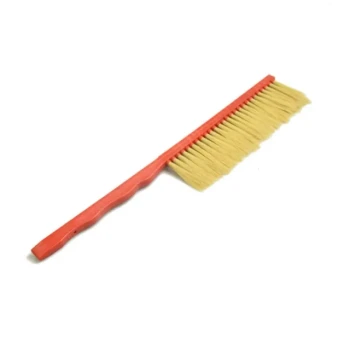
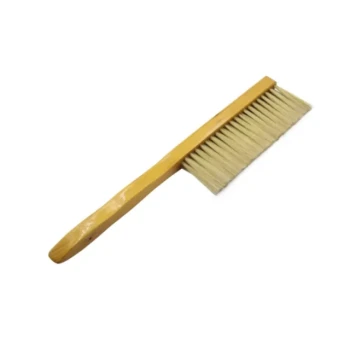
Precision and environmental stability are the primary reasons for using these specific tools. Fine handling brushes allow for the delicate transfer of individual Varroa destructor mites into capped cells, while molten beeswax is strictly required to reseal the incisions made during the process, effectively repairing the hive structure.
These tools enable controlled artificial infestation by mimicking natural conditions. The brush ensures accurate parasite introduction, and the beeswax restores the cell's micro-environment to ensure the bee completes its development.
The Mechanics of Controlled Infestation
The Role of the Fine Handling Brush
The primary function of the fine handling brush is the precise transfer of parasites.
Researchers must introduce individual Varroa destructor mites into specific capped larval cells.
Using a fine brush minimizes physical trauma to the delicate mite during this transfer, ensuring the parasite remains viable for the experiment.
The Function of Molten Beeswax
Once a cell cap is incised to introduce the mite, the natural seal is broken.
Molten beeswax is applied immediately to reseal these incisions.
This acts as a surgical adhesive, physically closing the gap created by the researcher to restore the physical barrier of the cell cap.
Why Environmental Integrity Matters
Preserving the Micro-Environment
The interior of a sealed honeycomb cell maintains a specific balance of humidity and temperature.
Resealing the cell with beeswax maintains the integrity of this micro-environment.
Without this step, the internal conditions would fluctuate, potentially killing the larva or altering the behavior of the mite.
Ensuring Natural Development
The goal of these experiments is to observe the interaction between the bee and the parasite under naturalistic conditions.
The beeswax seal allows test bees to complete their development and emergence just as they would in nature.
This ensures that any observed effects are caused by the Varroa infestation, not by exposure to the outside environment.
Understanding the Trade-offs
The Risk of Handling Stress
While fine brushes reduce damage, the manual transfer of mites is still an artificial interference.
Any physical manipulation carries a risk of stressing the parasite or the host larva, which must be accounted for in experimental controls.
Dependency on Seal Quality
The success of the experiment relies heavily on the quality of the beeswax application.
If the seal is imperfect, the micro-environment is compromised; if the wax is applied improperly, it could damage the cell structure further.
Ensuring Experimental Success
To maximize the validity of your Varroa research, consider the following applications:
- If your primary focus is parasite viability: Use the finest brush available to prevent physical trauma during the transfer of individual mites.
- If your primary focus is host survival: Prioritize a seamless beeswax application to fully restore the protective micro-environment of the larval cell.
Precision in these physical manipulations is the baseline requirement for obtaining reliable data on bee-parasite interactions.
Summary Table:
| Tool | Primary Function | Experimental Impact |
|---|---|---|
| Fine Handling Brush | Precise transfer of individual mites | Minimizes physical trauma; ensures parasite viability |
| Molten Beeswax | Resealing cell cap incisions | Restores micro-environment humidity and temperature |
| Surgical Incision | Access to larval cells | Enables controlled, stage-specific artificial infestation |
| Sealing Quality | Structural restoration | Prevents larval mortality due to external exposure |
Elevate Your Apiary Research and Operations with HONESTBEE
Precision is the foundation of success in both honeybee research and commercial beekeeping. At HONESTBEE, we understand the technical demands of the industry. We cater to commercial apiaries and distributors with a comprehensive wholesale offering designed to streamline your operations.
Our value to you includes:
- Complete Equipment Spectrum: From precision beekeeping tools for delicate tasks to heavy-duty honey-filling and hive-making machinery.
- Industrial Consumables: A wide array of essential supplies to keep your colonies and production lines running efficiently.
- Cultural Merchandise: Unique honey-themed products to expand your market reach.
Whether you are conducting controlled infestation studies or scaling up commercial honey production, HONESTBEE provides the specialized hardware and expertise you need to succeed.
Ready to upgrade your equipment? Contact us today to explore our wholesale solutions!
References
- Nuria Morfín, Ernesto Guzmán‐Novoa. Interaction of Varroa destructor and Sublethal Clothianidin Doses during the Larval Stage on Subsequent Adult Honey Bee (Apis mellifera L.) Health, Cellular Immunity, Deformed Wing Virus Levels and Differential Gene Expression. DOI: 10.3390/microorganisms8060858
This article is also based on technical information from HonestBee Knowledge Base .
Related Products
- Plastic Handle Single Row Artificial Fiber Bee Brush
- Wooden Bee Brush with Triple Row Artificial Fiber for Beekeeping
- Double Row Artificial Fiber Bee Brush for Beekeeping
- Classic Wooden Bee Brush with Double-Row Boar Bristles
People Also Ask
- What is the specific function of a bee brush? Ensure Pure Harvests and Colony Welfare During Honey Extraction
- What is the purpose of using a bee brush during the inspection of hive components? Safe & Precise Hive Management
- What problem does a bee brush solve? Protect Your Colony with Gentle Precision Tools
- What are the key features of a popular bee brush? Essential Design for Bee Safety and Hive Hygiene
- What are the key characteristics of the bristles on a bee brush? Master Gentle and Efficient Bee Removal