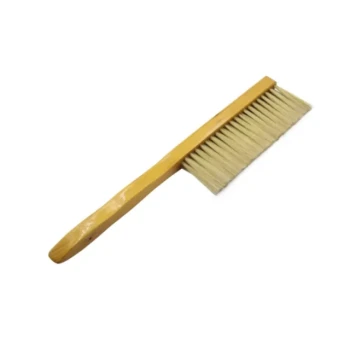
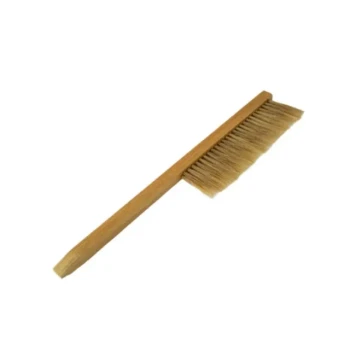
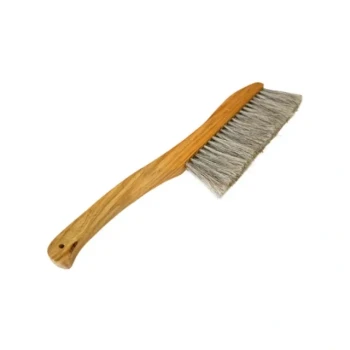
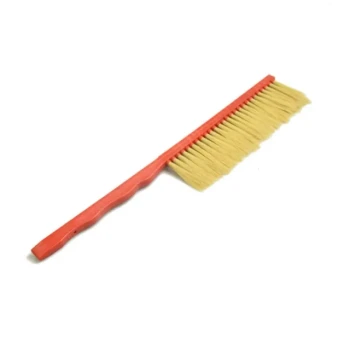
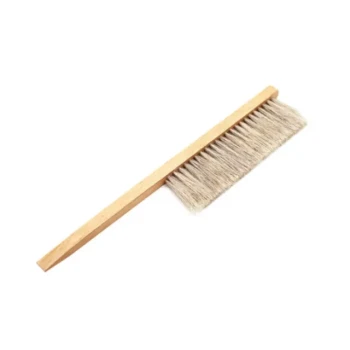
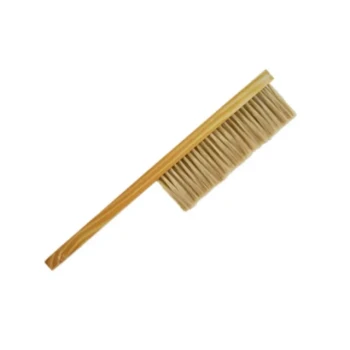
The primary purpose of a bee brush is to gently displace honeybees from specific hive components—such as frames, inner covers, and feeders—allowing the beekeeper to work without harming the colony. This tool provides a mechanical means to safely clear a visual path or workspace, facilitating tasks ranging from structural inspection to honey harvesting.
Core Takeaway The bee brush serves as a non-destructive management tool, enabling you to physically move bees off specific surfaces to prevent injury to the insects and ensure a clear view for the beekeeper during intricate hive manipulations.
Operational Utility in Inspections
Clearing Component Surfaces
During an inspection, bees often congregate on the inner covers and in-hive feeders. A bee brush is used to sweep these bees away gently. This prevents the bees from being crushed when you remove or replace these heavy components.
Gaining Visual Access
To properly assess the health of a hive, you often need to see the comb structure beneath the layer of bees. The brush allows you to clear a "window" on the frames. This grants you the visibility needed to inspect for eggs, queen cells, or disease without disrupting the entire colony setup.
Preparation for Maintenance and Harvest
When removing frames for honey harvesting or replacing old equipment, the component must be free of bees. The brush provides an efficient method to clear the frame completely. This ensures that bees are not inadvertently removed from the hive along with the equipment.
The Principle of Non-Destructive Management
Reducing Bee Mortality
Professional beekeeping tools are designed to minimize physical disturbance. Unlike shaking a frame, which can be violent, or using smoke, which only directs them, the brush allows for precise, localized removal. Using this tool correctly helps reduce bee mortality during inspections.
Controlled Manipulation
The bee brush acts as an extension of the beekeeper’s hand. It allows for the safe movement of bees from areas where you need to use a hive tool to pry apart propolis-sealed boxes. By clearing the area first, you ensure a controlled process where bees are not caught in the leverage points of other tools.
Understanding the Trade-offs
The Requirement for Gentleness
The primary reference explicitly states the brush must be used gently. If used with excessive force or speed, a brush can agitate the colony rather than simply moving them. Effective use requires a slow, sweeping motion to avoid provoking a defensive response.
Alternative Tools
While the bee brush is the standard tool for this job, some beekeepers opt for a feather. A feather serves the exact same purpose—moving bees away from specific sections. This alternative is often used when an even softer touch is required to ensure the bees remain calm.
Making the Right Choice for Your Goal
To integrate the bee brush effectively into your inspection workflow:
- If your primary focus is Equipment Maintenance: Use the brush to clear bees from inner covers and feeders before placing them on the ground to prevent crushing stragglers.
- If your primary focus is Harvesting: Use the brush to systematically sweep every bee off honey frames to ensure no insects are transported to the extraction area.
The bee brush is the bridge between safety and visibility, allowing you to manipulate the hive environment without compromising the welfare of the colony.
Summary Table:
| Feature | Purpose of Bee Brush Usage | Impact on Hive Management |
|---|---|---|
| Visual Inspection | Clears bees from comb surfaces | Facilitates spotting eggs, queens, and disease signs. |
| Honey Harvesting | Removes bees from honey frames | Ensures no bees are transported to the extraction area. |
| Component Care | Clears inner covers and feeders | Prevents crushing bees when replacing heavy equipment. |
| Bee Welfare | Gentle, non-destructive displacement | Reduces bee mortality compared to shaking or smoking. |
| Operational Safety | Clears propolis-sealed joints | Allows safe use of hive tools without harming insects. |
Elevate Your Apiary Operations with HONESTBEE
Are you looking to scale your commercial beekeeping business or replenish your distribution inventory? HONESTBEE is your dedicated wholesale partner, providing the professional-grade tools and machinery needed for efficient hive management.
Why Choose HONESTBEE?
- Comprehensive Wholesale Offering: We supply the full spectrum of beekeeping tools, machinery, and equipment.
- Specialized Hardware: From hive-making machines to high-precision honey-filling lines, we provide the technology to grow your output.
- Industry Consumables & Merchandise: Access a wide array of essential consumables and unique honey-themed cultural merchandise to diversify your retail range.
Whether you are managing thousands of colonies or supplying the next generation of beekeepers, our portfolio is designed to meet the rigorous demands of the industry.
Contact HONESTBEE today to discuss your wholesale needs!
Related Products
- Wooden Bee Brush with Triple Row Artificial Fiber for Beekeeping
- Classic Wooden Bee Brush with Double-Row Boar Bristles
- Premium Triple-Row Horsehair Bee Brush
- Plastic Handle Single Row Artificial Fiber Bee Brush
- Wooden Bee Brush with Double-Row Horsehair Bristles
People Also Ask
- What is the specific function of a bee brush? Ensure Pure Harvests and Colony Welfare During Honey Extraction
- What are the key characteristics of the bristles on a bee brush? Master Gentle and Efficient Bee Removal
- What problem does a bee brush solve? Protect Your Colony with Gentle Precision Tools
- Why is a bee brush necessary when extracting honeybee hive frames that contain larvae? Protect Your Brood and Colony
- What is the correct way to use a bee brush and what actions should be avoided? Master Gentle Hive Management