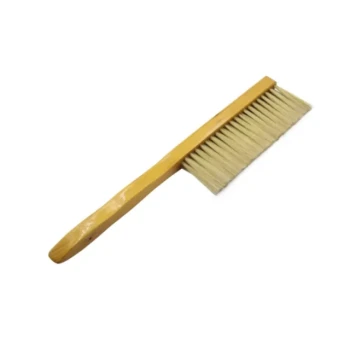
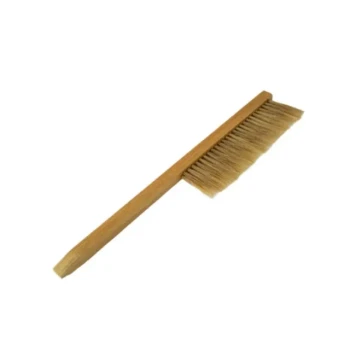
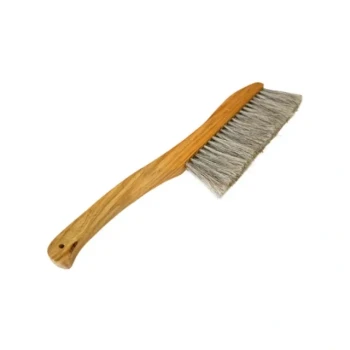
Minimizing physical trauma is the primary reason researchers utilize fine-tipped brushes for Varroa mite collection. These instruments function as essential micro-tools, allowing scientists to dislodge and transfer mites from honeybee larvae or pupae without exerting crushing force. By providing extremely gentle physical contact, the brush ensures the mite is moved without sustaining damage to its delicate structures.
In effective parasitology research, the validity of the data depends entirely on the condition of the specimen. Fine-tipped brushes act as a non-destructive interface, preserving the mite's exoskeleton and appendages to ensure experimental results reflect natural physiology rather than injury.
Preserving Anatomical Integrity
Protecting Delicate Structures
Varroa mites possess a fragile exoskeleton and sensitive appendages that are easily damaged by rigid tools like forceps or tweezers.
Using a fine-tipped brush mitigates the risk of crushing or piercing these structures during collection.
Safe Extraction from Hosts
Mites are often collected directly from honeybee larvae or pupae, environments that require delicate navigation.
The soft bristles of the brush allow researchers to manipulate the parasite away from the host without inadvertently harming the bee or the mite.
Ensuring Experimental Validity
Maintaining Physiological Consistency
For research data to be reliable, the test subjects must remain in a healthy and consistent physiological state.
Trauma induced during collection can alter a mite's biological responses, introducing variables that skew experimental outcomes.
The Prerequisite for Live Study
When the goal is to study the behavior or biology of live parasites, the survival of the specimen is non-negotiable.
Precise handling via brushes is a prerequisite for keeping the mites alive and functioning normally post-transfer.
Operational Trade-offs
The Requirement for Manual Dexterity
While brushes prevent damage, they require steady hands and significant patience from the researcher.
This method is inherently slower and more labor-intensive than potential bulk collection methods, but the trade-off is necessary for sample quality.
limitations on Throughput
Because this is a micro-tool technique involving individual handling, it is not optimized for high-speed, high-volume processing.
Researchers must prioritize the quality and health of individual mites over the speed of collection.
Maximizing Research Validity
To ensure your data withstands scrutiny, consider the following when selecting collection tools:
- If your primary focus is behavioral study: Use fine-tipped brushes to ensure the mite's appendages remain intact for natural movement.
- If your primary focus is physiological analysis: Rely on brush transfer to prevent stress or injury from altering the mite's internal biological state.
The integrity of your tools dictates the integrity of your subject; choose gentleness to ensure your data reflects reality.
Summary Table:
| Feature | Fine-Tipped Brush Handling | Impact on Research |
|---|---|---|
| Physical Impact | Minimizes trauma/crushing | Preserves exoskeleton & appendages |
| Host Safety | Safe for larvae and pupae | Prevents damage to honeybee hosts |
| Specimen Status | Maintains live, healthy state | Ensures physiological consistency |
| Data Quality | High (reduces variables) | Reliable behavioral & biological results |
| Process Speed | Lower (requires dexterity) | Prioritizes sample quality over volume |
Elevate Your Apiary Management with HONESTBEE
At HONESTBEE, we understand that precision is the foundation of successful beekeeping, whether in a research lab or a commercial apiary. As a premier provider for commercial apiaries and global distributors, we offer a comprehensive wholesale range of professional beekeeping tools, specialized honey-filling machinery, and essential consumables designed to maintain the highest industry standards.
From delicate handling tools to high-capacity hive-making equipment, our portfolio is built to enhance your operational efficiency and specimen care. Contact us today to discover how our tailored equipment solutions and industry expertise can support your growth and deliver superior value to your business.
References
- Roberto Bava, Ernesto Palma. Chemical Profile of Essential Oils of Selected Lamiaceae Plants and In Vitro Activity for Varroosis Control in Honeybees (Apis mellifera). DOI: 10.3390/vetsci10120701
This article is also based on technical information from HonestBee Knowledge Base .
Related Products
- Varroa Easy Check Mite Tester Kit Counter Alcohol Wash Jar
- Compact Circular Bee Mite Treatment Dispenser
- Adjustable Formic and Acetic Acid Dispenser for Bee Mite Treatment
- Wooden Bee Brush with Triple Row Artificial Fiber for Beekeeping
- Double Row Artificial Fiber Bee Brush for Beekeeping
People Also Ask
- What tools are utilized within an Integrated Pest Management (IPM) strategy for honeybees? Optimize Colony Health
- What is the significance of standardized detection tools in Varroa control? Data-Driven Beekeeping Strategies
- Why is surfactant added to 70% alcohol for Varroa detection? Ensure Accurate Mite Counts for Professional Beekeeping
- What is the purpose of using white filter cloth for Varroa mite screening? Enhance Detection and Accuracy
- How does a specialized Varroa mite tester with sugar powder facilitate mite diagnosis? Precise B2B Hive Health Solutions