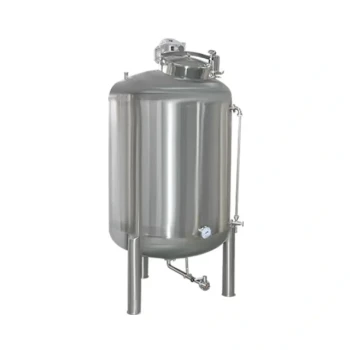
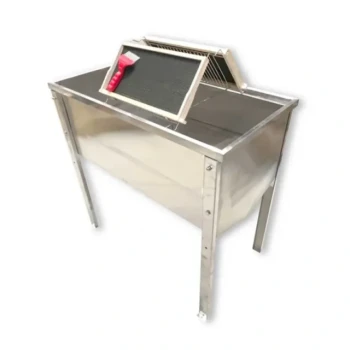
Post-extraction refinement is the defining step that transforms raw, centrifuged honey into a commercial-grade product. While filters provide immediate mechanical removal of solid contaminants like wax and larval remains, settling tanks utilize gravity to stratify the liquid, effectively separating microscopic impurities and air bubbles to ensure optimal clarity.
The core purpose of this two-stage process is to leverage mechanical interception and specific gravity to isolate pure liquid honey. By removing physical debris and trapped air, producers ensure high sensory quality, accurate yield measurement, and distinct market value.
The Mechanics of Purification
Mechanical Filtration
The centrifugation process inevitably introduces solid contaminants into raw honey. Filters act as the primary line of defense, designed to physically intercept larger impurities.
This stage specifically targets visible debris such as wax particles, larval remains, and bee parts. By trapping these solids immediately, the system prevents them from contaminating the final storage containers or clogging downstream bottling machinery.
Gravity-Based Sedimentation
Filtration alone cannot remove every impurity, particularly those that are microscopic or liquid-suspended. Settling tanks address this by utilizing the principle of specific gravity to achieve natural stratification.
During this static phase, the honey is allowed to rest undisturbed. Air bubbles and lighter wax fragments naturally rise to the surface, while heavier fine particles sink to the bottom.
The Middle Layer Advantage
The ultimate goal of using a settling tank is to access the "clean zone" in the center of the tank. Once stratification is complete, high-purity honey is drawn from this middle layer.
This ensures that the floating foam and settled sediment are left behind, resulting in a product with consistent density and texture.
Commercial and Analytical Value
Enhancing Sensory Quality
For the high-end market, clarity and transparency are non-negotiable indicators of quality. The removal of micro-bubbles and fine suspended particles is essential for achieving this aesthetic.
Without the settling process, trapped air bubbles can cloud the honey, negatively impacting its visual appeal and perceived value.
Ensuring Data Precision
Beyond aesthetics, purity is critical for accurate production analysis. If honey contains significant non-honey substances, yield data becomes unreliable.
By removing wax and debris before the final weigh-in, producers ensure that their yield data reflects only the high-purity liquid product, allowing for rigorous operational tracking.
Understanding the Operational Trade-offs
The Requirement of Time
Unlike filtration, which is a rapid flow-through process, sedimentation is time-intensive. Effective clarification in a settling tank often requires the honey to sit for extended periods, sometimes up to two weeks.
This creates a bottleneck in production speed that must be accounted for in the operational schedule. Rushing this step compromises the separation of micro-bubbles.
Volume Loss
Achieving high purity through stratification involves a necessary loss of volume. The top layer (scum/foam) and the bottom layer (sediment) must often be discarded or processed separately.
Producers must accept a slightly lower total volume of finished product in exchange for the significantly higher market grade and value of the refined honey.
Making the Right Choice for Your Goal
While both tools are standard, the emphasis you place on each depends on your specific production targets.
- If your primary focus is Market Grade and Aesthetics: Prioritize the settling tank duration to ensure all micro-bubbles are eliminated for maximum transparency.
- If your primary focus is Production Data Accuracy: Ensure your filtration stages are rigorous to remove all non-honey mass before the final weigh-in.
True refinement requires patience; the clarity of the final product is a direct reflection of the time allowed for natural separation.
Summary Table:
| Refinement Stage | Mechanism | Primary Impurities Removed | Process Duration |
|---|---|---|---|
| Mechanical Filtration | Physical Interception | Wax particles, larval remains, bee debris | Rapid (Real-time) |
| Settling Tanks | Gravity Stratification | Micro-bubbles, fine suspended particles | Long (Up to 2 weeks) |
| Middle Layer Extraction | Stratified Isolation | Remaining scum (top) and sediment (bottom) | Post-sedimentation |
Maximize Your Honey Quality with HONESTBEE
At HONESTBEE, we understand that commercial success depends on the purity and presentation of your harvest. We provide commercial apiaries and distributors with professional-grade beekeeping machinery, including high-efficiency filtration systems and precision settling tanks designed to optimize your refinement process.
Whether you need specialized honey-filling machines or a complete suite of beekeeping tools and consumables, we deliver the hardware necessary to scale your operations and improve market value.
Ready to upgrade your production line? Contact us today to discuss your wholesale equipment needs.
References
- Simone Cristina Camargo, Daniela Jessica Pereira. Implementation of a geographic information system (GIS) for the planning of beekeeping in the west region of Paraná. DOI: 10.1590/0001-3765201420130278
This article is also based on technical information from HonestBee Knowledge Base .
Related Products
- Stainless Steel Honey Storage and Settling Tank with Double Strainer
- Heavy Duty Stainless Steel Honey Processing Machine Decrystallizing Tank
- Stainless Steel Honey Storage Tank with Lid for Honey
- Professional Honey Storage Tank with Agitation System
- Stainless Steel Uncapping Tank with Stand and Strainer
People Also Ask
- What economic role do honey storage tanks play? Boost Your Revenue Through Strategic Inventory Management
- What roles do industrial honey storage tanks and filtration meshes play in processing? Ensure Purity & Consistency
- What is the purpose of a honey storage tank? Streamline Your Honey Processing for Quality & Efficiency
- What role do settling tanks play in honey production? Achieve Pure, High-Clarity Honey Naturally
- Why are large settling tanks used in the honey clarification process? Achieve Natural Purity & Batch Consistency