Industrial-grade airtight containers are strictly required because honey is highly hygroscopic, meaning it actively absorbs moisture from the surrounding atmosphere. Without this specialized barrier, the honey will absorb water and ferment, while simultaneously becoming vulnerable to external dust that distorts the sample's internal pollen profile.
Core Takeaway: The validity of a melissopalynological (pollen) evaluation relies entirely on sample isolation. If the container allows air exchange, the resulting fermentation and contamination render the pollen spectrum inauthentic, making accurate scientific analysis impossible.
The Critical Role of Moisture Control
Combating Hygroscopic Properties
Honey is naturally hygroscopic; it acts like a sponge for atmospheric moisture.
If exposed to air during storage or transport, the water content in the honey rises rapidly.
Industrial-grade airtight containers provide the hermetic seal necessary to completely isolate the product from ambient humidity.
Preventing Fermentation
The immediate consequence of moisture absorption is fermentation.
As water content increases, yeast naturally present in the honey becomes active, chemically altering the sample.
This biological activity degrades the honey, compromising the physical matrix required for proper slide preparation and analysis.
Preserving the Pollen Spectrum
Blocking External Contaminants
For pollen analysis, the "pollen spectrum"—the specific count and variety of grains—must remain exactly as it was at the time of harvest.
Standard containers may allow micro-gaps where external dust and impurities can infiltrate the sample.
These foreign particles can physically resemble pollen grains or obscure them, leading to inaccurate identification and counting.
Ensuring Sample Authenticity
The primary goal of melissopalynological evaluation is to determine the botanical and geographical origin of the honey.
Introduction of external dust creates a "contaminated" spectrum that does not reflect the honey's true source.
Airtight industrial containers ensure the pollen grains analyzed are exclusively those collected by the bees, maintaining the original and authentic nature of the sample.
Understanding the Material Trade-offs
The Risk of Chemical Migration
While the seal protects against air, the material of the container itself poses a hidden risk.
Lower-quality plastics can leach plasticizers or other chemicals into the honey over long periods.
This migration alters the sample's chemistry and can interfere with sensitive tests.
Avoiding False Positives
Industrial-grade options, specifically food-grade polyethylene (PE), offer superior chemical stability.
Using inferior containers can lead to false-positive results when analyzing for trace elements like polycyclic aromatic hydrocarbons (PAHs) or pesticide residues.
The container must be inert to ensure that any chemicals detected are actually from the honey, not the storage vessel.
Making the Right Choice for Your Goal
To ensure your analysis yields actionable data, select your containment strategy based on your specific analytical targets.
- If your primary focus is Pollen Analysis (Melissopalynology): Prioritize the airtight seal above all else to prevent moisture uptake and dust ingress, which preserves the authentic pollen spectrum.
- If your primary focus is Chemical Residue Analysis: Ensure the container is made of high-purity food-grade polyethylene (PE) to prevent plasticizer migration and false positives.
Ultimately, the container is not just a vessel; it is an active component of your quality control chain that preserves the scientific truth of the sample.
Summary Table:
| Factor | Impact on Honey Sample | Industrial Container Solution |
|---|---|---|
| Hygroscopy | Absorbs moisture, causing fermentation | Hermetic seal isolates ambient humidity |
| Pollen Spectrum | External dust alters botanical data | Particle-proof barrier prevents contamination |
| Chemical Stability | Plasticizers can leach into honey | Food-grade PE ensures chemical inertness |
| Authenticity | Inaccurate geographical/botanical results | Maintains the original pollen profile |
Secure Your Honey Quality with HONESTBEE
At HONESTBEE, we understand that the integrity of your honey sample is the foundation of your business reputation. As a dedicated partner to commercial apiaries and global distributors, we provide more than just storage; we deliver a complete chain of quality control.
From high-purity food-grade containers that prevent chemical migration to professional-grade honey-filling machines and specialized beekeeping tools, our comprehensive wholesale offering is designed to scale your operations while preserving the scientific truth of your products.
Ready to upgrade your storage and processing equipment?
Contact HONESTBEE Today to Explore Our Wholesale Solutions
References
- Pooja Dalal, Krishna. An overview of mellissopalynology and its scope in beekeeping. DOI: 10.33545/26174693.2025.v9.i4sd.4139
This article is also based on technical information from HonestBee Knowledge Base .
Related Products
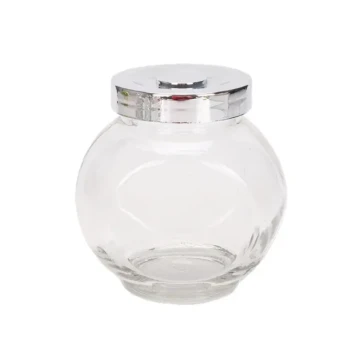
- Classic Drum Shaped Glass Honey Jar with Airtight Lid
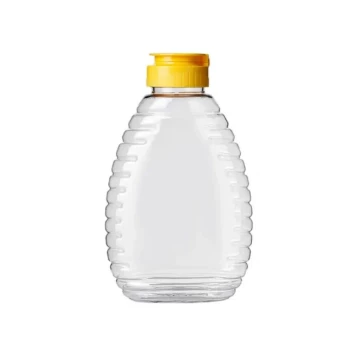
- Squeezable No-Drip Beehive-Shaped Honey Jars with Flip-Top Cap
- Classic Honey Bear Jars with Flip Top Dispensing Cap for Liquid Sweeteners
- Inverted Squeezable Honey Jar with No Drip Flip Top Cap for Easy Pouring
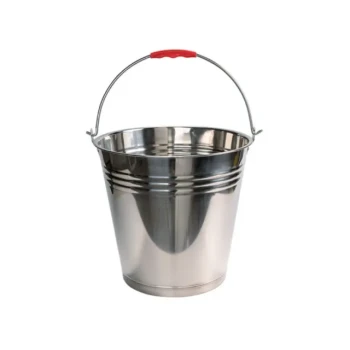
- Premium Stainless Steel Honey Tank Bucket Pail with Reinforced Handle and Polished Finish
People Also Ask
- What is the best utensil to store honey? Preserve Purity with the Right Container
- How does the appearance of glass jar packaging affect the sales and perception of honey? Boost Your Premium Brand Value
- Why is a glass jar preferred for packaging honey? Ultimate Protection for Purity & Flavor
- What is the aesthetic appeal of using glass jars for honey? Elevate Your Brand with Premium Packaging
- What are the advantages of glass containers for honey? Elevate Quality and Market Value with Premium Packaging