The necessity of physical squeezing and filtration stems directly from the irregular architecture of wild honeycombs. Unlike domesticated hives, the nests of species like Apis florea are structurally incompatible with standard centrifugal extractors, requiring manual crushing to release the honey and subsequent filtration to remove the resulting debris.
The Core Insight Processing wild honey is a balance between extraction efficiency and product purity. Because standard machinery cannot accommodate wild combs, physical squeezing provides the necessary force to extract the honey, while filtration acts as the critical refinement step to ensure clarity without sacrificing nutritional value.
Overcoming Structural Limitations
The Incompatibility of Standard Equipment
Standard commercial beekeeping relies on centrifugal extractors that spin standardized frames to release honey. Wild honeycombs, particularly from open-nesting species like Apis florea, do not fit into this machinery.
The Role of Physical Squeezing
To bypass this equipment limitation, physical squeezing becomes the primary extraction method. This manual process applies direct pressure to the honeycomb structure to force the honey out of the cells.
Refining the Product
Managing Extraction Byproducts
While squeezing is effective for extraction, it is a destructive process. It inevitably mixes the honey with structural debris, such as wax residue and fragments of pollen.
Pressure-Driven Filtration
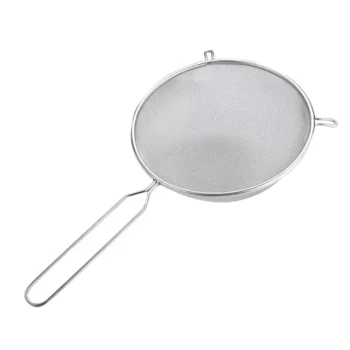
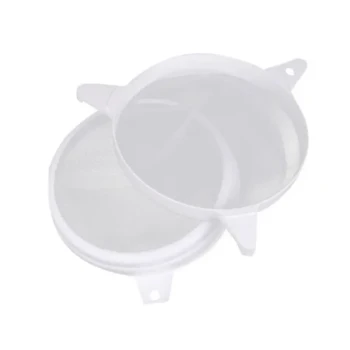
To correct the impurity issues caused by squeezing, a pressure-driven filtration stage is essential. This process forces the crude mixture through media with specific pore sizes.
Improving Clarity and Texture
This filtration separates the liquid honey from the suspended solid particles introduced during the squeezing phase. The result is a product with significantly improved clarity and a smoother texture.
Preserving Nutritional Integrity
Crucially, this physical refining process is designed to be gentle. It removes the unwanted physical debris without compromising the natural nutritional components inherent to the wild honey.
Understanding the Trade-offs
Process Efficiency vs. Hive Preservation
Physical squeezing is necessary for bulk processing, but it destroys the comb structure. While specialized needles exist for non-destructive sampling via seepage, they are typically reserved for small-scale collection where preserving the hive structure is the priority, rather than bulk extraction.
Clarity vs. Total Rawness
Filtration improves consumer appeal by removing suspended particles. However, it requires careful calibration of pore size to ensure that while wax and debris are removed, the beneficial properties of the honey remain intact.
Making the Right Choice for Your Goal
When establishing a protocol for wild honey processing, consider your end-use requirements:
- If your primary focus is Volume and Efficiency: Rely on physical squeezing as it is the only viable method for extracting significant quantities from irregular wild combs.
- If your primary focus is Product Quality: Implement a pressure-driven filtration system immediately after squeezing to remove wax and pollen debris while retaining nutritional value.
Physical processing of wild honey is not just a primitive alternative to centrifugation; it is a necessary adaptation to the unique biology of wild bee species.
Summary Table:
| Process Phase | Method | Primary Purpose | Key Benefit |
|---|---|---|---|
| Extraction | Physical Squeezing | Bypassing centrifugal machine incompatibility | Maximizes honey yield from irregular combs |
| Refinement | Pressure-driven Filtration | Removing wax, pollen, and hive debris | Enhances clarity and texture of the honey |
| Quality Control | Controlled Pore Sizing | Balancing filtration and nutrition | Preserves natural nutritional integrity |
Scale Your Wild Honey Production with Professional Equipment
Processing wild honey from species like Apis florea presents unique challenges that standard equipment can't solve. HONESTBEE specializes in providing commercial apiaries and distributors with the robust machinery and tools needed to refine these processes.
Whether you require high-efficiency honey-filling machines for your final product or durable specialized hardware to streamline manual extraction, we offer a comprehensive wholesale portfolio tailored to your growth. From essential consumables to advanced beekeeping machinery, we help you maintain nutritional integrity while maximizing output.
Ready to upgrade your commercial honey processing? Contact us today to discover how HONESTBEE can power your operation.
References
- Muthuswamy Balasubramanyam. Assessment on Vitamin Constituents of Multifloral Honey of Indigenous Bee Apis Florea and Apis Cerana Indica from Plains, Hills and Western Ghats of Karnataka. DOI: 10.24214/jcbps.b.13.1.08086
This article is also based on technical information from HonestBee Knowledge Base .
Related Products
- Honey Concentrating and Filtering Dehumidifier Machine 2T Capacity for Honey
- Electric Double Wall Honey Filtering Machine Purifier Equipment for Honey Processing Plant
- Electric Honey Press Machine for Squeezing Honey Comb Press Equipment
- Stainless Steel Triangle Support Honey Strainer and Filters
- Automatic Honey Filling and Filtering Machine for Beekeeping Bottle Filling
People Also Ask
- What heating methods can be used with the honey concentrating equipment? Electric vs. Boiler Options
- How does honey filtration and processing machinery transform raw honey? Scale Your Production for Global Markets
- What are the main functions of the honey concentrating equipment? Essential Machinery for Commercial Quality
- What maintenance should be performed when the honey concentrating equipment is not in use? Key Safety & Care Tips
- What electrical safety precaution is necessary when operating the honey concentrating equipment? Essential Grounding Tips