Specialized drying and cleaning machines are the backbone of safe, marketable bee pollen production. These systems address two fundamental challenges: they reduce moisture content to prevent rapid bacterial and fungal spoilage, and they physically remove contaminants like insect parts to ensure the product meets food-grade hygiene standards. Without this equipment, fresh pollen remains volatile, unsafe for consumption, and commercially unviable.
The core value of this machinery lies in stabilization. Fresh bee pollen is a nutrient-rich, high-moisture substance that acts as a breeding ground for toxic mold; specialized equipment transforms it into a shelf-stable product while preserving heat-sensitive vitamins and enzymes.
The Critical Role of Moisture Control
Halting Microbial Growth
Freshly collected bee pollen contains high moisture levels, making it biologically unstable. This environment effectively acts as a petri dish for bacteria and fungi.
Specialized drying machines rapidly reduce moisture content to a safe range (typically 10–14%). By removing the water required for microbial life, the machinery effectively pauses biodegradation and extends the product's shelf life significantly.
Preventing Toxicity
The risk of improper drying goes beyond simple spoilage; it involves consumer safety. Without immediate and controlled dehydration, pollen is susceptible to fungi such as Aspergillus.
These fungi can produce Ochratoxin A, a dangerous mycotoxin. Industrial drying equipment eliminates the conditions required for this fungal growth, preventing the contamination of the final product with hazardous toxins.
Preserving Bioactive Value
Precision Temperature Regulation
Drying pollen is a delicate balance; you must remove water without "cooking" the product. High heat destroys the very nutrients that make bee pollen commercially valuable.
Specialized equipment maintains strict temperature controls, generally keeping the thermal field below 45°C. This prevents thermal degradation of heat-sensitive components, such as enzymes and amino acids.
Protecting Vitamin Integrity
Standardized dehydration processes are essential for retaining specific micronutrients. For example, the Vitamin B complex found in pollen is highly susceptible to damage.
By utilizing controlled airflow and temperature rather than aggressive heating, these machines ensure that the nutritional profile—and even antioxidant concentration—remains intact for the end consumer.
Achieving Food-Grade Hygiene
Mechanical Separation
Raw pollen arrives from the hive mixed with debris. This often includes beeswax, dust, and even bee body parts.
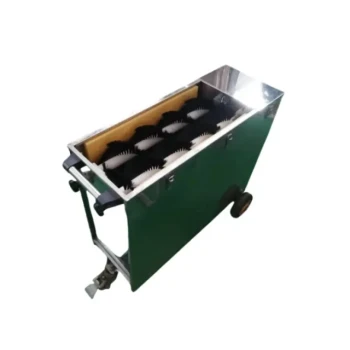
Complementary cleaning machines are essential for removing these foreign materials. They employ screening mechanisms to sift out larger and smaller particles that do not match the size profile of the pollen granules.
Air-Selection Processes
Beyond physical screens, advanced cleaning systems use air-selection technology. This uses airflow to separate lighter impurities (like dust or wing fragments) from the denser pollen granules.
This ensures the finished product meets strict food hygiene standards, transforming a raw agricultural harvest into a clean, edible commodity.
Common Pitfalls to Avoid
The Danger of Solar Drying
Producers might be tempted to dry pollen naturally to save on equipment costs. However, natural sunlight contains ultraviolet (UV) radiation.
UV radiation can destroy bioactive substances within the pollen. Specialized equipment uses convective drying (heated air circulation) in a controlled environment to avoid this degradation, preserving biological properties that sunlight would ruin.
Balancing Cost and Quality
For small to medium enterprises, the trade-off is often between investment cost and production efficiency.
Convective drying equipment serves as a core choice for these businesses. It provides a uniform thermal field at a relatively low cost, balancing the need for high-quality preservation with the financial constraints of commercial production.
Making the Right Choice for Your Goal
How to Prioritize Equipment Features
- If your primary focus is Consumer Safety: Prioritize drying systems with rapid moisture reduction capabilities to prevent Aspergillus growth and mycotoxin formation immediately after harvest.
- If your primary focus is Product Quality: Select equipment with precise thermal regulation (under 45°C) to protect heat-sensitive enzymes and Vitamin B complexes.
- If your primary focus is Market Standards: Ensure your setup includes dedicated air-selection and screening machinery to guarantee the removal of all bee parts and foreign wax.
Ultimately, the commercial viability of bee pollen depends entirely on using technology to stabilize its chemistry without stripping away its nutritional benefits.
Summary Table:
| Feature | Function in Pollen Processing | Key Benefit |
|---|---|---|
| Moisture Control | Reduces water content to 10–14% | Prevents mold growth and Ochratoxin A |
| Thermal Regulation | Maintains drying heat below 45°C | Preserves heat-sensitive vitamins and enzymes |
| Mechanical Screening | Sifts out wax, dust, and debris | Achieves food-grade hygiene standards |
| Air-Selection | Uses airflow to remove light impurities | Ensures high product purity for consumers |
| Convective Drying | Uniform heat without UV exposure | Protects bioactives from sun damage |
Scale Your Pollen Production with HONESTBEE
Transitioning from raw harvest to a shelf-stable, premium commodity requires precision technology. HONESTBEE specializes in supporting commercial apiaries and distributors with the professional machinery needed to dominate the market.
From pollen drying and cleaning systems that protect nutritional integrity to honey-filling machines and hive-making hardware, we provide the full spectrum of equipment and consumables. Let us help you ensure food-grade safety and maximize your bioactive yield.
Contact HONESTBEE Today for a Wholesale Consultation
References
- Fermín J. Chamorro, Guiomar Nates‐Parra. Botanical origin and geographic differentiation of bee-pollen produced in high mountains from the Colombian eastern Andes. DOI: 10.1080/00173134.2017.1283440
This article is also based on technical information from HonestBee Knowledge Base .
Related Products
- Heavy-Duty Ergonomic Stainless Steel Pollen Shovel
- High Quality Honey Dehumidifier Dryer Thickening Machine for Beekeeping
- Stainless Steel Pollen Shovel with Wooden Handle
- Heavy-Duty Ergonomic Grip Galvanized Pollen Shovel
- High Performance Cordless Electric Bee Shaker for Beekeeping
People Also Ask
- How is pollen cleaned after it has been dried? Master Efficient Separation for Pure Bee Pollen
- What methods are used to clean harvested bee pollen? Scale Your Beekeeping Operations with the Right Technique
- How can harvested bee pollen be cleaned to remove impurities? Efficient Methods for Commercial and Hobbyist Beekeepers
- How do bee pollen collection tools affect the quality of bee pollen used in functional dairy ice cream production?
- What is the technical significance of using specialized cutting tools for propolis? Master Precision Pollen Harvesting