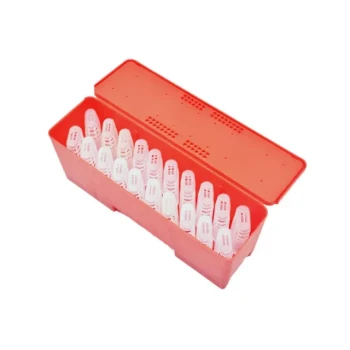
The accuracy of honeybee morphological analysis is entirely dependent on sample preservation. Specialized live bee collection containers and preservation consumables are strictly necessary to maintain the physical structure of the bee, specifically the wings, during the sampling process. Failing to use these specialized tools introduces mechanical damage that corrupts the precise measurements required for valid breed identification.
Morphological analysis relies heavily on the geometric precision of wing vein structures; using standardized sampling consumables is the only way to eliminate measurement errors caused by physical handling and ensure valid breed identification.
The Critical Role of Physical Integrity
Protecting Wing Structures
The primary data source for morphological analysis is the honeybee wing. Specialized containers are designed to house bees in a way that prevents them from damaging these delicate structures.
Eliminating Mechanical Damage
When bees are stressed during collection, they can damage themselves or others if confined in improper vessels. Specialized consumables minimize movement and contact, ensuring the wing integrity remains flawless for microscopic examination.
The Foundation of Breed Identification
Morphology is not just visual inspection; it is a measurement science. Because breed identification depends on specific vein patterns, any physical alteration renders the sample useless for accurate classification.
Ensuring Scientific Validity
Standardization for Accuracy
Using standardized consumables creates a baseline of consistency across all samples. This eliminates variable errors where one sample might be degraded while another is pristine.
Reducing Measurement Errors
Standardized tools remove the "noise" of damaged specimens from your data set. This ensures that any variation observed in the lab is a result of genetic difference, not handling errors.
Understanding the Trade-offs
The Cost of Improper Sampling
While general-purpose containers may be cheaper or more readily available, they introduce a high risk of data invalidation. A crushed wing or a torn vein often requires the researcher to discard the sample and repeat the collection process, doubling the effort and cost.
Precision vs. Convenience
Specialized consumables may require specific procurement channels, but they are an investment in data fidelity. Opting for convenience by using non-specialized tools acts as a false economy, as it compromises the scientific evidence required to validate specific breeds.
Making the Right Choice for Your Goal
To ensure your research withstands scrutiny, align your tools with your analytical objectives.
- If your primary focus is Breed Identification: You must use specialized containers to preserve wing vein structures and prevent mechanical damage.
- If your primary focus is Data Consistency: You should utilize standardized consumables to eliminate variables caused by equipment differences.
Ultimately, the validity of your morphological conclusion is only as strong as the physical integrity of your sample.
Summary Table:
| Feature | Specialized Consumables | General-Purpose Containers |
|---|---|---|
| Wing Integrity | Maintains geometric precision | High risk of mechanical damage |
| Data Validity | Ensures scientific accuracy | Likely to cause data invalidation |
| Measurement Noise | Minimized via standardization | High due to physical handling errors |
| Primary Use Case | Precise breed identification | General observation only |
Secure Your Research Accuracy with HONESTBEE
At HONESTBEE, we understand that the precision of your morphological analysis depends on the quality of your tools. As a premier partner for commercial apiaries and distributors, we provide a comprehensive wholesale range of professional beekeeping machinery, specialized hardware, and essential industry consumables.
Whether you need precision-engineered collection tools to preserve wing vein structures or high-capacity honey-filling machines, our portfolio is designed to enhance your operational efficiency and data fidelity. Don't let improper sampling compromise your scientific evidence.
Contact us today to explore our full spectrum of specialized beekeeping equipment!
References
- Stepan Kerek, Viktor Papp. PREPARATORY STAGES OF ESTABLISHING A TRUE-BRED EXPANSE OF CARPATHIAN BEES WITHIN THE TERRITORY OF KHUST DISTRICT IN THE TRANSCARPATHIAN REGION. DOI: 10.46913/beekeepingjournal.2022.8.05
This article is also based on technical information from HonestBee Knowledge Base .
Related Products
- Plastic Transporting Bee Packages and Nuc Boxes for Beekeeping
- JZBZ Style Professional Battery Box with 20 Shipping Cages
- Classic Glass Honey Jar with Metal Lug Cap for Beehive Storage
- Langstroth Honey Bee Box Hive Boxes for Different Depths
- High-Performance Langstroth Bee Hives for Global Professional Beekeeping
People Also Ask
- What role do bee package boxes play in the commercial transport and expansion of honeybee colonies? - Logistic Essentials
- What are beekeeping boxes called? A Guide to Hive Bodies and Box Types
- How do standardized bee packages serve as a recovery mechanism for commercial beekeeping? Ensure Business Continuity
- What is the commercial value of using standardized bee packages? Drive Scalability in Large-Scale Apiaries
- Why is the timely introduction of high-quality bee packages critical? Save Your Apiary from Asian Hornet Invasions