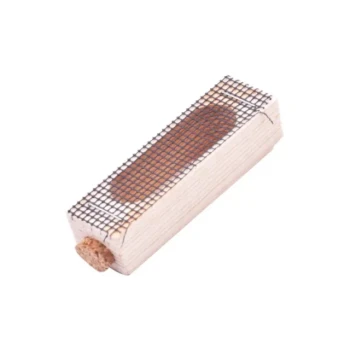
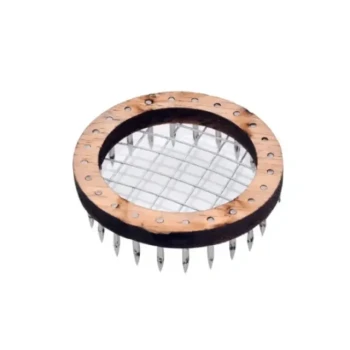
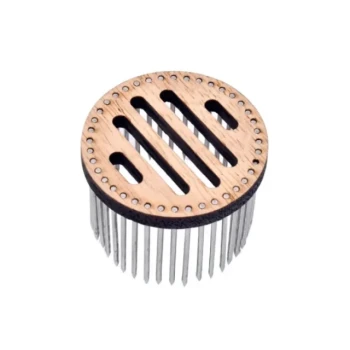
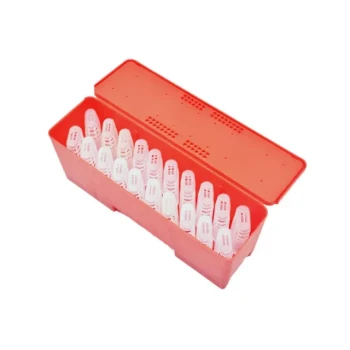
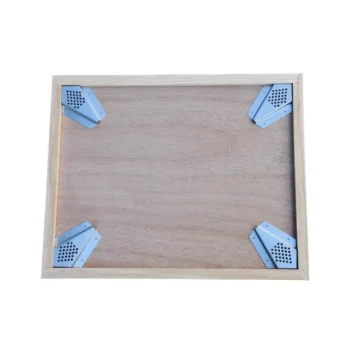
Wooden bee cages with mesh panels are utilized in simulated field studies because they solve the dual challenge of containment and physiological maintenance. The wooden structure provides rigid stability to securely contain the experimental bees, while the mesh panels on the front and rear ensure continuous air circulation. Crucially, this design allows researchers to conduct visual monitoring without physically interfering with the bees, preserving the integrity of the controlled environment.
This equipment is essential for creating a controlled laboratory rearing environment, balancing the need for secure containment with the biological requirement for breathability and the scientific necessity of non-intrusive observation.
Establishing a Stable Research Environment
Structural Stability and Containment
In a simulated field environment, the physical security of the sample is paramount. Wooden frames provide robust structural support that prevents the cage from warping or collapsing during handling.
This rigidity ensures that the bees are securely contained, preventing accidental escapes that could invalidate study data or introduce external variables.
Optimizing Air Circulation
Honeybees are highly sensitive to air quality and temperature. The inclusion of front and rear mesh panels is a deliberate design choice to maximize breathability.
Unlike fully enclosed containers, the mesh promotes airflow, mimicking the ventilation bees might experience in a natural setting while still keeping them within a defined space. This prevents the buildup of humidity or stale air that could compromise bee health during the study.
Non-Interference Observation
One of the greatest challenges in behavioral studies is the "observer effect"—where the act of observing changes the behavior of the subject.
The mesh design facilitates visual observation without the need to open the cage. Researchers can monitor health, movement, and interactions without introducing physical stress or altering the internal environment, ensuring the data collected reflects natural biological responses.
Understanding the Scope and Limitations
The Difference Between Rearing and Field Hives
It is important to distinguish the wooden mesh cage from a standard hive. While the cage is ideal for controlled rearing and observation, it is not a substitute for a standardized ten-frame Langstroth hive.
Langstroth hives are used when the goal is to compare colony-level biological indicators, such as adult bee mass or brood area, across different treatment groups in an open field setting.
Specificity of Data Collection
While the wooden cage allows for visual health checks, it is not designed for quantitative mortality collection in the wild.
For studies specifically focused on counting dead bees to measure pesticide impact or pathogen infestation, specialized bee traps are required. These devices prevent scavengers (like birds) from removing carcasses, ensuring accurate mortality counts that a simple mesh cage cannot guarantee in an open environment.
Selecting the Right Equipment for Your Study
To ensure the validity of your honeybee health study, align your equipment choice with your specific data requirements:
- If your primary focus is controlled observation: Prioritize wooden mesh cages to maintain air circulation and allow for visual monitoring without disturbing the bees.
- If your primary focus is colony-level biological metrics: Utilize standardized Langstroth hives to ensure uniform internal space for comparing brood area and biomass.
- If your primary focus is mortality quantification: Implement specialized bee traps to prevent scavenger interference and secure accurate death counts.
Success in honeybee health research relies on selecting containment tools that minimize stress on the subject while maximizing the accuracy of your data.
Summary Table:
| Feature | Benefit for Research | Application |
|---|---|---|
| Wooden Frame | Ensures structural rigidity & prevents containment failure | Controlled lab rearing & observation |
| Mesh Panels | Promotes air circulation & mimics natural ventilation | Maintaining physiological health |
| Visual Design | Allows non-intrusive monitoring without disturbing bees | Behavioral & health response studies |
| Versatility | Supports secure containment while facilitating feeding | Simulated field environment testing |
Elevate Your Research with HONESTBEE Precision Equipment
Success in honeybee health studies depends on equipment that maintains biological integrity. HONESTBEE specializes in supporting commercial apiaries and distributors by providing a comprehensive range of beekeeping tools, from specialized wooden rearing cages to industrial honey-filling machines.
Whether you are scaling a commercial operation or supplying the latest beekeeping innovations, our portfolio covers everything from essential consumables to advanced hive-making hardware. Contact us today to discuss how our wholesale solutions can enhance your efficiency and scientific accuracy.
References
- Fiona Lupi-Peate. Effects of Hydroxymethylfurfural in High Fructose Corn Syrup on Honeybee Health. DOI: 10.4079/2578-9201.1(2022).04
This article is also based on technical information from HonestBee Knowledge Base .
Related Products
- Classic Wooden and Mesh California Queen Cage
- Wood and Mesh Push-In Queen Cage
- HONESTBEE Wooden Bee Escape Board with Triangle Mesh Design for Beekeeping
- Assembled Wooden Bee Frames with Beeswax Foundation Ready to Use by HONESTBEE
- Assembled Wooden Bee Frames with Plastic Foundation for Durability and Convenience by HONESTBEE
People Also Ask
- How are queen cages used to protect newly hatched queens? Secure Your Virgin Queens During Development
- Why are queen cages or grid cages used in bee studies? Achieve Precise Biological Data for Research
- Why are professional queen cages necessary for queen replacement? Secure Your Apiary’s Future
- What should be done if bees damage the queen cage? Secure Your Queen with These Emergency Intervention Steps
- What is the correct procedure for installing a queen cage into a new hive? A Pro Guide for Colony Success