Commercial apiary operators move from clay-cylinder and other fixed-comb hives to Langstroth boxes because Langstroth systems make colonies inspectable, harvestable, transportable, and scalable. Removable frames allow beekeepers to examine brood and honey without destroying the comb, manage pests and diseases more systematically, and use centrifugal extraction equipment. Standardized boxes also support stacking, mechanized handling, colony transport, and repeatable production across large apiaries.
Traditional fixed-comb hives limit visibility, harvesting efficiency, and operational scale. Langstroth hives convert beekeeping into a modular production system in which frames, boxes, extraction equipment, and transport processes work together.
Why Fixed-Comb Hives Limit Commercial Growth
Inspections are destructive or highly disruptive
Clay cylinders, hollow logs, and similar primitive hives generally do not provide removable frames. Inspecting the brood nest or locating stored honey may require cutting into or severely disturbing the comb.
That makes it difficult to assess queen performance, colony strength, food reserves, and emerging disease problems while preserving the colony’s structure.
Harvesting damages valuable comb
In fixed-comb systems, honey harvesting commonly involves cutting, crushing, or removing comb from the hive. The colony must then rebuild much of that comb before returning to full honey production.
This diverts bee energy from nectar collection and can increase colony stress and mortality. It also makes consistent, high-volume harvesting more difficult.
Manual handling restricts throughput
Traditional hives can be practical in small-scale or low-input settings, but their fixed architecture creates bottlenecks for commercial operators managing dozens, hundreds, or thousands of colonies.
Each inspection and harvest requires more manual labor, while standardized processing equipment cannot be integrated efficiently.
How Langstroth Hives Improve Apiary Management
Removable frames enable non-destructive inspections
Langstroth frames can be lifted, rearranged, replaced, or returned to the same hive. Operators can inspect brood patterns, monitor queen performance, evaluate colony strength, and identify problems without destroying the comb.
This provides better management information and supports earlier intervention when colonies show signs of weakness or disease.
Disease and pest monitoring become more systematic
Movable frames make it easier to inspect for conditions such as Varroa mites and brood diseases, including foulbrood. Beekeepers can examine affected areas, isolate or replace frames, and apply approved management practices more precisely.
The hive design does not eliminate disease risk. Its advantage is that it gives operators better access and control.
Comb can be reused after extraction
Langstroth frames can be placed in centrifugal honey extractors, allowing honey to be removed while leaving the comb largely intact. The frames can then be returned to the colony.
Reusing drawn comb reduces the energy bees must spend rebuilding wax. This helps direct more colony resources toward brood rearing and honey production.
Why Standardization Matters at Commercial Scale
Components are modular and interchangeable
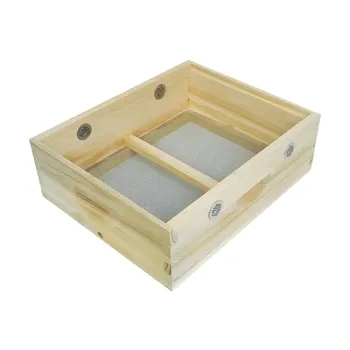
A Langstroth apiary can use standardized boxes, frames, supers, bottom boards, covers, and other woodenware components. These parts can be stacked, repaired, replaced, and reorganized according to colony strength and seasonal conditions.
For commercial operators, this modularity simplifies inventory management and reduces dependence on individually crafted hive structures.
Equipment integrates with honey-processing systems
Standard framed honeycombs are compatible with common commercial equipment, including:
- Centrifugal honey extractors
- Uncapping machines
- Honey filtering and filling systems
- Palletized transport and storage systems
By contrast, top-bar and fixed-comb systems often require manual cutting, pressing, or crushing, which limits mechanical throughput and may produce more variable product quality.
Uniform dimensions improve logistics
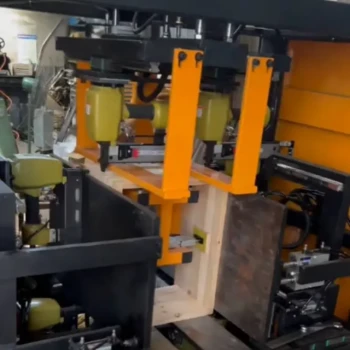
Precision-manufactured Langstroth boxes provide consistent dimensions and predictable fit between hive components. Uniform equipment is easier to stack, transport, repair, and deploy across high-density apiaries.
For distributors and wholesalers, standardized production also supports reliable sourcing, repeat orders, replacement-part availability, and broader customer compatibility.
Colonies can be transported more efficiently
Commercial apiaries may move colonies for pollination contracts, seasonal forage, or regional production. Langstroth boxes are designed for secure stacking and practical handling during transport.
This makes them better suited to mobile commercial operations than irregular clay, log, or earthen hives.
The Business Case for Commercial Apiaries
Higher productivity depends on management, not the box alone
Langstroth hives can support substantially greater honey production than many traditional fixed-comb systems because they enable better inspections, comb reuse, colony expansion, and timely harvesting.
However, actual yield depends on forage availability, climate, colony genetics, nutrition, disease control, labor quality, and seasonal management. The hive design is an enabling platform, not a guarantee of a specific yield.
Labor becomes more productive
With removable frames and standardized equipment, workers can inspect, manipulate, harvest, and prepare colonies using repeatable procedures. This reduces the time and disruption associated with cutting into individual fixed-comb hives.
The resulting labor efficiency becomes increasingly important as the number of colonies grows.
Product quality and sanitation improve
Langstroth equipment supports cleaner separation of brood comb and honey supers, more controlled harvesting, and easier replacement of damaged or contaminated frames. These practices can improve sanitation and help commercial operators maintain more consistent honey and beeswax quality.
They also make it easier to establish standard operating procedures across multiple apiary sites.
Operations become easier to scale
A commercial apiary needs more than productive colonies. It needs repeatable equipment, predictable maintenance, compatible processing machinery, and dependable replacement components.
Langstroth systems provide a common hardware platform around which operators can build purchasing, training, transport, extraction, and fulfillment processes.
Understanding the Trade-offs
The transition requires capital
Moving from clay cylinders to Langstroth boxes involves purchasing hives, frames, stands, protective equipment, tools, transport accessories, and potentially extraction machinery.
Operators should evaluate the transition as an integrated system rather than buying boxes without planning for frame management, harvesting, storage, and maintenance.
Standardization requires operational discipline
Langstroth equipment is only effective when components are built to consistent dimensions and maintained properly. Poorly manufactured boxes, warped frames, incompatible parts, or inaccurate spacing can reduce efficiency and create additional labor.
For commercial buyers, supplier quality, dimensional consistency, material durability, and after-sales support are important purchasing criteria.
Management demands more technical knowledge
Modern hives provide access to more information, but operators must know how to interpret it. Colony inspections, frame manipulation, Varroa monitoring, queen management, feeding, and seasonal supering require trained personnel.
The system increases control; it does not replace competent beekeeping.
Local conditions still matter
Langstroth hives are widely used, but the best configuration may vary with climate, bee strain, forage conditions, and local management practices. Box size, ventilation, insulation, equipment materials, and transport methods should be selected for the operating environment.
A standardized platform should not be confused with a one-size-fits-all management program.
Choosing Equipment for a Scalable Apiary
A successful transition should align hive purchases with the apiary’s processing, labor, transport, and growth plans.
- If your primary focus is higher honey productivity: Choose movable-frame Langstroth equipment and prioritize comb reuse, regular inspections, strong colony management, and compatible extraction machinery.
- If your primary focus is disease and pest control: Select hive components that provide reliable frame access and establish inspection procedures for Varroa mites and brood diseases.
- If your primary focus is mechanized harvesting: Standardize box and frame dimensions across the apiary so they integrate with extractors, uncapping equipment, and filling systems.
- If your primary focus is mobile pollination services: Use durable, stackable hive boxes and transport accessories designed for secure movement between locations.
- If your primary focus is procurement and resale: Work with suppliers capable of providing a full range of compatible boxes, frames, woodenware, machinery, replacement parts, and responsive order fulfillment.
- If your primary focus is long-term operational reliability: Evaluate dimensional precision, lumber quality, durability, delivery speed, technical support, and the supplier’s ability to maintain consistent inventory.
For commercial operators, Langstroth hives are valuable because they turn colony management, honey extraction, and apiary logistics into a coordinated, repeatable system.
Summary Table:
| Aspect | Traditional Fixed-Comb Hives | Langstroth Hive Boxes |
|---|---|---|
| Inspection | Destructive or disruptive | Non-destructive with removable frames |
| Harvesting | Cutting/crushing comb | Centrifugal extraction preserves comb |
| Scalability | Limited by manual handling | Modular, standardized, transportable |
| Disease Control | Difficult to access | Systematic monitoring and management |
| Equipment Integration | Minimal | Compatible with extractors and processing |
| Business Suitability | Small-scale, low-throughput | Commercial, high-throughput operations |
Ready to upgrade your apiary with high-quality Langstroth equipment? At HONESTBEE, we offer a comprehensive range of premium beekeeping tools, machinery, and supplies tailored for commercial apiaries and distributors. Our one-stop sourcing ensures consistent supply, fast delivery, and expert support. Whether you need hive components, extractors, or full processing lines, we help you improve efficiency and profitability. Contact us today to discuss your needs and get a customized quote.
Related Products
- Australian Langstroth Beehive Boxes for Beekeeping Wholesales
- High-Performance Langstroth Bee Hives for Global Professional Beekeeping
- Langstroth Honey Bee Box Hive Boxes for Different Depths
- Professional Observation Hive: The Ultimate Portable Solution for Beekeeping Education, Exhibitions, and Colony Displays
- 5 Frame Langstroth Poly Nuc Corrugated Plastic Nuc Boxes
People Also Ask
- What are the differences between the three standard depths of Langstroth boxes? Choose the Best Size for Your Apiary
- What are the primary advantages of using standardized Langstroth boxes? Scale Your Commercial Beekeeping Operation
- What role do standardized Langstroth boxes play in commercial apiary management and honey bee research? | HONESTBEE Guide
- How many beehive boxes are needed when starting a new hive? A Guide to Proper Hive Setup
- What are the disadvantages of using a combination of deep and medium boxes? Avoid Costly Incompatibility Issues