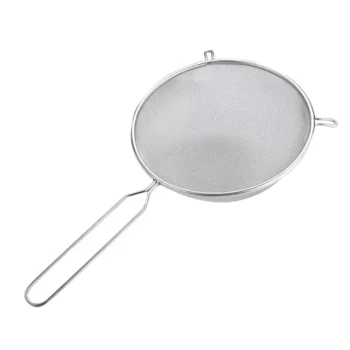
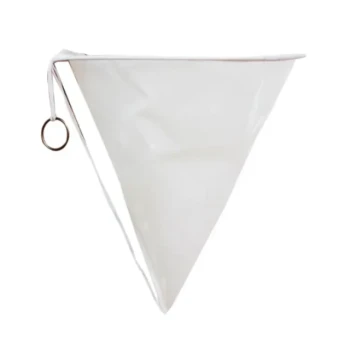
A 0.5mm precision sieve is essential for pre-treating honey because it mechanically removes coarse physical contaminants—specifically wax pieces and bee body fragments—that are suspended in the high-viscosity fluid. By filtering these impurities out, you prevent them from interfering with the delicate optical paths of refractometers or skewing mass detection in density meters, ensuring the sample is physically uniform before analysis.
Precision measurement requires a homogeneous sample. Pre-treating honey with a sieve eliminates structural inconsistencies, ensuring that Total Soluble Solids (TSS) readings reflect the chemistry of the honey rather than the presence of random debris.
The Impact of Impurities on Precision
Optical Interference in Refractometry
Refractometers calculate TSS by measuring how light bends (refracts) as it passes through a liquid. Suspended solids disrupt this process.
Debris such as wax or organic matter can block or scatter the light beam. This scattering prevents the instrument from obtaining a clear "shadow line" or digital reading, resulting in fluctuating or inaccurate data.
Deviations in Density Measurements
Density meters rely on a known volume-to-mass ratio to determine purity and sugar content. Particulates introduce a variable density.
A fragment of wax has a significantly different density than the honey matrix. If these fragments are present in the sample chamber, the instrument measures the average density of the honey plus the debris, rather than the honey alone.
Why Uniformity Drives Reliability
Ensuring Repeatability
The primary goal of laboratory testing is repeatability—getting the same result multiple times on the same sample. Coarse impurities cause random error.
Without sieving, one sample drop might contain a bee fragment while the next does not. This inconsistency makes it impossible to verify if a batch meets quality standards.
Protecting Sensitive Instrumentation
High-precision instruments often feature delicate prisms or narrow intake tubes. Pre-treatment acts as a safety barrier.
By removing "coarse impurities" before the sample enters the device, you protect the optical surfaces from scratches and prevent flow systems from clogging.
Understanding the Trade-offs
Viscosity and Processing Time
The major trade-off when using a 0.5mm sieve is the increase in preparation time.
High-viscosity honey resists flowing through fine mesh. This often necessitates waiting for gravity filtration or applying gentle warmth (within allowable limits) to facilitate flow, which can slow down high-volume testing environments.
The Risk of Air Entrainment
The mechanical action of sieving thick fluids can introduce air bubbles. Bubbles are just as disruptive as solid debris.
While the sieve removes solids, the user must ensure that the strained honey is allowed to settle so that micro-bubbles rise to the surface and are not drawn into the measuring instrument.
Optimizing Your Quality Control
To ensure your Total Soluble Solids data is definitive, apply the following logic to your workflow:
- If your primary focus is Data Accuracy: Mandate the use of the 0.5mm sieve for every batch to eliminate outlier readings caused by organic debris.
- If your primary focus is Instrument Longevity: Use sieving to prevent abrasive particulates from contacting the prism or sensor surfaces of your refractometer.
Uniform samples yield the only data worth trusting.
Summary Table:
| Feature | Impact on TSS Measurement | Benefit of 0.5mm Sieving |
|---|---|---|
| Physical Purity | Wax & bee fragments skew density and mass | Removes coarse debris for a homogeneous sample |
| Optical Clarity | Suspended solids scatter light in refractometers | Ensures a clear shadow line for precise Brix/TSS data |
| Data Consistency | Random impurities cause fluctuating results | Eliminates outliers and ensures high repeatability |
| Tool Protection | Abrasive particles can scratch prisms/sensors | Acts as a safety barrier for sensitive lab equipment |
Elevate Your Honey Quality Control with HONESTBEE
At HONESTBEE, we understand that precision in the lab translates to value in the market. As a premier partner for commercial apiaries and global distributors, we provide more than just tools—we provide the competitive edge needed for high-volume honey production and processing.
Our comprehensive wholesale portfolio includes:
- Precision Processing Machinery: From honey-filling machines to industrial-grade filtration systems.
- Professional Hardware: High-durability hive-making equipment and specialized beekeeping tools.
- Essential Consumables: A full spectrum of industry-standard supplies to keep your operations seamless.
- Cultural Merchandise: Unique honey-themed products to diversify your retail offering.
Whether you are scaling a commercial apiary or stocking a distribution network, our expert team is ready to support your growth with reliable, high-performance equipment.
Contact HONESTBEE today to optimize your honey production line!
References
- E. Nafea, S. Elsayeh. The Physical and Chemical Properties of Bee Honey Produced in North SinaiGovernorate, Egypt. DOI: 10.36632/mejas/2023.13.4.40
This article is also based on technical information from HonestBee Knowledge Base .
Related Products
- 0.5T Capacity Honey Dehumidifier Dryer with Vacuum Heating and Thickening Filtering Machine
- Professional Stainless Steel Honey Filter with Support Handle
- Stainless Steel Double Layer Honey Strainer Sieve Filters
- Stainless Steel Triangle Support Honey Strainer and Filters
- Professional Cone-Shaped Honey Filter with Reinforced Steel Ring
People Also Ask
- What is the primary function of professional dehumidification equipment in honey processing? Stability & Quality
- How to dry up honey? The Safe Guide to Stabilizing Honey and Preventing Fermentation
- What is the process for using a dehumidifier to lower honey's moisture content? Expert Drying Techniques
- How to decrease moisture in honey? Prevent Fermentation and Ensure Long-Term Quality
- How to remove humidity from honey? Protect Your Harvest from Fermentation