Replicating the authentic environment of a honeybee colony is the cornerstone of modern apicultural research.
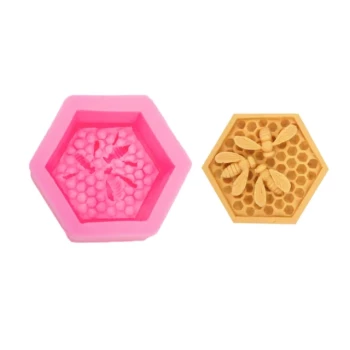
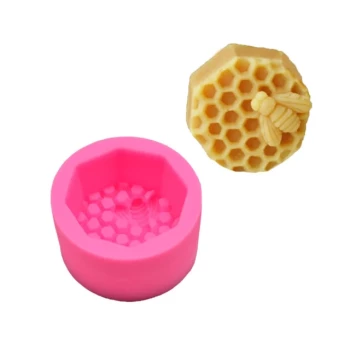
A beehive foundation mold is essential because it uses physical molding technology to transform experimental beeswax into standardized foundation sheets that replicate the honeycomb’s natural geometry. This allows honeybee larvae to develop in direct contact with the wax, creating a realistic field-simulated model that is critical for accurately evaluating how chemical residues and environmental stressors impact larval growth and health.
Core Takeaway: By providing a precise physical guide for honeycomb construction, the foundation mold ensures that research environments are biologically authentic and scientifically standardized, eliminating variables that could otherwise compromise data integrity.
Replicating Natural Biology for Research Precision
Direct Contact and Residue Evaluation
The primary function of a foundation mold is to ensure larvae develop in an environment that mirrors a natural hive. Because the mold creates a standardized hexagonal base, researchers can incorporate specific chemical concentrations directly into the wax.
This setup allows scientists to observe the direct interaction between larvae and the wax surface. It provides a definitive way to measure the bioaccumulation of pesticides or the effects of environmental toxins over a 21-day development cycle.
Establishing Realistic Field-Simulated Models
Research accuracy depends on the ability to move a study from a laboratory setting to a simulated field environment. The mold produces the exact physical structure worker bees require to build uniform combs.
By establishing this baseline, researchers can attribute changes in larval survival or worker bee fitness to biological factors rather than inconsistencies in the hive's physical architecture.
The Value of Standardization in Colony Modeling
Eliminating Experimental Variables
Standardized hardware, such as fixed-dimension frames (e.g., 366 x 222 mm), ensures that the colony scale remains consistent across all test groups. When every hive has the same number of larval combs, the "colony potential" is unified.
This level of control minimizes experimental errors. It ensures that differences in honey storage or brood area are a result of the experimental variables being tested, such as parasitic infections, rather than spatial differences.
Optimizing Internal Hive Dynamics
A stable, molded foundation supports the bees' ability to perform essential tasks like ventilation and temperature control. These structural guides reduce the physiological energy bees must spend on secreting wax.
By using factory-precision molds, the resulting combs are straight and parallel. This facilitates the interchangeability of combs between hives, a necessity for large-scale research projects and mechanized honey extraction.
Understanding the Trade-offs
Manual vs. Industrial Precision
While manual molds offer flexibility for small-batch experimental wax, they may lack the geometric consistency of high-precision industrial pressing processes. Inconsistent cell dimensions can lead to irregular comb building, which disrupts the hive's thermal balance.
Material Integrity and Contamination
The quality of the mold itself is a critical factor. If a mold is not made from high-grade, food-safe materials, it can introduce external contaminants into the experimental wax. This undermines the very research intended to study chemical purity and larval health.
Partnering for Professional Success
Distributors and wholesalers play a vital role in the research supply chain by providing access to full-spectrum product portfolios. Sourcing from a partner with deep professional industry expertise ensures that the hardware meets the rigorous standards required for scientific validation.
Resellers should prioritize suppliers who offer rapid response times and ultra-fast delivery. In the world of biological research, the timing of hive initialization is critical, and efficient order fulfillment is the difference between a successful study and a missed season.
How to Apply This to Your Business Strategy
- If your primary focus is Research Supply: Prioritize foundation molds that offer the highest geometric precision to ensure your clients can achieve repeatable, standardized results across multiple colonies.
- If your primary focus is Commercial Beekeeping: Emphasize the efficiency gains of standardized foundations, specifically focusing on how they reduce bee energy expenditure and facilitate mechanized harvesting.
- If your primary focus is Business Growth: Partner with a one-stop-source provider that can deliver a comprehensive range of hardware rapidly, allowing you to respond to market demands without maintaining excessive overhead.
By integrating high-precision foundation molds into your inventory, you provide your clients with the essential tools needed to bridge the gap between laboratory theory and authentic biological reality.
Summary Table:
| Key Feature | Research Benefit | Commercial & Distributor Value |
|---|---|---|
| Standardized Geometry | Eliminates variables in larval growth | Ensures uniform comb for mechanized extraction |
| Direct Wax Contact | Enables accurate bioaccumulation testing | Guarantees hardware compatibility and scaling |
| Precision Molding | Replicates authentic biological environments | Minimizes bee energy expenditure and wax waste |
| Food-Grade Material | Prevents external chemical contamination | High-durability equipment with professional certifications |
Scale Your Success with HONESTBEE’s One-Stop Sourcing
Elevate your inventory with HONESTBEE, the premier partner for commercial apiaries, distributors, and B2B resellers. We provide a comprehensive, full-spectrum product portfolio designed to meet the rigorous demands of both scientific research and large-scale honey production.
Why Partner with HONESTBEE?
- Unmatched Selection: From high-precision foundation molds and hive-making machines to honey-filling hardware and cultural merchandise.
- Deep Industry Expertise: Our team understands the technical nuances of apiculture to support your most complex sourcing needs.
- Efficiency at Scale: Benefit from rapid response times, ultra-fast delivery, and dedicated customer service to keep your supply chain moving.
- B2B Focused: We offer competitive wholesale pricing, OEM/ODM support, and reliable fulfillment to maximize your profit margins.
Ready to enhance your supply capabilities? Contact us today to discuss your wholesale needs!
References
- Noëmie El Agrebi, Claude Saegerman. A field realistic model to assess the effects of pesticides residues and adulterants on honey bee gene expression. DOI: 10.1371/journal.pone.0302183
This article is also based on technical information from HonestBee Knowledge Base .
Related Products
- Colorful Silicone Beeswax Foundation Mold Mould for Beekeeping
- Notebook Style Beeswax Foundation Mould Wax Foundation Mold
- HONESTBEE Wired and Assembled Wooden Bee Frames Foundation for a Thriving Hive
- Beeswax Foundation Sheets Beehive Foundation for Wholesale
- Assembled Wooden Bee Frames with Plastic Foundation for Durability and Convenience by HONESTBEE
People Also Ask
- How do beeswax foundation molds facilitate the construction of standardized honeycombs? Optimize Your Apiary Efficiency
- How do you use the Foundation Mold to create beeswax foundation? Master DIY Beekeeping with Precision
- How can beeswax value-addition processes be utilized to increase beekeeping revenue? Boost Your Apiary Profitability
- What is the first tip for pouring beeswax into a silicone mold? Ensure a Perfect Release
- Why are specific wax foundation molds used to downsize brood cells? Master Mechanical Pest Inhibition