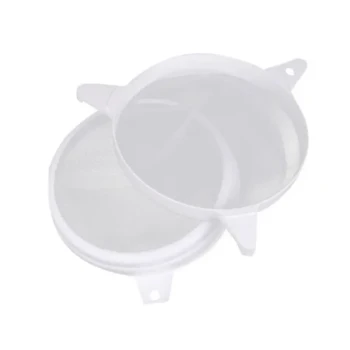
Foundational purity is the primary objective. A funnel equipped with a filter mesh is critical during the initial transfer of forest honey into storage containers to physically separate macro-impurities. By capturing contaminants such as bee fragments, beeswax debris, and forest detritus immediately after harvest, this tool establishes the baseline hygiene required for a high-quality product.
The use of a filter funnel is not merely a procedural step; it is a quality control checkpoint that eliminates physical contaminants while preserving the honey's essential natural properties for subsequent analysis or sale.
The Mechanics of Preliminary Purification
Removing Physical Contaminants
Harvesting forest honey is an inherently messy process that introduces foreign matter into the raw product.
The primary function of the filter mesh is to intercept solid impurities generated during extraction. This includes beeswax fragments, propolis residues, and parts of bees that inevitably mix with the honey.
Protecting the Storage Environment
Using a funnel with a built-in filter is essential when transferring honey into large-capacity storage containers.
By filtering at this specific stage, you prevent organic debris from settling in the bulk storage. This ensures that the honey remains stable and clean, preventing the degradation that can occur if organic matter is left to decompose within the liquid.
Balancing Purity with Natural Composition
Selective Filtration Strategy
The effectiveness of this process relies on the calibration of the mesh, often utilizing screens with a pore size of approximately 1 mm.
This specific size is chosen to strike a critical balance. It is fine enough to stop wax and bee parts but coarse enough to allow natural pollen grains to pass through.
Preserving Nutritional Integrity
Unlike ultra-filtration which strips honey of its identity, this primary processing method maintains the product's nutritional profile.
Retaining pollen is vital for verifying the botanical origin of the forest honey. It ensures the raw sample remains authentic for future quality and nutritional analysis.
Impact on Sensory Quality
Enhancing Visual Appeal
Raw honey containing suspended solids can appear cloudy or dirty, which is unappealing to consumers.
The filtration process ensures the honey achieves a clear and attractive appearance. This is a requisite step for meeting commercial sensory standards.
Improving Texture
Beyond optics, the presence of wax or propolis creates a gritty, unpleasant mouthfeel.
Filtering ensures the final product possesses a smooth texture. This consistency is necessary for the honey to be considered high-grade and commercially viable.
Understanding the Trade-offs
The Risk of Over-Filtration
While removing debris is necessary, using a mesh that is too fine during this stage can be detrimental.
Excessive filtration can strip the honey of its unique forest characteristics, specifically pollen. This reduces the nutritional value and makes it difficult to trace the honey's origin.
Flow Rate Challenges
Filtering raw, viscous forest honey requires patience and the right equipment.
A mesh clogged with wax debris can significantly slow down the transfer process. It is essential to monitor the funnel to maintain efficiency without compromising the physical clarity of the batch.
Making the Right Choice for Your Goal
Whether you are preparing honey for a laboratory or a storefront, the filtration method dictates the final outcome.
- If your primary focus is Commercial Sale: Prioritize filtration that removes all visible propolis and wax to ensure a smooth texture and clear, marketable appearance.
- If your primary focus is Scientific Analysis: Ensure your mesh size allows for the retention of pollen grains to permit accurate botanical and nutritional profiling.
- If your primary focus is Bulk Storage: Use the funnel to remove organic bee fragments immediately to prevent contamination or spoilage during long-term holding.
Proper filtration transforms raw forest extract into a stable, clean, and valuable resource.
Summary Table:
| Feature | Primary Function | Benefit |
|---|---|---|
| Physical Separation | Filters bee parts, wax, and forest debris | Ensures baseline hygiene and product purity |
| Mesh Calibration | Typically 1mm pore size | Removes macro-impurities while retaining pollen |
| Sensory Enhancement | Eliminates suspended solids | Improves visual clarity and creates a smooth texture |
| Storage Stability | Prevents organic settling | Protects bulk honey from degradation and spoilage |
| Origin Verification | Selective filtration | Maintains botanical identity for scientific analysis |
Elevate Your Honey Production with HONESTBEE
For commercial apiaries and distributors, achieving the perfect balance between purity and natural integrity is key to market success. HONESTBEE provides the professional-grade tools you need to streamline your primary processing.
From high-efficiency filter funnels and specialized hardware to advanced honey-filling machines and hive-making equipment, we offer a comprehensive wholesale portfolio designed for large-scale operations. Whether you are looking for durable beekeeping tools or honey-themed cultural merchandise to enhance your brand, we are your dedicated industry partner.
Ready to scale your apiary or distribution business?
Contact HONESTBEE Today for Custom Wholesale Solutions
References
- Syifa Saputra. Strategi Pemasaran Madu Hutan Sialang Di Desa Dundangan Kecamatan Pangkalan Kuras Kabupaten Pelalawan Propinsi Riau. DOI: 10.25299/jaaa.2023.13970
This article is also based on technical information from HonestBee Knowledge Base .
Related Products
- Electric Double Wall Honey Filtering Machine Purifier Equipment for Honey Processing Plant
- Professional Honey Filter with Tripod Support Stand
- 0.5T Capacity Honey Dehumidifier Dryer with Vacuum Heating and Thickening Filtering Machine
- Honey Concentrating and Filtering Dehumidifier Machine 2T Capacity for Honey
- Professional Stainless Steel Honey Filtering Machine with Water Bath Heating for Beekeeping
People Also Ask
- What types of equipment are used in honey filtering? Build an Efficient System for Pure, Marketable Honey
- What is the process of filtering honey? A Guide to Clean, Pure, and Market-Ready Honey
- What is the overall importance of using the right equipment in honey filtering? Boost Quality & Marketability
- What is a potential concern associated with filtering honey? Balancing Clarity and Pollen Preservation
- What steps are involved in maintaining honey filtering equipment? A Guide to Protecting Your Honey Quality