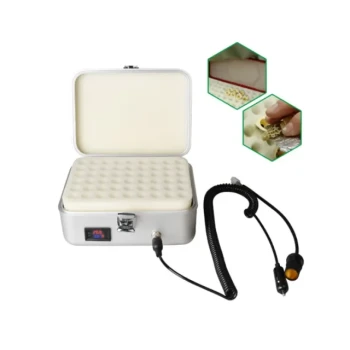
A high-precision constant temperature and humidity incubator is essential for honey bee rearing experiments because it rigorously simulates the stable microenvironment of a natural beehive, typically maintaining conditions around 34±1°C and 66±1% humidity. This precision eliminates environmental variance, ensuring that data regarding survival rates and oxidative stress markers reflects the actual impact of infections or supplements rather than temperature shock or dehydration.
By stabilizing the physical environment, these incubators act as a fundamental control mechanism. They remove the "noise" of environmental stress, allowing researchers to attribute physiological changes directly to the experimental variables being tested.
Replicating the Colony Microenvironment
The Necessity of Thermal Stability
Honey bees, particularly developing larvae and pupae, have evolved to thrive in a tightly regulated hive environment. A high-precision incubator replicates this by maintaining a constant temperature, often set to 34±1°C.
This stability is critical because even minor fluctuations can induce thermal stress. By removing temperature spikes or drops, you prevent developmental abnormalities that would otherwise skew your research data.
Humidity Control and Dehydration Prevention
Temperature is only half the equation; maintaining relative humidity (often around 66±1%) is equally vital. Without precise humidity control, individual bees are at high risk of rapid dehydration.
Consistent humidity ensures that the bees' physiological processes function normally. It creates a baseline where the bee's hydration status is not a variable, but a constant.
Ensuring Data Integrity and Experimental Success
Isolating Experimental Variables
The primary goal of many rearing experiments is to test specific factors, such as the efficacy of nutritional extracts or the impact of infections. If the environment fluctuates, it creates oxidative stress markers unrelated to your experiment.
High-precision incubators eliminate this interference. When environmental stress is removed, any change in survival rates or health markers can be accurately attributed to your specific experimental treatment.
Maintaining Feed Stability
Beyond the biology of the bee, the incubator protects the physical state of experimental feed. Humidity levels between 55% and 65% prevent liquid diets from drying out or hardening.
This ensures that the bees can access nutrients consistently throughout the study. It guarantees that intake data is accurate and not the result of the feed becoming physically unconsumable.
Applications in Queen Rearing
Protecting Sensitive Pupation Stages
Queen bee larvae are exceptionally sensitive during pupation and emergence. High-precision incubators provide a stable sanctuary, often outperforming the consistency of a natural colony during erratic weather.
By maintaining conditions such as 33°C to 34°C, these units prevent emergence failure. This leads to a higher rate of successful emergence and more uniform biological samples.
Batch Management and Safety
Using an incubator allows for the isolation of queen cells after capping. This prevents the natural behavior where the first emerging virgin queen kills her rivals.
Researchers can manage large batches of queens efficiently. It ensures every queen develops under optimal conditions without the risk of in-hive aggression.
Understanding the Trade-offs
The "Simulation" Limit
While incubators mimic temperature and humidity, they cannot perfectly replicate the complex social and pheromonal environment of a living colony. Results obtained in vitro should always be contextualized as occurring in a simplified environment.
Parameter Sensitivity
The optimal settings cited in literature vary slightly (e.g., humidity ranging from 40% to 75% depending on the specific developmental stage). Rigid adherence to a single setpoint without calibration for your specific bee strain or life stage can lead to suboptimal results.
Making the Right Choice for Your Goal
To maximize the value of your incubator, align the settings with your specific research objective:
- If your primary focus is nutritional or infection research: Prioritize 34±1°C and 66±1% humidity to minimize oxidative stress and ensure feed consistency.
- If your primary focus is Queen Rearing: Utilize settings around 33-34°C to maximize emergence rates and use the incubator to isolate queens for batch management.
- If your primary focus is Larval Development: Ensure humidity does not drop below 55% to prevent desiccation of the delicate larval skin and food.
Success in honey bee rearing relies not just on the experiment itself, but on the absolute rigorous control of the environment in which it takes place.
Summary Table:
| Parameter | Ideal Range | Impact on Research |
|---|---|---|
| Temperature | 33°C - 34°C (±1°C) | Prevents developmental abnormalities and thermal stress. |
| Humidity | 55% - 66% (±1%) | Prevents dehydration and maintains feed consistency. |
| Environment | Controlled Microenvironment | Eliminates oxidative stress markers and environmental "noise." |
| Application | Queen Rearing | Protects sensitive pupation stages and enables batch management. |
Elevate Your Beekeeping Operations with HONESTBEE
At HONESTBEE, we understand that precision is the foundation of successful beekeeping and scientific research. We specialize in supporting commercial apiaries and global distributors with a comprehensive wholesale portfolio designed for professional success.
Our expertise extends across the entire industry spectrum:
- Advanced Machinery: High-efficiency hive-making and honey-filling machines.
- Professional Equipment: A full range of specialized beekeeping tools and hardware.
- Essential Consumables: Every item needed to maintain a thriving commercial operation.
- Honey Culture: Unique honey-themed merchandise to expand your brand's reach.
Whether you are scaling a commercial colony or equipping a distribution network, HONESTBEE provides the reliability and innovation you need to succeed.
Contact HONESTBEE Today to Discuss Your Wholesale Needs
References
- Uroš Glavinić, Zoran Stanimirović. Oxidative status of honey bees infected with Nosema ceranae microsporidium and supplemented with Agaricus bisporus mushroom extract. DOI: 10.2298/vetgl220715013g
This article is also based on technical information from HonestBee Knowledge Base .
Related Products
- Portable Queen Bee Incubator with 12V Car Adapter for Safe Transport
- Plastic Beekeeping Honey Bee Larvae Grafting Tools for Queen Rearing and Chinese Grafting
- Precision Honey Refractometer Instrument for Quality Assessment
- HONESTBEE Commercial Upright Honey Melter
- HONESTBEE AC Powered Wire Embedder with Alligator Clips
People Also Ask
- What happens if a colony loses its queen during the nectar flow? A Guide to Salvaging Your Honey Harvest
- How can you tell if the worker bees have accepted the queen? Decode Bee Behavior for a Thriving Hive
- How can the queenless state of a newly created nuc be resolved? Expert Solutions for Colony Growth
- What are the primary reasons for replacing a queen bee? Boost Your Commercial Honeybee Colony's Success
- What queen bee behaviors should be observed after introduction? Ensure Hive Success with Our Expert Monitoring Guide