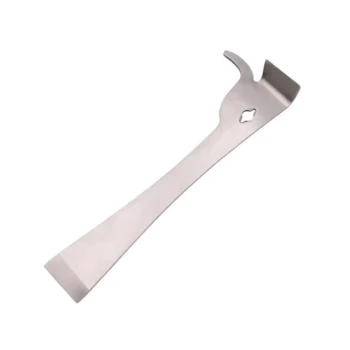
In an emergency, you can use a large flathead screwdriver, a small pry bar, or even a sturdy pocket knife as a substitute for a hive tool. While these common tools can perform specific functions like prying or cutting, they are poor replacements. A dedicated hive tool is a specialized multi-tool engineered for the unique combination of force and finesse that beekeeping demands.
The core issue isn't whether an alternative tool can open a hive, but whether it can do so without damaging the equipment, agitating the bees, or turning a simple inspection into a frustrating ordeal. A proper hive tool is designed for precision, leverage, and scraping—three tasks no single alternative can accomplish effectively.
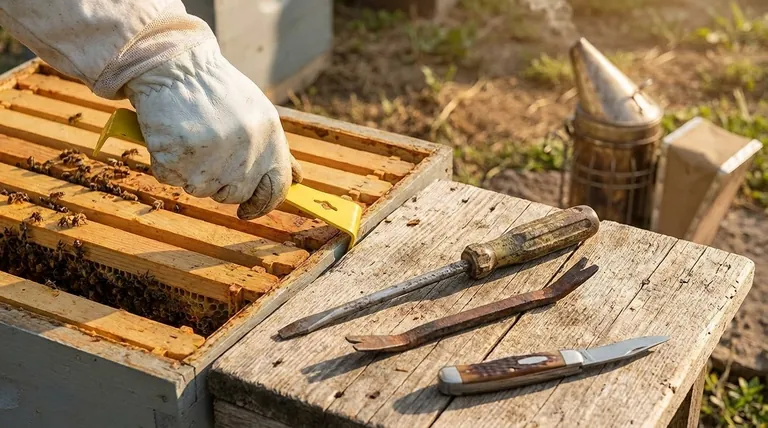
Why a Hive Tool Is a Specialized Instrument
A hive tool may look like a simple piece of metal, but its design is the result of decades of beekeeping experience. It's built to handle the incredibly strong glue (propolis) that bees use to seal their hive.
The Power of Prying
The primary function of any hive tool is to pry apart hive components. Bees use propolis to seal every crack, essentially gluing the hive bodies, inner cover, and frames together.
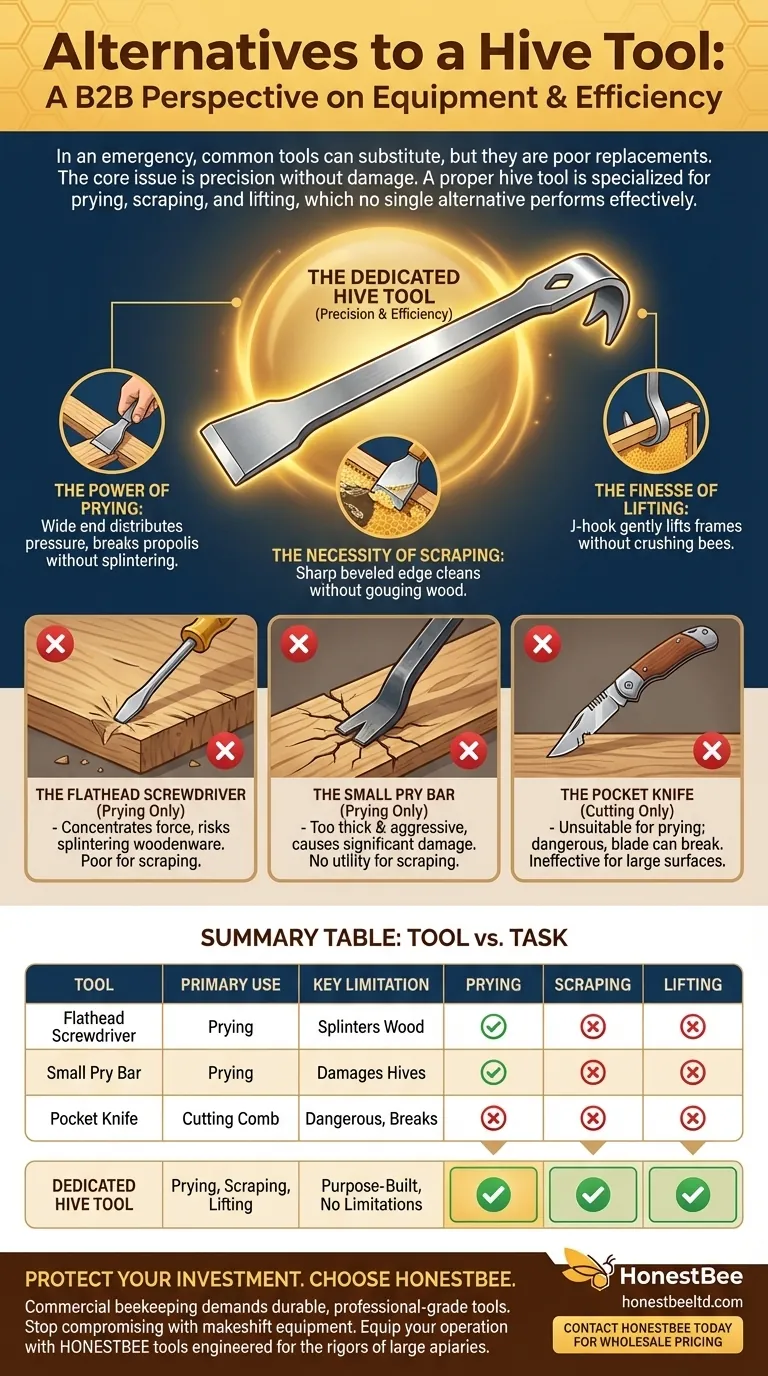
The flat, wide end of a hive tool is designed to distribute pressure evenly. This allows you to break the propolis seal without splintering the wood of your hive boxes.
The Necessity of Scraping
Bees also build unwanted burr comb and deposit propolis in inconvenient places. A key feature of a hive tool is its sharpened, beveled edge.
This edge is perfect for scraping away this excess wax and propolis from frames and boxes. It cleans surfaces efficiently without gouging the wood, which is crucial for maintaining your equipment.
The Finesse of Lifting
Many hive tools feature a "J-hook" or a bent end. This is not just for leverage; it's specifically designed to hook under the ear of a frame.
This allows you to gently lift the first, tightly-packed frame out of a box. Performing this action with a screwdriver or pry bar is nearly impossible without crushing bees or damaging the frame.
The Trade-offs of Using Alternatives
Using a tool not designed for beekeeping introduces risks and inefficiencies. While it might solve an immediate problem, it can create new ones.
The Flathead Screwdriver
A large screwdriver can provide leverage to separate boxes. However, its narrow tip concentrates force in a small area, often denting or splintering the edges of your woodenware. It is also an exceptionally poor tool for scraping.
The Small Pry Bar
A pry bar offers excellent leverage but is almost always too thick and aggressive. It is very likely to cause significant damage to the soft wood of hive bodies, creating cracks that can weaken the hive and invite pests. It has no utility for scraping or delicate work.
The Pocket Knife
A knife is useful for cutting through a thick piece of burr comb but is entirely unsuitable for prying. Attempting to pry with a knife is a good way to break the blade or handle, risking injury. Its thin blade is also ineffective for scraping large surfaces.
Making the Right Choice for Your Goal
Your choice of tool should be guided by your commitment to beekeeping best practices, which prioritize the health of the colony and the longevity of your equipment.
- If you are in a genuine emergency: Use a large flathead screwdriver for prying only, applying pressure slowly and carefully to minimize damage to the wood.
- If you only need to cut something small: A pocket knife can work, but do not use it for any task requiring leverage.
- If your primary focus is effective, long-term beekeeping: There is no substitute for a proper hive tool; it is the single most essential piece of equipment for any hive inspection.
Investing in a purpose-built hive tool is the most practical decision for protecting your bees, your equipment, and your own time.
Summary Table:
| Alternative Tool | Primary Use | Key Limitation |
|---|---|---|
| Flathead Screwdriver | Prying | Concentrates force, risks splintering wood |
| Small Pry Bar | Prying | Too thick, likely to damage hive bodies |
| Pocket Knife | Cutting comb | Unsuitable for prying; blade can break |
| Dedicated Hive Tool | Prying, Scraping, Lifting frames | No significant limitations; purpose-built for the job |
Protect your investment and your bees with the right equipment from the start.
As a commercial beekeeper or distributor, your time and the integrity of your equipment are critical. HONESTBEE supplies durable, professional-grade hive tools and beekeeping supplies designed for the rigors of commercial apiaries.
Stop compromising with makeshift tools that can damage your woodenware and agitate your colonies. Equip your operation with tools engineered for precision and efficiency.
Contact HONESTBEE today to discuss wholesale pricing and equip your team with the essential tools for success.
Visual Guide
Related Products
- Professional Multi-Function Stainless Steel Hive Tool
- Professional Stainless Steel Pry-Bar Hive Tool
- HONESTBEE Professional Long Handled Hive Tool with Precision Cutting Blade
- HONESTBEE Premium Italian Style Hive Tool with Hardwood Handle
- Ergonomic Plastic Frame Spacer Tool for Rapid Hive Management Beekeeping
People Also Ask
- Why are professional hive tools considered indispensable? Master Beekeeping Maintenance with Precision Leverage
- What is the role of professional hive tools in routine apiary maintenance? Expert Tips for Hive Health and Longevity
- What are the benefits of a multi-functional hive tool? Streamline Your Apiary Workflow with One Tool
- What advantages do multi-functional hive tools offer? Maximize Your Apiary Efficiency and Workflow
- What are the common construction features of hive tools? Key Insights for Superior Beekeeping Efficiency