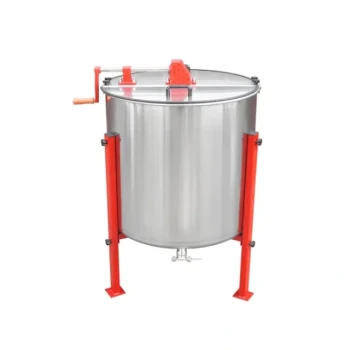
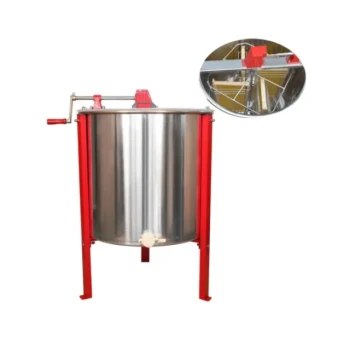
A manual honey press is the essential tool for traditional hive management because these hives produce honey in irregular, non-standardized combs rather than removable frames. Since traditional combs cannot be placed in a centrifugal extractor, mechanical compression is the only effective method to separate liquid honey from beeswax while preserving the product’s natural characteristics.
For distributors and wholesalers, the manual honey press is a vital component of a full-spectrum beekeeping portfolio. It enables the processing of high-value "wild" or traditional harvests that cater to niche markets seeking unrefined, mineral-rich honey profiles.
The Technical Necessity of Mechanical Compression
Processing Irregular Honeycombs
Traditional hives do not utilize standardized, removable frames, which means honey is harvested as bulk comb honey. A manual honey press applies direct physical pressure to these irregular structures to force the liquid honey out. This is the primary mechanical solution for turning raw hive harvest into a marketable liquid product.
Capturing Secondary Revenue Streams
The pressing process performs the initial separation of honey from wax residue, often referred to as Sefef. This residue is a critical raw material for the production of industrial-grade beeswax blocks. By providing pressing equipment, you empower your clients to monetize both the honey and the wax components of the hive.
Versatility Across Bee Species
Manual presses are uniquely suited for specialized harvests, such as those from stingless bees that store honey in small wax pots called cerumen. Unlike industrial centrifugal systems, a manual press can handle these delicate and varied structures without destroying the integrity of the harvest. Our expertise in sourcing specialized equipment ensures you can meet these diverse regional demands.
Meeting Consumer Demand for Natural Profiles
Retention of Nutritional Density
The pressing method increases the contact time between the honey, wax, and pollen during extraction. This results in a final product with higher mineral and insoluble solid content than centrifugal honey. Many premium consumers specifically seek this "unrefined" profile for its perceived health benefits and robust flavor.
Supporting Niche Market Access
Manual pressing allows beekeepers to prepare chunk honey and other minimally processed varieties favored by natural-food enthusiasts. Offering these tools allows distributors to position themselves as partners in the high-margin "artisanal" and "organic" honey sectors. Our rapid response times ensure you can capitalize on these market trends as they emerge.
Operational Simplicity and Reliability
Manual presses are easy to operate and require no electricity, making them ideal for remote sourcing areas where traditional hives are most common. This reliability reduces the risk of equipment failure during peak harvest seasons. We prioritize efficient order fulfillment to ensure these essential tools are in your warehouse before the harvest begins.
Understanding the Trade-offs
Clarity vs. Substance
While pressing produces a nutritionally dense honey, it also introduces more wax debris and bee fragments. To achieve high physical clarity, beekeepers must follow the pressing stage with laboratory-grade filtration. This two-step process is the baseline for high-quality grading in professional trade.
Labor Intensity and Throughput
Manual pressing is more labor-intensive than automated centrifugal extraction and is best suited for smaller batches or specialized harvests. For large-scale industrial operations using modern frames, centrifugal equipment remains the standard for hygiene and speed. As a one-stop sourcing partner, we provide both manual and industrial solutions to cover every level of production.
Optimizing Your Product Portfolio
Strategic Recommendations for Distributors
Selecting the right equipment depends entirely on the sourcing methods and target markets of your end-users. Our professional team is available to help you calibrate your inventory based on regional hive types and production goals.
- If your primary focus is Niche/Artisanal Markets: Stock heavy-duty manual presses to support beekeepers who prioritize mineral-rich, unrefined honey profiles.
- If your primary focus is Industrial Wax Production: Emphasize the press as a mandatory tool for harvesting high-quality crude wax raw materials.
- If your primary focus is Organic Certification: Ensure your inventory includes uncontaminated, food-grade manual presses that meet strict international physical isolation standards.
A comprehensive inventory that includes manual pressing technology ensures you can serve the entire beekeeping value chain, from traditional rural harvests to premium retail shelves.
Summary Table:
| Feature | Technical Necessity | Business Value for Distributors |
|---|---|---|
| Processing Method | Mechanical compression for irregular combs | Supports niche/wild honey market segments |
| Product Integrity | Retains high mineral & pollen content | Targets premium, health-conscious consumers |
| Versatility | Suitable for stingless bees & wax pots | Expands portfolio for diverse regional needs |
| Revenue Streams | Efficient separation of honey and beeswax | Increases demand for industrial wax processing tools |
| Utility | No electricity required; ideal for remote use | Reliable, low-maintenance hardware for resellers |
Scale Your Wholesale Business with HONESTBEE’s One-Stop Sourcing
Are you looking to capture the high-margin artisanal honey market? HONESTBEE empowers distributors and B2B resellers with a comprehensive, full-spectrum portfolio of beekeeping solutions. From heavy-duty manual honey presses and honey-filling machines to specialized hive-making equipment and essential consumables, we provide the tools your customers need to succeed.
Why Partner with HONESTBEE?
- Deep Industry Expertise: We understand the technical requirements of both traditional and modern beekeeping.
- Rapid Fulfillment: Benefit from ultra-fast delivery and efficient order processing to keep your inventory ready for harvest season.
- Premium Service: Our dedicated team offers exceptional support, ensuring you find the right equipment to maximize your profit margins.
Ready to elevate your product offering? Contact us today to explore our wholesale catalog and OEM/ODM capabilities!
References
- Solomon Abera Bariagabre, Daniel Woldegebriel. The effect of harvesting time and beehive type on honey yield and quality of Apis mellifera in Kilite Awlaelo district, Tigray, Northern Ethiopia. DOI: 10.1007/s44187-025-00704-z
This article is also based on technical information from HonestBee Knowledge Base .
Related Products
- Stainless Steel Manual Honey Press with Guard for Pressing Honey and Wax
- Easy Use Manual Stainless Steel Honey Press for Honey Comb
- Manual Honey Filling Machine Bottling Machine for Honey
- Stainless Steel 3 Frame Manual Honey Extractor Spinner for Bee Honey Extraction
- 6 Frame Manual Stainless Steel Honey Extractor Beekeeping Equipment
People Also Ask
- What other functions can a honey press serve besides honey extraction? Discover Versatile Multi-Purpose Uses
- How does the honey press preserve the quality of honey during extraction? Maintain Pure Enzymes and Flavor
- What materials are used to construct the honey press? Choose Durable, Food-Grade Solutions for Your Apiary
- What are the fundamental differences between manual honey presses and centrifugal honey extractors? A Guide for Pros
- What are some general features of a honey press? Maximize Your Yield with Durable Extraction Tools