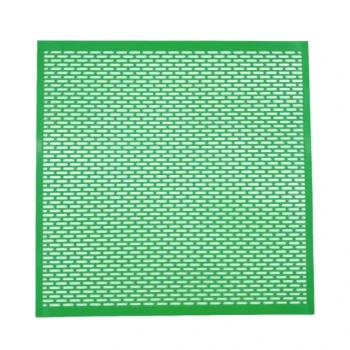
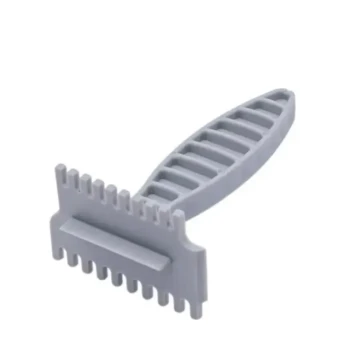
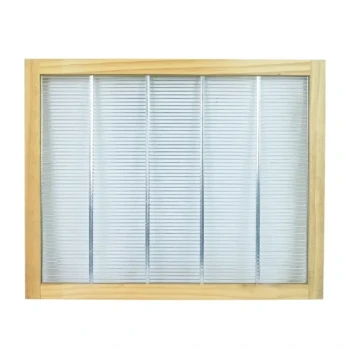
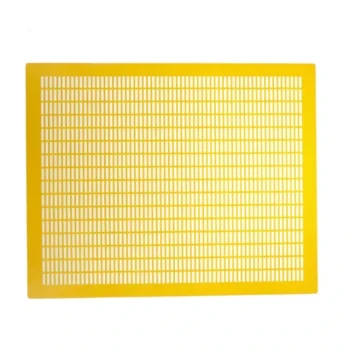
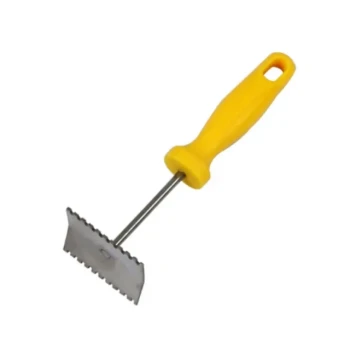
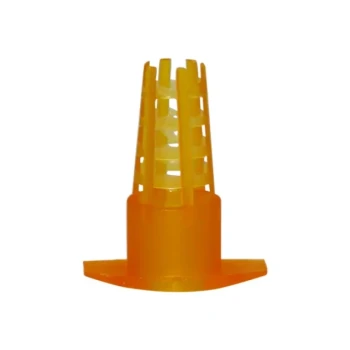
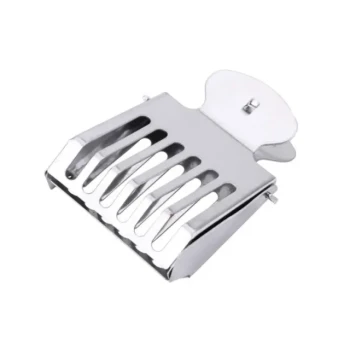
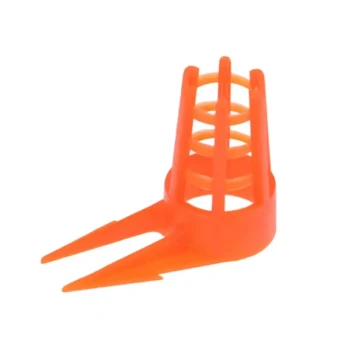
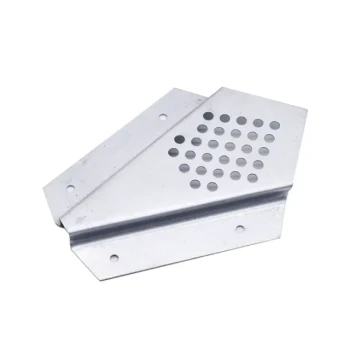
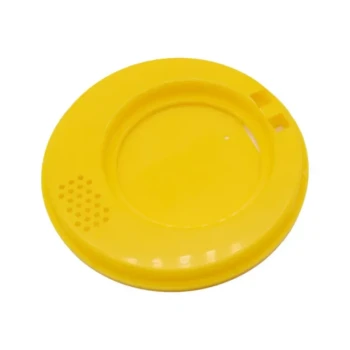
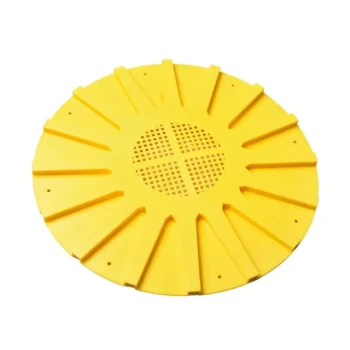
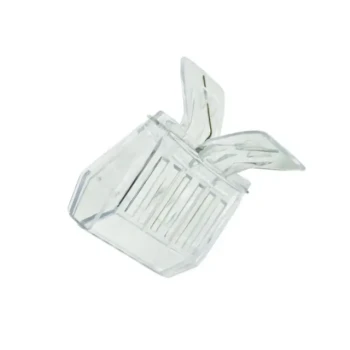
A queen excluder is a critical physical barrier utilized in commercial beekeeping to segregate the queen from the honey storage areas. Placed between the brood box and the honey supers, it features specific grid spacing that allows smaller worker bees to pass through while physically blocking the larger queen bee. This simple mechanism is the primary defense against brood contamination, ensuring the final honey product remains pure.
Core Takeaway By strictly confining the queen to the lower brood chamber, the excluder ensures that honey supers are reserved exclusively for storage rather than reproduction. This separation eliminates the risk of harvesting honey contaminated with larvae or pupal debris, thereby securing the sensory quality required for commercial standards.
The Mechanics of Separation
Exploiting Size Differences
The function of the queen excluder relies on precise grid spacing.
The gaps are engineered to be large enough for worker bees to traverse freely between the brood chamber and the upper supers.
However, the spacing is too narrow for the larger abdomen of the queen bee. This acts as a filter, effectively confining the queen to the lower brood box.
The Two-Chamber System
This device is the central component of the two-chamber beekeeping system.
It establishes a designated "work zone" for the queen below and a "storage zone" for the colony above.
By restricting the queen's movement, the system ensures the upper honey supers are used strictly for honey storage, preventing the chaotic mixing of brood rearing and food storage.
Ensuring Biological and Sensory Purity
Eliminating Brood Contamination
Without an excluder, a queen will naturally move upward to lay eggs in the honey supers.
This results in the presence of eggs, larvae, and pupae within the combs intended for harvest.
The excluder guarantees that harvested honey is free of larval debris and pupae, which are unacceptable impurities in commercial food products.
Enhancing Sensory Quality
Commercial honey requires a high standard of clarity and taste.
Biological contaminants not only affect the visual purity of the honey but can also degrade its sensory profile.
Using an excluder ensures the final product maintains the high sensory quality consumers expect from pure honey.
Operational Efficiency and Ripening
Facilitating Mechanical Harvesting
Commercial operations rely on mechanical extraction to process large volumes of honey.
Combs that contain brood (eggs and larvae) are difficult to process cleanly and can damage extraction equipment or contaminate the batch.
The excluder provides clean combs, which are significantly better suited for automated mechanical harvesting.
Creating an Undisturbed Environment
Honey quality also depends on proper dehydration and ripening by worker bees.
Confining the queen prevents her from disturbing the workers in the supers.
This allows workers to focus on dehydrating and ripening the honey in a stable environment, leading to a higher quality end product.
Common Pitfalls in Material Selection
The Risk of Environmental Corrosion
The interior of a beehive is a challenging environment characterized by high humidity and the presence of organic acids.
If a beekeeper uses excluders made of low-quality metals, these conditions can lead to rapid oxidation and rust.
Metal Contamination
Rust and metal fatigue are significant threats to honey safety.
Corrosion products can leach into the honey, compromising its safety for consumption.
Furthermore, if the honey is intended for use as a bio-indicator for environmental pollution monitoring, metal contamination from the excluder will destroy the accuracy of the data.
Making the Right Choice for Your Goal
To maintain commercial standards, you must select the appropriate equipment for your specific operational targets.
- If your primary focus is Consumer Sales: Prioritize the use of excluders to guarantee honey is free of larval debris and maintains peak sensory quality.
- If your primary focus is Operational Efficiency: Utilize excluders to ensure combs are brood-free, facilitating faster and cleaner mechanical harvesting.
- If your primary focus is Environmental Monitoring: Select excluders treated with plasticization or high-standard chrome plating to prevent rust and ensure chemical accuracy.
By strictly enforcing the separation between brood rearing and honey storage, you ensure a product that is pure, processable, and chemically stable.
Summary Table:
| Feature | Function in Commercial Beekeeping | Benefit to Honey Quality |
|---|---|---|
| Grid Spacing | Physically blocks the larger queen from honey supers | Eliminates larval debris and pupal contamination |
| Zoning | Separates the brood chamber from storage zones | Ensures clear, pure honey with high sensory standards |
| Operational Flow | Provides brood-free combs for extraction | Facilitates clean, efficient mechanical harvesting |
| Material Quality | High-grade plating or plasticization | Prevents rust and metal leaching into the final product |
Elevate Your Honey Production with HONESTBEE Professional Equipment
At HONESTBEE, we understand that commercial success depends on the purity of your product and the efficiency of your operation. We cater to commercial apiaries and distributors by providing a comprehensive wholesale range of high-quality beekeeping tools designed to meet the strictest industry standards.
Whether you need precision-engineered queen excluders to prevent contamination, advanced honey-filling machines, or specialized hive-making machinery, our portfolio covers the full spectrum of hardware and essential consumables. We also offer honey-themed cultural merchandise to help you expand your brand's reach.
Ready to scale your commercial apiary? Contact us today to discover how our premium equipment can enhance your honey quality and operational efficiency.
References
- Sunday Idowu Ogunjimi, Chinwe Egbunonu. Assessing the Knowledge Level of Beekeepers on Improved Beekeeping Management Practices in Peri-Urban Areas of Southwestern Nigeria. DOI: 10.1080/10496505.2015.1124781
This article is also based on technical information from HonestBee Knowledge Base .
Related Products
- High Performance Plastic Queen Excluder for Beekeeping and Apiary Management
- Lightweight Durable Plastic Queen Excluder Scraper for Beekeeping
- Premium Wood Framed Metal Wire Queen Bee Excluder
- Professional Plastic Queen Excluder for Modern Beekeeping
- Metal Queen Bee Excluder for Beekeeping
People Also Ask
- What are the characteristics of a plastic queen excluder? Key Benefits for Cost-Effective Beekeeping
- What are the operational and cost advantages of using plastic queen excluders over metal or wire excluders in commercial hive management? Discover how they reduce labor, prevent wing damage, and lower total costs.
- What types of queen excluders are available for beekeepers? Choose the Right Tool for Your Hive
- Why are standardized hive frames and queen excluders essential for maintaining honey purity and quality? Scale Your Purity
- Do plastic queen excluders work? A Cost-Effective Solution for Modern Apiaries