Precise bee space is essential for functional, serviceable beehives. The correct clearance—typically about 6 to 9.5 mm, depending on bee species and hive design—allows bees to move between combs and hive components without filling the gap. If the space is too narrow, bees apply propolis; if it is too wide, they build burr or brace comb, making frames difficult to remove and inspect.
Bee space is a functional tolerance, not a cosmetic measurement. Correctly dimensioned hive bodies and movable frames preserve natural bee movement, prevent unwanted construction, and support faster, cleaner hive management.
Why Bee Space Matters in Hive Design
Bees respond to gaps predictably
Honeybees maintain internal clearances within a narrow natural range. Equipment that matches this range is generally left open for passage and routine movement around the comb.
Gaps outside the intended range are treated as spaces that must be sealed or filled.
Narrow gaps create propolis adhesion
When the clearance is too small, bees fill it with propolis, a sticky resin used to seal and stabilize hive surfaces.
This can bond frames to one another, frames to box walls, or hive boxes to covers. The beekeeper must then use greater force to separate components, increasing the risk of damaged wood, crushed bees, and broken comb.
Wide gaps create burr and brace comb
When the clearance is too large, bees commonly build burr comb or brace comb to occupy the excess space.
This unwanted wax can connect adjacent frames or link frames to the hive body. It obstructs inspection, complicates honey harvesting, and can damage comb when components are separated.
How Precision Supports Beekeeper Operations
Frames remain removable
Correct spacing allows frames to be lifted individually with a hive tool rather than pulled from a mass of propolis and wax.
This is particularly important during inspections, where speed and careful handling affect both labor efficiency and colony disturbance.
Comb structure is protected
Properly spaced frames reduce the likelihood that comb will be bridged between components.
Protecting comb structure helps maintain usable frames and reduces replacement, repair, and cleanup requirements.
Inspections become more efficient
Movable-frame management depends on being able to remove, rotate, and replace frames reliably.
Consistent bee space supports routine tasks such as checking brood, evaluating food stores, managing colony strength, and identifying problems without unnecessary disruption.
Why Manufacturing Accuracy Matters
Hive and frame dimensions work as a system
Bee space is not controlled by one measurement alone. It depends on the relationship between frame dimensions, frame spacing, box interiors, covers, and other hive components.
A frame may be correctly built in isolation but still create incorrect clearances if the hive body or mating components are out of specification.
Consistent components preserve modular compatibility
Commercial hive equipment is often stacked, exchanged, or replenished over time. Consistent dimensions help new frames, boxes, and covers function with existing equipment.
If different production batches vary significantly, bee space may be lost at the interfaces between components. This can cause recurring propolis adhesion or burr-comb formation across an entire apiary.
Precision supports one-stop equipment sourcing
For distributors, wholesalers, and B2B resellers, compatible equipment is more valuable than isolated low-cost components.
A dependable supplier should be able to provide dimensionally coordinated hive bodies, frames, and related wooden parts, supported by clear specifications, responsive service, and consistent order fulfillment.
What Buyers and Manufacturers Should Verify
Confirm the intended bee species and hive standard
The appropriate bee-space target can vary according to the bee population and equipment design.
Products should therefore be specified for the intended market, bee species, and hive system rather than described only as “standard size.”
Check the complete internal geometry
Review the dimensions that determine clearances between:
- Adjacent frames
- Frame sides and hive walls
- Frame tops and covers
- Frame bottoms and lower box surfaces
- Stacked hive bodies and connecting components
The objective is to preserve the intended clearance throughout the complete assembled hive.
Require dimensional consistency between batches
A supplier’s sample may be acceptable while later production varies. Buyers should evaluate manufacturing controls, inspection procedures, and the consistency of repeated orders.
For commercial supply, reliable tolerances are essential for reducing complaints, returns, field failures, and compatibility problems.
Understanding the Trade-offs
“Tight” construction is not automatically better
Reducing clearances may appear to make a hive more compact or rigid, but undersized gaps encourage propolis sealing.
The result is often harder frame removal and more aggressive tool use during inspections.
More space is not safer
Oversized clearances do not provide bees with useful extra room. They encourage burr comb, which can bind parts together and increase maintenance labor.
The correct approach is not to maximize or minimize the gap, but to maintain the specified bee-space range for the selected system.
Nominal dimensions are not enough
Wooden components can be produced to nominal measurements while still creating incorrect assembled clearances if tolerances are poorly controlled.
Buyers should assess the finished relationship between parts, not only the dimension printed on an individual frame or box specification.
Universal claims require caution
Bee space is commonly expressed as approximately 6 to 9.5 mm, or roughly 1/4 to 3/8 inch, but the correct target should follow the intended hive design and bee species.
Suppliers should avoid applying one measurement indiscriminately across every regional standard or equipment format.
Making the Right Choice for Your Goal
Use bee-space compliance as a core purchasing and manufacturing criterion, not as a minor woodworking detail.
- If your primary focus is beekeeper usability: Select frames and hive bodies with verified clearances that prevent propolis bonding and burr-comb formation.
- If your primary focus is commercial resale: Source dimensionally compatible hive components from suppliers that can maintain consistent specifications across repeat orders.
- If your primary focus is manufacturing quality: Control the assembled dimensions between frames, boxes, walls, and covers rather than checking individual parts in isolation.
- If your primary focus is rapid fulfillment: Favor a supplier with a complete product portfolio, responsive technical support, and efficient order processing so replacement components remain compatible.
- If your primary focus is apiary productivity: Choose equipment that enables quick frame removal, clean inspections, and minimal comb damage.
Correct bee space turns wooden hive equipment into a reliable working system—improving compatibility, reducing labor, and protecting long-term apiary efficiency.
Summary Table:
| Aspect | Correct Bee Space (6–9.5 mm) | Incorrect Bee Space (Too Narrow) | Incorrect Bee Space (Too Wide) |
|---|---|---|---|
| Bee Behavior | Bees move freely without filling gap | Bees fill gap with propolis | Bees build burr/brace comb |
| Frame Removal | Easy, minimal force | Frames stuck, require force | Frames bound by comb |
| Inspection Time | Quick and efficient | Slower, more disruption | Obstructed, extra clean-up |
| Comb Integrity | Protected | Risk of damage | Risk of damage |
| Equipment Compatibility | Modular, interchangeable | May not fit mating parts | May not fit mating parts |
| Manufacturing Consistency | Specified tolerances maintained | Dimensional drift | Dimensional drift |
Ensure your beekeeping operations run smoothly with precise bee space equipment. At HONESTBEE, we supply dimensionally coordinated wooden hives and frames designed for optimal bee space, backed by rapid response, dedicated service, and efficient fulfillment. Whether you're a distributor or commercial beekeeper, our one-stop sourcing covers everything from hive-making machinery to honey-themed merchandise. Ready to enhance your apiary efficiency? Contact us today to discuss your needs and discover how our expertise can support your success.
Related Products
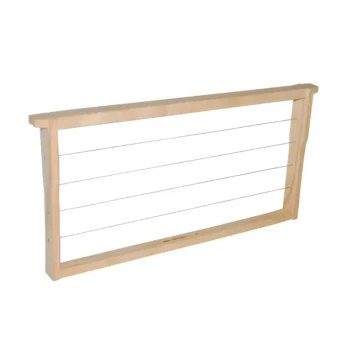
- HONESTBEE Wired and Assembled Wooden Bee Frames Foundation for a Thriving Hive
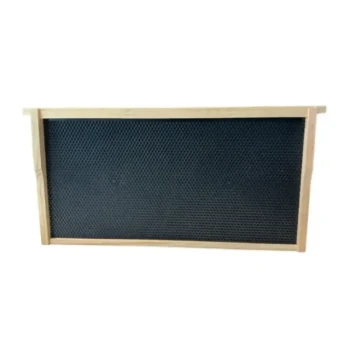
- Assembled Wooden Bee Frames with Plastic Foundation for Durability and Convenience by HONESTBEE
- Wooden Bee Hive Frames for Beekeeping and Wholesale
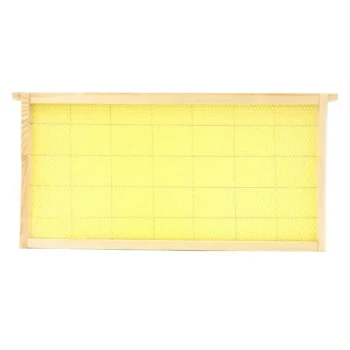
- Assembled Wooden Bee Frames with Beeswax Foundation Ready to Use by HONESTBEE
- Wholesales Dadant Size Wooden Bee Hives for Beekeeping
People Also Ask
- What role does replacing foundation and frames play in controlling American Foulbrood (AFB)? A Key to Hive Sanitation
- What is the role of frames and foundation in a bee hive? Build a Stable and Productive Apiary with Modern Design
- What is the difference between frames and foundation in a bee hive? A Guide to Hive Structure and Comb Building
- What is the purpose of frames and foundations in a beehive? Achieve a Healthy, Manageable Hive
- How do wooden and plastic hive frames compare in terms of durability? Wood vs. Plastic Longevity & Repairability