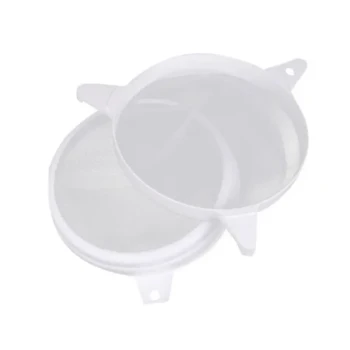
High-precision filtration is the essential refinement step that transforms raw drone brood homogenate into a consumable, commercial-grade product. It is strictly necessary to mechanically remove inedible physical debris—specifically chitinous larval shell fragments and hive cell residues—which allows the final liquid to meet the rigorous texture and purity standards required for food and pharmaceutical applications.
The Core Reality Raw drone brood homogenate inherently contains structural debris like wax and exoskeleton fragments that make it unsuitable for direct consumption. High-precision filtration eliminates these physical impurities, ensuring the final product is smooth, palatable, and pure enough for high-value health supplements.
The Removal of Physical Contaminants
Eliminating Chitinous Fragments
The homogenization process breaks down the drone larvae, but it cannot dissolve the chitinous shells (the larval exoskeletons). Without high-precision filtration, these tough, fibrous fragments remain suspended in the liquid. Filtration captures these solids, preventing them from contaminating the final product.
Clearing Hive Residues
During harvest, structural components of the honeycomb often mix with the larvae. This includes hive cell residues such as beeswax or propolis particles. High-precision equipment is capable of separating these dense, waxy impurities from the valuable biological liquid.
Elevating Sensory Quality and Compliance
Enhancing Texture and Mouthfeel
For a product to be viable in the food or pharmaceutical market, "sensory quality" is paramount. Filtration removes large particulate matter that causes grittiness. This results in a smooth, uniform texture that is palatable to consumers.
Meeting Industry Purity Standards
Pharmaceutical-grade supplements require a level of purity that raw homogenization cannot achieve alone. By removing all large particulate impurities, filtration ensures the material meets the hygiene and consistency requirements necessary for regulatory approval and safe consumption.
Understanding the Scope and Limitations
Filtration vs. Chemical Verification
It is critical to understand that filtration addresses physical purity, not chemical consistency. While filtration removes debris, it does not quantify the active ingredients.
As noted in industry practices, precision laboratory testing (using equipment like HPLC and Mass Spectrometry) is required after filtration. This step verifies that essential compounds—such as amino acids, fatty acids, and steroid hormones like testosterone—remain intact and potent.
The Balance of Yield and Purity
Using high-precision filtration involves a trade-off between flow rate and clarity. Extremely fine filtration ensures maximum purity but may require higher pressure or frequent maintenance to prevent clogging from the viscous homogenate.
Making the Right Choice for Your Production
## Strategic Implementation for Product Quality
To produce a market-ready Apilarnil product, you must balance physical processing with chemical verification.
- If your primary focus is Consumer Acceptance: Prioritize filtration systems that target the specific particle size of chitin fragments to ensure a completely smooth mouthfeel.
- If your primary focus is Efficacy Claims: Ensure your filtration process is gentle enough to preserve bioactivity, then validate the presence of hormones and antioxidants using HPLC or Mass Spectrometry analysis.
High-precision filtration is not just about cleaning the liquid; it is the bridge between a raw agricultural harvest and a refined, functional ingredient.
Summary Table:
| Feature | Purpose in Production | Benefit to Final Product |
|---|---|---|
| Chitin Removal | Eliminates larval shell fragments | Ensures smooth, non-gritty texture |
| Residue Clearing | Filters out beeswax and propolis | Increases biological purity and clarity |
| Sensory Refinement | Standardizes liquid consistency | Improves consumer mouthfeel and acceptance |
| Regulatory Support | Meets hygiene and safety benchmarks | Facilitates pharmaceutical-grade compliance |
Elevate Your Apilarnil Production with HONESTBEE
Transition from raw harvest to premium-grade health supplements with the right industrial solutions. HONESTBEE specializes in supporting commercial apiaries and distributors by providing a comprehensive range of professional beekeeping machinery, honey-filling equipment, and essential industry consumables.
Whether you are scaling up your drone brood processing or looking to refine your final product for the global market, our specialized hardware ensures the highest standards of efficiency and purity. Contact us today to explore our wholesale offerings and equipment solutions and see how we can add value to your commercial beekeeping operation.
References
- Rahşan İvgi̇n Tunca, Tülin Arslan. A LITTLE KNOWN BEE PRODUCT WITH THE POTENTIAL TO BECOME A FUNCTIONAL FOOD AND NUTRITIONAL SUPPLEMENT: APILARNIL. DOI: 10.31467/uluaricilik.1523198
This article is also based on technical information from HonestBee Knowledge Base .
Related Products
- Electric Double Wall Honey Filtering Machine Purifier Equipment for Honey Processing Plant
- Professional Honey Filter with Tripod Support Stand
- Professional Cone-Shaped Honey Filter with Reinforced Steel Ring
- Professional Stainless Steel Honey Filtering Machine with Water Bath Heating for Beekeeping
- Conical Nylon Honey Strainer Filter Bag for Beekeeping and Honey Filtration
People Also Ask
- What is the process of filtering honey? A Guide to Clean, Pure, and Market-Ready Honey
- What types of equipment are used in honey filtering? Build an Efficient System for Pure, Marketable Honey
- What is the overall importance of using the right equipment in honey filtering? Boost Quality & Marketability
- How should honey filtering equipment be properly maintained? Extend Equipment Life & Protect Honey Purity
- What are the benefits of drying honey filtering equipment after use? Protect Your Honey Quality & Equipment Investment