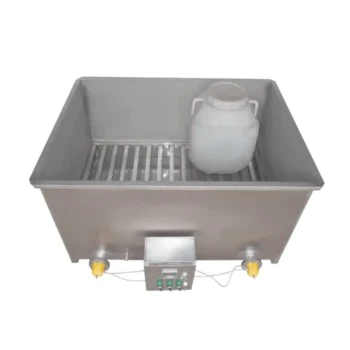
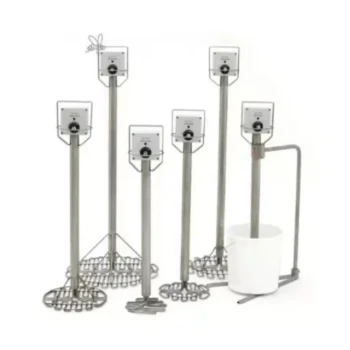
Industrial-grade high-precision temperature control is the non-negotiable standard for professional honey processing. This equipment protects product integrity by maintaining heating strictly below the 55-60°C threshold, which prevents the spike of Hydroxymethylfurfural (HMF), a potential carcinogen and primary indicator of heat damage. By utilizing precise temperature compensation and uniform heating technology, these systems ensure honey remains within strict international safety limits while preserving the delicate enzymes and nutritional structure essential for premium market value.
Precision temperature control is the only reliable method to balance the industrial need for honey flowability with the chemical requirement to limit HMF formation below 40 mg/kg. It transforms thermal processing from a high-risk liability into a controlled, value-preserving operation.
The Critical Link Between Temperature and HMF Formation
Preventing the Synthesis of Potential Carcinogens
High-precision equipment limits the thermal stress that triggers the irreversible formation of 5-Hydroxymethylfurfural (HMF). Without granular control, even brief temperature spikes can cause HMF levels to exceed safety limits, creating a product with mutagenic and cytotoxic potential.
Maintaining International Regulatory Standards
Global markets, including those following the Turkish Food Codex, enforce a strict HMF limit of 40 mg/kg for non-tropical honey. Industrial-grade systems provide the accuracy needed to pass these rigorous physicochemical tests, ensuring your inventory is eligible for high-value export.
Accuracy as a Quality Benchmark
HMF is the primary chemical parameter used to measure the extent of heat treatment and aging in honey. Utilizing precision water baths or ovens ensures that the honey's "chemical age" does not advance prematurely during the liquefaction or filtration phases.
Protecting the Biological Identity of Honey
Safeguarding Heat-Sensitive Enzyme Activity
Honey’s therapeutic value relies on enzymes like diastase and invertase, which begin to degrade rapidly at temperatures above 50°C. Precision equipment maintains a stable thermal field, preventing the localized "hot spots" that typically destroy these active components in lower-grade heating systems.
Preserving Medicinal and Nutritional Compounds
Bioactive components, such as hydrogen peroxide and polyphenols, are highly sensitive to thermal fluctuations. High-precision control ensures these elements remain intact, protecting the medicinal properties that allow honey to be marketed as a functional health product.
Consistency Across Large Batches
Industrial-grade systems use advanced sensors to ensure the entire volume of honey reaches the target temperature simultaneously. This uniform heating prevents the center of a container from remaining crystallized while the edges suffer from HMF-producing over-exposure.
Optimization of Industrial Processing Efficiency
Reducing Viscosity Without Thermal Damage
Heating is necessary to reduce viscosity for efficient industrial filling and filtration. Precision systems allow processors to hit the exact "sweet spot" where honey flows freely enough for high-speed machinery without reaching the temperatures that trigger HMF synthesis.
Mitigating Thermal Deviation Risks
Standard heating equipment often suffers from temperature deviations exceeding 15°C, which can ruin an entire batch’s chemical profile in minutes. High-precision units provide a narrow operational window, ensuring that even during rapid processing, the honey stays within a safe 2-3°C range.
Ensuring Rapid Order Fulfillment
By utilizing reliable, professional-grade equipment, distributors can avoid the delays caused by batch failures or regulatory rejections. Consistent thermal performance translates directly into faster lead times and more reliable supply chain management.
Understanding the Trade-offs
Initial Capital Expenditure vs. Long-term Yield
While industrial-grade precision equipment requires a higher initial investment compared to standard heaters, it significantly reduces the risk of batch rejection. For wholesalers, the cost of one contaminated shipment often exceeds the price of a high-precision control system.
Operational Complexity and Calibration
These systems require regular professional calibration to maintain their high degree of accuracy. Ignoring maintenance schedules can lead to "sensor drift," where the display indicates a safe temperature while the actual product is undergoing thermal degradation.
Energy Consumption vs. Heating Speed
High-precision systems often prioritize temperature stability over raw heating speed to protect the honey’s molecular structure. This may result in slightly longer processing times compared to aggressive, high-heat methods, but it guarantees a superior final product.
Strategic Sourcing for Market Competitiveness
Choosing the right thermal equipment is a strategic decision that impacts your entire product portfolio's reputation and safety.
- If your primary focus is Regulatory Compliance: Invest in systems with integrated data logging that provide a verifiable "thermal map" of every batch for quality assurance audits.
- If your primary focus is Operational Efficiency: Select high-precision equipment with rapid-response compensation technology to maximize flowability while maintaining strict HMF safety buffers.
- If your primary focus is Premium Quality/Medicinal Honey: Prioritize uniform heating technology and precision water baths to ensure that heat-sensitive enzymes like diastase remain at peak activity levels.
By integrating high-precision temperature control into your processing line, you secure the chemical integrity, biological value, and global marketability of your honey products.
Summary Table:
| Feature | High-Precision Control (Industrial Grade) | Standard Heating Equipment |
|---|---|---|
| HMF Levels | Maintained below 40 mg/kg (Export Ready) | High risk of exceeding safety limits |
| Temperature Margin | Tight window (±2-3°C variance) | Wide fluctuations (up to 15°C spikes) |
| Enzyme Preservation | Protects diastase and invertase activity | Rapid degradation due to "hot spots" |
| Processing Efficiency | Optimized flow without thermal damage | Slow or inconsistent viscosity reduction |
| Market Impact | Higher resale value and batch consistency | Risk of batch rejection and quality loss |
Scale Your Honey Business with HONESTBEE
Maintaining the biological integrity of honey is critical for distributors and B2B resellers looking to capture premium markets. HONESTBEE provides a one-stop sourcing solution for commercial apiaries, offering a comprehensive portfolio from high-precision honey-filling machines to essential beekeeping consumables.
Why partner with us?
- Industry Expertise: Deep knowledge in HMF control and thermal processing.
- Global Supply Reliability: Ultra-fast delivery and efficient order fulfillment to keep your inventory moving.
- Premium Trading Services: Dedicated customer support and OEM/ODM options to maximize your profit margins.
Ready to enhance your processing efficiency with professional-grade equipment? Contact our expert team today!
References
- Rüksane Çelik, Ersin Karakaya. The Opinions of Diyarbakır Provincial Center Consumers on the Quality of Honey on the Market and the Factors Affecting Their Honey Consumption Preferences. DOI: 10.30910/turkjans.1452609
This article is also based on technical information from HonestBee Knowledge Base .
Related Products
- Professional Thermostatic Conical Honey Melter
- Double Wall Honey Heating Stirring Homogenizer Mixing Machine with Various Capacity
- Heavy Duty Stainless Steel Honey Processing Machine Decrystallizing Tank
- 0.5T Capacity Honey Dehumidifier Dryer with Vacuum Heating and Thickening Filtering Machine
- Electric Double Wall Honey Filtering Machine Purifier Equipment for Honey Processing Plant
People Also Ask
- What is melter honey used for? A Low-Cost Ingredient for Bakers and Brewers
- How does a honey melter address the issue of crystallized honey in storage? Restore Flow and Quality Efficiently
- How do you melt a bucket of honey? Safely Reliquefy Crystallized Honey Without Damage
- When is a honey melter necessary? Optimize Your Facility's Workflow for Crystallized Honey
- How to heat a bucket of honey? Safely Restore Liquid Honey While Preserving Quality