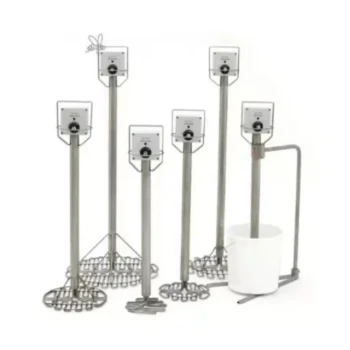
A honey melter addresses crystallization by applying precise, controlled heat to solidified reserves, effectively reversing the physical change that occurs during storage. This equipment transitions the honey back into a liquid state suitable for filtering and bottling, ensuring the product remains viable without suffering from heat degradation.
Core Insight: Crystallization is a storage hurdle that halts production flow. A honey melter solves this not just by heating the product, but by creating a regulated thermal environment that liquefies honey efficiently while strictly preserving its quality and integrity.
The Mechanics of Liquefaction
Applying Controlled Heat
The primary function of a honey melter is the application of controlled heat. Unlike makeshift heating methods, a melter maintains a specific temperature range designed to break down crystals.
This precision prevents the "hot spots" often associated with uneven heating. It ensures the entire batch is treated uniformly.
Restoring Flowability
Crystallized honey is solid and unmanageable. The melter transforms this solid mass back into a flowable state.
Once liquefied, the honey can be moved through pumps and pipes. This restoration of flow is essential for moving honey from bulk storage containers into the packaging line.
Enabling Filtration
Liquefaction is a prerequisite for cleaning the honey. You cannot filter a solid product.
By melting the crystals, the equipment prepares the honey for filtering. This allows producers to remove wax cappings, propolis, and other debris that may be trapped within the crystallized structure.
Preserving Product Quality
Preventing Overheating
The most critical aspect of a honey melter is safety for the product. It liquefies the honey without damaging its quality.
High temperatures can destroy beneficial enzymes and alter the flavor profile. The melter is engineered to avoid these critical thermal thresholds.
Balancing Speed and Safety
Efficiency is key in production. The melter is designed to liquefy the product quickly relative to passive methods.
However, it balances this speed with safety limits. It expedites the process only as fast as the honey can safely absorb the heat.
Understanding the Trade-offs
Equipment Dependence
While a melter automates the process, it creates a dependency on the machinery's accuracy. If the thermostat or sensors fail, the "controlled" aspect is lost.
Regular calibration is required to ensure the controlled heat remains within safe parameters.
The Definition of "Quickly"
The reference notes the machine liquefies honey "quickly," but this is a relative term. Thermal transfer in a dense substance like honey takes time.
Users must understand that "quick" refers to efficiency compared to ambient warming, not an instantaneous transformation. Rushing the process by overriding controls defeats the purpose of the equipment.
Making the Right Choice for Your Goal
- If your primary focus is preserving raw quality: Ensure the melter is set to the lowest effective temperature to return flowability without cooking the enzymes.
- If your primary focus is production efficiency: Utilize the melter to batch-process stored honey, ensuring a steady supply of liquid product for your bottling line.
A honey melter is the bridge between long-term storage and the final retail package, ensuring your product remains professional and pure.
Summary Table:
| Feature | How it Addresses Crystallization | Impact on Production |
|---|---|---|
| Controlled Heat | Breaks down glucose crystals at precise temperatures. | Prevents overheating and enzyme degradation. |
| Uniform Liquefaction | Eliminates solid clusters throughout the batch. | Restores flowability for pumps and piping. |
| Thermal Regulation | Maintains safe temperature thresholds. | Balances processing speed with product integrity. |
| Filtration Readiness | Transitions honey to a liquid state. | Allows removal of wax and debris post-storage. |
Maximize Your Honey Production with HONESTBEE
Crystallized honey shouldn't stall your operations. HONESTBEE provides commercial apiaries and distributors with professional-grade honey melters and advanced honey-filling machinery designed to preserve the integrity of your harvest. From specialized beekeeping tools to complete processing lines, our comprehensive wholesale offering ensures your honey remains pure, flowable, and market-ready.
Ready to streamline your bottling process and scale your business?
Contact our experts today to find the right equipment solutions
Related Products
- HONESTBEE Commercial Upright Honey Melter
- Professional Thermostatic Conical Honey Melter
- Economy Honey Homogenizer Mixer and Melting Machine for Beekeeping
- Beeswax Melter for Candle Making Honey Bee Wax Melter
- Heavy Duty Stainless Steel Honey Processing Machine Decrystallizing Tank
People Also Ask
- What is melter honey used for? A Low-Cost Ingredient for Bakers and Brewers
- How do you melt a bucket of honey? Safely Reliquefy Crystallized Honey Without Damage
- When is a honey melter necessary? Optimize Your Facility's Workflow for Crystallized Honey
- What methods are used to heat honey, and what precaution should be taken? Expert Guide to Safe Honey Liquefaction
- What factors should be considered when selecting a heater for honey containers? Optimize Your Warming Efficiency