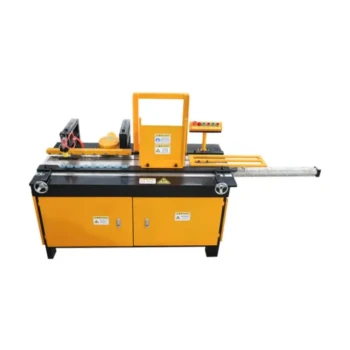
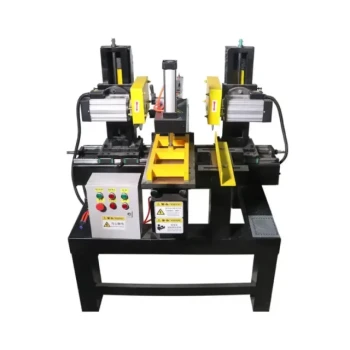
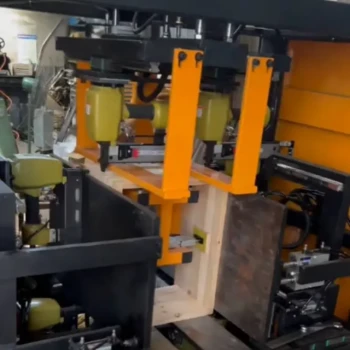
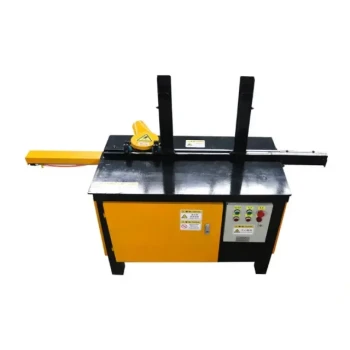
Industrial-grade hive-making machinery is the linchpin of commercial beekeeping because it replaces variable artisanal craftsmanship with high-precision manufacturing. By producing hive bodies and frames with exact specifications, these machines ensure total standardization, which is a strict prerequisite for apiary automation and mechanized harvesting. This shift significantly lowers per-unit production costs, removing the financial and technical barriers that otherwise make scaling from a few colonies to thousands impossible.
The Core Reality Scaling to a commercial level is not merely about owning more hives; it is about establishing a standardized infrastructure. Industrial machinery creates a uniform hardware ecosystem where every frame is interchangeable and compatible with automated tools, enabling the rapid expansion and efficiency required for modern industrial apiculture.
The Foundation of Commercial Scalability
Enabling Total Interchangeability
For a commercial operation, custom-fitted equipment is a logistical bottleneck. Industrial machinery ensures that every frame and hive body is produced with uniform specifications.
This precision allows beekeepers to move frames between any hive in the operation without friction. It simplifies colony management, such as splitting or merging hives, which is impossible if components vary in size.
The Prerequisite for Automation
Modern commercial beekeeping relies on mechanized harvesting to manage labor costs. Automated extraction lines and handling equipment require consistent input dimensions to function correctly.
Hand-built hives often have slight variances that cause jams or damage in automated systems. Industrial-grade machinery eliminates these deviations, ensuring hardware is compatible with advanced processing tools.
Reducing Per-Unit Production Costs
Traditional hive construction is labor-intensive and expensive per unit. Industrial machinery introduces economies of scale, dramatically lowering the cost of manufacturing modern equipment.
By reducing the financial barrier to entry, these machines allow beekeepers to acquire the sheer volume of hardware needed for industrial-scale production without compromising on quality.
Operational Efficiency and Growth
Facilitating Rapid Colony Expansion
Commercial operations often face high annual colony loss rates and need to replenish or expand numbers quickly. Industrial machinery enables the mass production of infrastructure on demand.
This capability allows professional beekeepers to rapidly deploy new hives for colony splitting and breeding. It ensures the physical foundation is always available to match biological growth targets.
Enhancing Biosecurity and Durability
High-precision cutting and molding result in tighter joints and better-sealed structures. This reduces gaps that can harbor pests or allow disease transmission, improving overall biosecurity standards.
Furthermore, standardized manufacturing often utilizes durable materials capable of withstanding extreme environmental conditions. This extends the lifespan of the equipment, protecting the capital investment of large-scale apiaries.
Understanding the Trade-offs
High Initial Capital Expenditure
While the per-unit cost of a hive drops, the upfront cost of industrial-grade machinery is significant. Small-scale operators may find the return on investment too slow unless they have a clear path to rapid expansion or plan to sell equipment to others.
Loss of Customization
Industrial manufacturing relies on rigid adherence to standards. This creates a lack of flexibility for beekeepers who prefer non-standard hive dimensions or experimental designs. Once a production line is tooled for a specific standard, reconfiguring it for a different specification is costly and time-consuming.
Making the Right Choice for Your Goal
To determine if investing in or sourcing from industrial manufacturing is right for you, consider your operational focus:
- If your primary focus is rapid expansion: Prioritize machinery that maximizes output volume to reduce the unit cost of new infrastructure.
- If your primary focus is automation efficiency: Prioritize high-precision equipment that guarantees strict dimensional tolerances for compatibility with harvesting lines.
- If your primary focus is biosecurity: Look for machinery capable of processing durable, non-porous materials that minimize disease vectors.
True commercial scalability is achieved when your infrastructure becomes a reliable, invisible standard that supports, rather than hinders, your biological operations.
Summary Table:
| Feature | Traditional Craftsmanship | Industrial-Grade Machinery |
|---|---|---|
| Dimensional Accuracy | Variable/Approximate | High-Precision/Standardized |
| Interchangeability | Low (Custom-fit) | Total (Plug-and-play) |
| Automation Readiness | Not Compatible | Prerequisite for Automated Extraction |
| Production Speed | Low (Labor Intensive) | High (Mass Production) |
| Unit Cost | High | Low (Economies of Scale) |
| Biosecurity | Variable Seal Quality | Superior Fit/Pest Resistance |
Scale Your Beekeeping Operation with HONESTBEE
At HONESTBEE, we empower commercial apiaries and distributors to bridge the gap between artisanal beekeeping and industrial success. We provide the full spectrum of beekeeping tools, machinery, and equipment—including high-precision hive-making and honey-filling machines—designed to ensure total standardization and efficiency across your entire operation.
Whether you are expanding your colony count or optimizing your honey processing line, our comprehensive wholesale offerings and industry consumables provide the durability and precision you need to thrive.
Ready to elevate your production capacity? Contact HONESTBEE today to discuss your industrial equipment needs
References
- Dirriba Mengistu. Economic Losses in the Traditional Honey Production System in Oromia Region, Ethiopia. DOI: 10.3329/ralf.v10i3.70998
This article is also based on technical information from HonestBee Knowledge Base .
Related Products
- High-Efficiency Pneumatic Bee Hive Making Machine for Rapid Box Assembly
- Beehive Handle and Frame Rest Cutting Machine: Your Specialized Hive Machine
- Beehive Machine Double End Saw for Precision Hive Component Manufacturing
- Automatic High-Speed Bee Hive Box Stapling Machine
- Mini Desktop Bee Hive Frame Forming Making Machine
People Also Ask
- How does the introduction of professional beehive-making machinery benefit sustainable beekeeping? Scale Your Apiary
- Why is specialized beehive-making machinery critical for low-defense breeding? Enhance Selection with Precision Tools
- How does the introduction of specialized beehive making machinery contribute to increasing the scale of regional beekeeping industries?
- What is the importance of specialized beehive making machinery in a circular bio-economy? Build Local Sustainability
- Why is specialized beehive-making machinery essential? Scale Your Apiary with Precision Industrial Standards