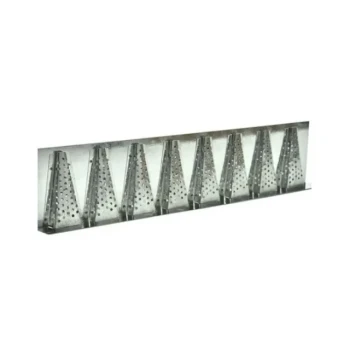
The screen functions as a critical safety barrier. It is necessary because it creates a selective separation layer: it allows small parasitic Varroa mites to fall through the mesh onto a sticky monitoring board, while physically blocking honeybees from contacting the vegetable oil or adhesive below. Without this screen, bees would become trapped in the oil or reintroduce mites into the colony.
Core Insight The industrial-grade screen converts a standard floor into a selective filtration system. It isolates the colony from the monitoring medium, ensuring that mite counts are accurate and that the bees remain clean, mobile, and safe from entrapment.
The Mechanics of Selective Filtration
Protecting the Colony from Contamination
The primary function of the metal screen is to separate the bees from the monitoring agent. Mite monitoring boards are typically coated with vegetable oil or similar sticky substances to trap fallen parasites.
If bees were to land directly on this board, they would become coated in oil. This can disrupt their normal activity, impair their flight, or fatally trap them on the surface.
Enabling Accurate Data Collection
For a mite count to be effective, the mites must fall out of the hive and stay out. The screen ensures that once a mite falls through the mesh, it cannot crawl back up or attach itself to a passing bee.
Furthermore, bees are fastidious cleaners. Without the screen, worker bees would likely attempt to clean the debris (mites) off the board, altering the count and rendering the monitoring data useless.
Secondary Benefits of the Screen Design
Enhanced Ventilation and Climate Control
Beyond monitoring, the screen plays a vital role in hive thermodynamics. It provides passive ventilation, allowing air to circulate more freely through the hive.
This is particularly effective for keeping the hive cooler during summer heat. In winter, it assists in moisture control, preventing the dangerous buildup of condensation that can freeze and kill the colony.
Pest and Predator Exclusion
The specific mesh size—typically #8 hardware cloth—is engineered for precise exclusion. It is large enough for mites and debris to pass through, but too small for larger pests to enter.
This barrier effectively prevents wasps, hornets, and other predators from entering the hive from below, while still maintaining the "open floor" concept required for ventilation.
Understanding the Trade-offs
Passive Reduction is Not Treatment
While the screen allows mites to fall out of the hive—a process that naturally reduces the mite population—you must not rely on it as a standalone solution.
The screen helps you monitor and slightly mitigate infestations, but it is not a substitute for active Varroa treatment methods. It should be viewed as a diagnostic tool rather than a cure.
Structural Requirements
Because the bottom board bears the entire weight of the hive, the screen installation must be robust. Using flimsy mesh or improper installation can compromise the structural integrity of the hive foundation.
Making the Right Choice for Your Goal
To maximize the utility of your bottom board setup, consider the following approach:
- If your primary focus is Accurate Monitoring: Ensure the screen is installed securely above the sticky board to prevent bee entrapment and ensure a precise mite count.
- If your primary focus is Hive Ventilation: You may remove the sticky board temporarily, allowing the screen to provide maximum airflow while still excluding pests.
The industrial-grade screen is the essential component that transforms a simple wooden base into a sophisticated tool for biological monitoring and climate management.
Summary Table:
| Feature | Function | Benefit |
|---|---|---|
| Selective Filtration | Allows mites to pass; blocks bees | Prevents bee entrapment and sticky contamination |
| Data Integrity | Isolates fallen mites on sticky boards | Ensures accurate pest counts for effective management |
| Passive Ventilation | Facilitates consistent airflow | Regulates summer heat and controls winter moisture |
| Physical Barrier | Precise #8 mesh sizing | Excludes predators like wasps and hornets from the hive |
| Structural Support | Industrial-grade durability | Maintains the integrity of the hive foundation under weight |
Elevate Your Apiary Operations with HONESTBEE
At HONESTBEE, we specialize in empowering commercial apiaries and distributors with the highest-grade beekeeping infrastructure. From precision-engineered industrial metal screens and beehive components to advanced honey-filling machines and specialized hardware, our comprehensive wholesale offering is designed to scale your business.
Partner with us to access:
- Premium Tools & Machinery: Durable equipment built for heavy-duty commercial use.
- Essential Consumables: A reliable supply chain for all your industry needs.
- Expert Solutions: Enhance hive health and operational efficiency with our targeted product portfolio.
Ready to optimize your production and supply chain? Contact us today to discuss our wholesale opportunities and see how HONESTBEE can drive your success.
References
- Jesús Humberto Reyna-Fuentes, Francisco Reyes-Zepeda. Comparative Evaluation of Organic and Commercial Treatments Against Varroa destructor in Apis mellifera: Implications for Honey Yield in Northeastern Mexico. DOI: 10.3390/pathogens14101051
This article is also based on technical information from HonestBee Knowledge Base .
Related Products
- Langstroth Screen Bottom Board for Beekeeping Wholesale
- 8-Cone Galvanized Steel Bee Robber Guard
- Metal Hive Feet Bee Hive Stand for Ant Protection
- Metal Bee Hive Stand Bee Box Stand for Beekeeping
- Precision Stainless Steel Frame Cleaner for Hive Grooves and Corners
People Also Ask
- What is the primary function of a standard screen bottom board when assessing honeybee grooming behavior? - Key Mite Data
- What is the primary function of a screen bottom board? Achieve Accurate Varroa Mite Assessment in Your Apiary
- What role do screen bottom boards and monitoring inserts play in assessing Varroa mite mortality and maintaining hive hygiene in Langstroth hives?
- Why is the combination of a screen bottom board and a sticky trap board essential for monitoring Varroa mite? Guide
- Why might a screen bottom board be less effective for pest control? Understanding the 'Mixed Sunlight' Complication