To achieve reliable mixing in honey, PTFE encapsulation is technically mandatory, not optional. This coating provides a critical non-stick barrier that counteracts the high viscosity and adhesive nature of honey. Without it, the fluid will adhere to the stir bar, causing mechanical instability and preventing the uniform distribution of solutes.
The extremely low surface energy of Polytetrafluoroethylene (PTFE) neutralizes the natural adhesiveness of honey. This ensures the stir bar remains distinct from the fluid it is agitating, preventing "spin-out" and guaranteeing that solutes are driven into the bulk mixture rather than accumulating on the mixing tool.
Overcoming Adhesion with Surface Science
The Role of Low Surface Energy
Honey functions as a highly adhesive substance. PTFE coatings are required because they possess extremely low surface energy. This physical property prevents the strong bonds typically formed by honey from attaching to the stir bar surface.
Ensuring Chemical Inertness
The encapsulation provides a chemically inert boundary. This is essential for maintaining the purity of the mixture. It ensures the stir bar does not chemically interact with the honey or any added solutes during the process.
Maintaining Mechanical Efficiency
Preventing Viscous Drag and Instability
When mixing high-viscosity fluids like honey, adhesion creates excessive drag. If the fluid sticks to the bar, it increases the resistance against the magnetic drive. PTFE eliminates this friction, preventing the stir bar from becoming unstable or decoupling from the magnetic field.
Achieving Bulk Phase Homogeneity
The goal of mixing is to distribute undissolved honey or solutes throughout the container. If the substance sticks to the bar, it simply spins in place without integrating. The non-stick coating forces these materials off the bar and into the "bulk phase," ensuring a truly uniform mixture.
Common Pitfalls of Incorrect Material Selection
The Risk of Solute Accumulation
Using a stir bar without a low-surface-energy coating leads to immediate material buildup. Undissolved honey will coat the bar, effectively removing it from the mixing process. This results in a heterogeneous mixture where key components remain stuck to the agitator rather than dissolved in the liquid.
Operational Failure via Decoupling
Adhesion increases the torque required to spin the bar. Without the slip provided by PTFE, the viscous adhesion can overwhelm the magnetic coupling. This causes the bar to shudder, wobble, or stop spinning entirely, ruining the efficiency of the application.
Making the Right Choice for Your Goal
To ensure your honey mixing process is both efficient and repeatable, prioritize the surface properties of your equipment.
- If your primary focus is Uniformity: Rely on PTFE encapsulation to prevent solute accumulation on the bar, forcing all ingredients into the bulk phase for consistent distribution.
- If your primary focus is Operational Stability: Use PTFE to reduce viscous drag, ensuring the magnetic coupling remains strong and the stir bar does not stall or wobble during high-resistance mixing.
The chemical and physical properties of the stir bar coating are just as critical as the speed or power of the mixer itself.
Summary Table:
| Feature | PTFE-Coated Stir Bar Benefit | Impact on Honey Mixing |
|---|---|---|
| Surface Energy | Extremely low surface energy | Prevents honey from adhering to the bar |
| Chemical Inertness | Non-reactive boundary | Maintains purity and prevents contamination |
| Friction Level | Minimal viscous drag | Prevents magnetic decoupling and 'spin-out' |
| Mixing Efficiency | Drives solutes into bulk phase | Ensures uniform distribution and homogeneity |
Elevate Your Honey Processing with HONESTBEE
For commercial apiaries and distributors, achieving perfect product consistency is the hallmark of quality. At HONESTBEE, we specialize in providing the professional-grade tools and machinery required to scale your operations. From advanced honey-filling machines to the specialized consumables and hardware—like high-efficiency mixing components—that keep your production lines running smoothly, we are your dedicated wholesale partner.
Ready to optimize your apiary’s efficiency? Contact our team today to explore our comprehensive range of beekeeping equipment and industrial machinery tailored for the modern honey producer.
References
- Henrique Ferreira, Isabela S. Bijotti. Method to mix tea with honey and use of transient light attenuation as an indicator of homogeneity. DOI: 10.1051/emsci/2018001
This article is also based on technical information from HonestBee Knowledge Base .
Related Products
- Double Wall Honey Heating Stirring Homogenizer Mixing Machine with Various Capacity
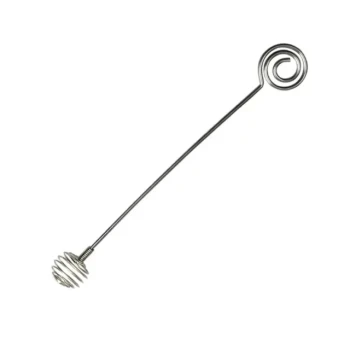
- Modern Stainless Steel Honey Dipper Stirrer
- Professional Plastic Honey Dipper for Easy Honey Drizzling
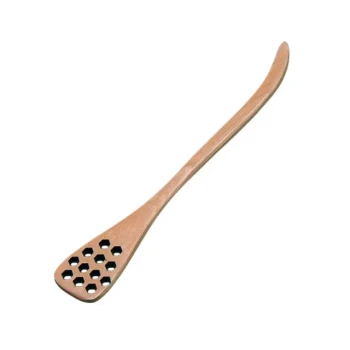
- Modern Honeycomb Pattern Wooden Honey Dipper for Stirring and Drizzling
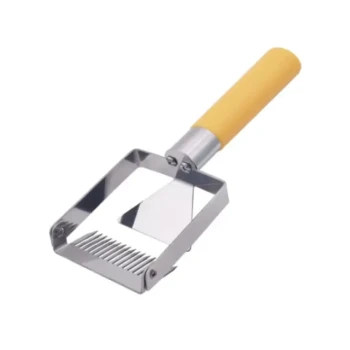
- All-Stainless Steel Pivoting Honey Uncapping Fork for Beekeeping
People Also Ask
- What impact do homogenizers or oscillating equipment have on honey microbial detection? Ensure Testing Accuracy
- Why is thorough mechanical stirring and homogenization emphasized in honey processing? Ensure Sample Accuracy
- How do heating equipment and homogenizers liquefy crystallized honey? Expert Guide to Professional Honey Processing
- How does the honey mixer handle different types of honey? Master Viscosity for Perfect Blends
- What are the main components of the honey mixer? Engineered for Gentle, Efficient Honey Processing