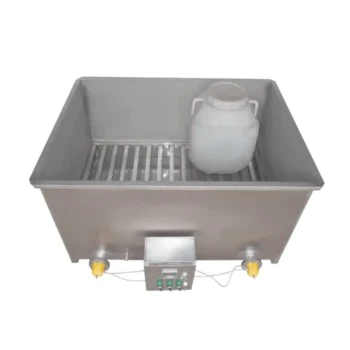
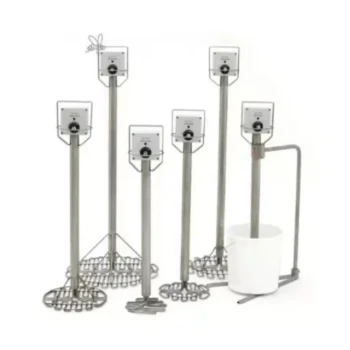
Precise temperature monitoring is the only way to prevent the formation of Hydroxymethylfurfural (HMF), a toxic byproduct of overheated sugar syrup. High-precision control ensures that sugar dissolves into a stable solution without undergoing chemical dehydration, which protects honeybee health, prevents metabolic fatigue, and reduces colony mortality rates.
Core Takeaway: Maintaining strict temperature boundaries during syrup preparation is a critical risk-mitigation strategy. It ensures the nutritional integrity of the feed while preventing the chemical breakdown that produces HMF, a substance highly toxic to honeybee populations.
The Chemical Risk: Preventing HMF Toxicity
The Formation of Hydroxymethylfurfural (HMF)
When sugar syrup is heated to excessive temperatures or held at high heat for too long, the sugars undergo a dehydration reaction. This chemical process creates Hydroxymethylfurfural (HMF), a compound that is significantly toxic to honeybees.
Impact on Colony Vitality
HMF exposure leads to severe metabolic disorders and increased mortality rates across the hive. For professional beekeepers, even a slight spike in HMF levels can compromise the immune security of the colony and result in devastating economic losses through reduced honey yields.
The Role of Precision Monitoring
Utilizing industrial-grade, high-precision monitoring equipment is the only reliable method to stabilize the preparation process. It allows operators to reach the necessary heat for dissolution while ensuring the syrup never crosses the threshold where chemical breakdown begins.
Achieving Physical Stability and Solution Uniformity
Breaking the Crystalline Structure
Heating is often required to prepare high-concentration syrups, such as the standard 50% sugar-to-water ratio. Precise heat application is necessary to break down the crystalline structure of the sugar, ensuring a uniform, stable solution.
Preventing Recrystallization and Clogging
Without controlled heat, sugar may not dissolve completely or may quickly recrystallize after cooling. This recrystallization can clog feeding equipment and make the supplemental nutrition inaccessible to the bees, leading to starvation during non-foraging seasons.
Protecting Medicinal Bioactivity
If medications are added to the syrup, precise phased temperature control is mandatory. Active medicinal ingredients must be dissolved in warm water and then cooled to prevent physical precipitation or the loss of biological activity due to heat degradation.
Understanding the Trade-offs and Risks
The Danger of Improper Equipment
Relying on low-precision or manual heating methods often results in temperature "overshoot," where the syrup accidentally reaches toxic thresholds. Inconsistent heating also risks incomplete dissolution, which leads to fermented feed or mechanical failure in industrial feeders.
External Environmental Variables
Temperature monitoring must also account for ambient conditions; for instance, if the syrup is fed when average temperatures are below 50 degrees Fahrenheit, bees cannot effectively dehydrate it. This leads to fermentation in the cells, which can be just as damaging to the hive as HMF toxicity.
The Risk of Feed Spillage
Improperly prepared syrup (too thin or inconsistent) increases the risk of spills during feeding. Spilled feed attracts pests and can trigger robbing behavior, where external colonies attack the hive, compromising the security of the entire apiary.
Sourcing the Right Solutions for Professional Success
Professional Recommendations for Distributors
Selecting the right equipment and supplies is essential for maintaining the high-volume honey production that professional beekeepers demand. As a technical partner, your goal is to provide tools that ensure both efficiency and biological safety.
- If your primary focus is risk mitigation and colony health: Prioritize sourcing industrial heating equipment with automated, high-precision thermal sensors to eliminate HMF formation.
- If your primary focus is maximizing honey yield: Ensure your product portfolio includes high-concentration syrup stabilizers that maintain uniform consistency and prevent recrystallization.
- If your primary focus is operational efficiency: Offer "one-stop" kits that combine rapid-dissolution sugar products with precision-controlled feeders for fast and reliable order fulfillment.
Expertise in precise temperature control transforms a simple variable cost into a powerful tool for ensuring the long-term productivity and health of commercial honeybee colonies.
Summary Table:
| Monitoring Factor | Risk of Overheating | Benefit of Precision |
|---|---|---|
| HMF Formation | Toxic chemical dehydration | Ensures biological safety and hive health |
| Solution State | Recrystallization & equipment clogging | Maintains stable, uniform syrup consistency |
| Additives | Loss of medicinal bioactivity | Protects heat-sensitive active ingredients |
| Colony Impact | Metabolic fatigue & high mortality | Maximizes honey yield and seasonal survival |
Secure Your Distribution Growth with HONESTBEE Precision Equipment
For distributors and B2B resellers, reliability is the foundation of profit. HONESTBEE caters to commercial apiaries and distributors with a comprehensive wholesale offering of the full spectrum of beekeeping tools, machinery, and equipment. Our high-precision monitoring solutions help your clients eliminate the risk of HMF toxicity, ensuring the colony health and productivity they demand.
Why Leading Distributors Choose HONESTBEE:
- One-Stop Sourcing: Access everything from specialized hive-making and honey-filling machines to essential industry consumables and honey-themed merchandise.
- Unmatched Support: Benefit from rapid response times, deep professional industry expertise, and dedicated customer service.
- Efficient Fulfillment: Leverage our ultra-fast delivery to maintain optimal inventory levels and satisfy your customers' urgent needs.
Partner with a supplier that understands the technical nuances of professional beekeeping. Contact us today at HONESTBEE to access premium trading services and enhance your market competitiveness!
References
- M. BOJANIĆ RAŠOVIĆ. EXAMINING AIR POLLUTANTS AS INFLUENCING FACTORS OF HONEY BEE COLONY COLLAPSE DISORDER. DOI: 10.15666/aeer/2306_1161911644
This article is also based on technical information from HonestBee Knowledge Base .
Related Products
- Precision Honey Refractometer Instrument for Quality Assessment
- Professional Thermostatic Conical Honey Melter
- Digital Honey Refractometer for Precision Measurement of Optimal Honey Quality
- Solar Beeswax Melter Easy Solar Wax Melter for Beeswax
- Professional Plastic Honey Dipper for Easy Honey Drizzling
People Also Ask
- How do professional scientific instruments contribute to honey quality testing? Ensure Purity and Market Compliance
- Why is a honey refractometer important for beekeepers? Ensure Quality and Prevent Fermentation
- What is the correct temperature for a honey sample before taking a refractometer reading? Tips for Accurate Measurement
- What criteria should be considered when choosing a honey refractometer? Expert Tips for Precise Moisture Control
- Why is a honey refractometer considered essential for harvesting honey? Guarantee Quality and Prevent Fermentation