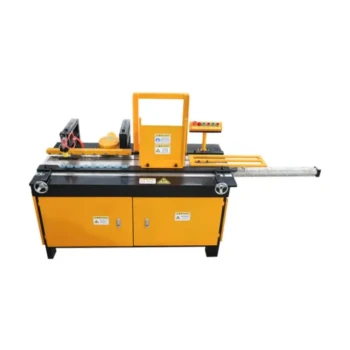
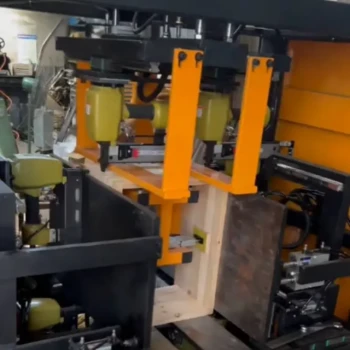
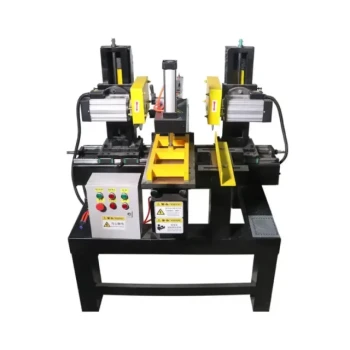
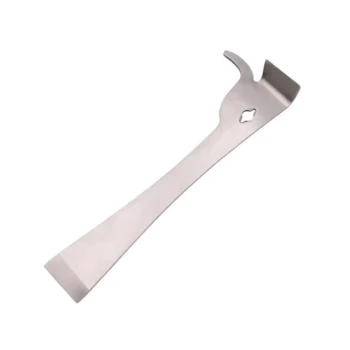
The implementation of standardized Hive-making Machines is the cornerstone of scalable apiary infrastructure. By enforcing precise specifications across all production units, these machines eliminate hardware variability that plagues traditional operations. This consistency is the fundamental requirement for modular asset management, allowing for the seamless interchangeability of components and significantly reducing long-term maintenance costs in commercial beekeeping.
Core Takeaway: By mechanizing the production of uniform hive components, you transform beekeeping from a variable craft into a predictable industrial process. This hardware uniformity serves as the critical physical interface required for future automation, efficient inventory tracking, and rapid operational scaling.
The Foundation of Asset Interchangeability
Eliminating Hardware Incompatibility
In a large-scale apiary, the inability to swap parts between hives creates logistical bottlenecks. Standardized Hive-making Machines ensure that every cover, super, and frame fits every other hive body perfectly. This eliminates the need to sort equipment by "batch" or "maker," streamlining daily operations.
Simplifying Maintenance and Repairs
When specifications are consistent, asset maintenance becomes a predictable, assembly-line process rather than a series of custom repairs. Damaged components can be instantly replaced with off-the-shelf spares without modification. This reduces labor costs associated with equipment upkeep and prolongs the lifecycle of the total asset base.
Lowering Procurement Complexity
Standardized production allows for bulk procurement of raw materials and simplified inventory management. Because the internal components (like frames) are uniform, beekeepers can predict material needs with high accuracy. This leads to a systemic increase in regional production efficiency and lower overall capital expenditure per unit.
Enabling Operational Scalability
Facilitating Industrial Processes
Commercial beekeeping involves repetitive, high-volume tasks such as colony splitting, honey harvesting, and relocation. Universal hardware specifications allow these processes to be executed rapidly. For example, moving frames between hives to balance populations is seamless when the structural dimensions are identical.
Preparing for Future Automation
This is the most critical long-term asset strategy. Standardized physical interfaces are a prerequisite for automation. You cannot integrate automated harvesting equipment or robotic handling systems if the physical hives vary in size or structure. Implementing these machines now future-proofs your operation for the next generation of ag-tech.
Enhancing Environmental Control and Protection
Stabilizing Colony Micro-climates
Beyond logistics, standardized hives provide a scientifically controlled environment. The precise structure ensures adequate thermal insulation and ventilation. This consistency helps maintain the colony's micro-climate, protecting the asset (the bees) from extreme weather and predators, which stabilizes annual honey yields.
Rapid Emergency Response capabilities
Standardized manufacturing ensures structural consistency and airtightness. In scenarios involving nearby chemical pesticide application, this allows operators to rapidly seal or relocate hives to protect the colonies. Non-standard hives often lack the precise fit required for effective isolation, leading to preventable secondary losses.
Understanding the Trade-offs
Initial Capital Investment
Transitioning to machine-based hive production requires an upfront investment in machinery and training. While this reduces per-unit costs over time, the initial expenditure is higher than purchasing cheap, non-standard equipment or building hives manually without precision tools.
Rigidity in Design
Standardization inherently limits customization. Once a specific "standard" is adopted via a machine, shifting to a different hive style or dimension becomes operationally expensive. It requires a commitment to a specific modular system for the lifespan of the assets.
Making the Right Choice for Your Goal
To maximize the value of your apiary assets, align your equipment strategy with your operational targets:
- If your primary focus is rapid scaling: Prioritize machines that produce widely accepted regional standard dimensions to ensure easy sourcing of auxiliary components.
- If your primary focus is future automation: Select machinery that adheres to strict tolerance levels compatible with currently available automated extraction lines.
- If your primary focus is risk mitigation: Ensure the machine produces hives with high structural integrity and sealability to protect against environmental hazards and pesticide exposure.
Standardization is not just about building boxes; it is about building a predictable, resilient, and scalable business foundation.
Summary Table:
| Feature | Impact on Asset Management | Operational Benefit |
|---|---|---|
| Hardware Uniformity | Eliminates component incompatibility | Seamless part interchangeability & faster field repairs |
| Modular Design | Simplifies inventory & procurement | Predictable material needs and lower capital expenditure |
| Precision Specs | Prerequisite for automated systems | Future-proofs apiaries for robotic harvesting & ag-tech |
| Structural Integrity | Stabilizes colony micro-climates | Enhanced protection against weather and pesticide exposure |
| Production Consistency | Transforms craft into industrial process | Scalable infrastructure for rapid regional expansion |
Scale Your Apiary Operations with HONESTBEE Precision
Transitioning to an industrial-scale beekeeping model requires the right foundation. At HONESTBEE, we specialize in empowering commercial apiaries and distributors with high-precision hive-making machines, honey-filling equipment, and a complete spectrum of professional beekeeping tools. Our standardized machinery ensures your assets are modular, durable, and ready for future automation, reducing your long-term maintenance costs and operational complexity.
Whether you are expanding your commercial fleet or sourcing wholesale consumables, our team provides the technical expertise and hardware to drive your growth. Contact HONESTBEE today to discover how our comprehensive equipment solutions can transform your beekeeping business into a predictable, high-yield operation.
References
- Nicholaus Bhikolimana Tutuba, Hawa Petro Tundui. Business Model Innovation for Sustainable Beekeeping in Tanzania: A Content Analysis Approach. DOI: 10.33423/ajm.v19i1.1340
This article is also based on technical information from HonestBee Knowledge Base .
Related Products
- High-Efficiency Pneumatic Bee Hive Making Machine for Rapid Box Assembly
- Mini Desktop Bee Hive Frame Forming Making Machine
- Beehive Handle and Frame Rest Cutting Machine: Your Specialized Hive Machine
- Automatic High-Speed Bee Hive Box Stapling Machine
- Beehive Machine Double End Saw for Precision Hive Component Manufacturing
People Also Ask
- How does the introduction of professional beehive-making machinery benefit sustainable beekeeping? Scale Your Apiary
- Why is specialized beehive-making machinery critical for low-defense breeding? Enhance Selection with Precision Tools
- How does the introduction of specialized beehive making machinery contribute to increasing the scale of regional beekeeping industries?
- What is the importance of specialized beehive making machinery in a circular bio-economy? Build Local Sustainability
- Why is specialized beehive-making machinery essential? Scale Your Apiary with Precision Industrial Standards