Precise assessment of comb area is the definitive metric for objectively measuring colony strength in commercial beekeeping. Because the comb acts as both the nursery for larvae and the storage facility for pollen and nectar, quantifying its total area—and the proportion covered by adult bees—provides an accurate gauge of a colony's health. For commercial pollination services, this data is critical because it directly correlates to foraging capacity and the resulting financial return.
The Core Insight In commercial pollination, a hive is only as valuable as its foraging population. Assessing comb area moves colony evaluation from a subjective guess to a quantifiable metric, ensuring that only strong, high-capacity colonies are deployed to maximize crop yields and profitability.
The Biological Basis of Commercial Value
The Dual Function of the Comb
To understand the value of a hive, you must look at its infrastructure. The comb serves two vital biological purposes: it is the primary storage for food resources (pollen and nectar) and the nursery for developing larvae.
Quantifying Colony Strength
Subjective visual checks are insufficient for large-scale operations. By measuring the total comb area and analyzing how much of it is covered by adult honeybees, apiarists can derive an objective measure of colony strength.
predicting Foraging Capacity
This measurement matters because infrastructure dictates population. A larger, well-populated comb area indicates a thriving brood and ample food stores, which translates to a larger population of active foragers ready to work the fields.
The Economic Impact on Pollination Services
Translating Strength to Yield
There is a direct link between the biological metrics of a hive and the agricultural output of the client. Stronger colonies with larger foraging populations are significantly more effective at pollinating commercial crops.
Maximizing Financial Returns
For high-value crops like coffee and sunflowers, the density of pollinators determines the harvest. By ensuring hives meet precise comb area standards, commercial services guarantee maximum pollination efficiency, thereby securing maximum financial returns for both the grower and the beekeeper.
The Role of Standardization and Equipment
The Necessity of Uniformity
Precise assessment is impossible without precise equipment. High-precision manufacturing machinery is required to produce beehive components with completely uniform specifications.
Scaling Operations Efficiently
Uniform equipment dimensions are the technical prerequisite for industrial-grade services. They ensure compatibility and stability during the transportation, stacking, and cross-regional operation of thousands of colonies.
Improving Turnover Efficiency
Standardization does not just help with measurement; it streamlines logistics. High-precision manufacturing improves the turnover efficiency of pollination colonies, allowing large-scale apiaries to manage vast numbers of hives with consistent quality.
Understanding the Trade-offs
The Cost of Precision
Achieving the level of uniformity required for precise assessment demands investment. It relies on high-precision machinery, which represents a significant upfront capital expenditure compared to traditional, less standardized equipment manufacturing.
Complexity vs. Speed
While precise measurement ensures quality, it introduces a layer of data management to beekeeping. Operators must balance the time required to assess and verify comb area metrics against the rapid logistical demands of moving thousands of hives for pollination contracts.
Making the Right Choice for Your Goal
To leverage comb area assessment effectively, consider your primary operational objectives:
- If your primary focus is Maximizing Crop Yields: Prioritize colonies with verified high comb area and bee coverage, as these are statistically proven to enhance pollination in crops like coffee and sunflowers.
- If your primary focus is Operational Scalability: Invest in high-precision manufacturing or standard equipment to ensure hive compatibility, which streamlines transport and enables consistent assessment across thousands of units.
By treating comb area as a precise data point rather than a biological variable, you transform pollination from a natural process into a reliable industrial service.
Summary Table:
| Metric | Importance in Commercial Pollination | Operational Benefit |
|---|---|---|
| Comb Area Coverage | Direct indicator of brood health and storage capacity. | Predicts foraging population size. |
| Adult Bee Density | Measures active labor force available for pollination. | Guarantees service quality for growers. |
| Equipment Uniformity | Enables standardized measurement across thousands of hives. | Increases logistics and turnover efficiency. |
| Financial Correlation | Links colony strength to crop yield (e.g., coffee, sunflower). | Optimizes ROI for beekeepers and clients. |
Transform Your Apiary into a Precision Pollination Powerhouse
At HONESTBEE, we understand that in commercial beekeeping, precision is the difference between a good season and a record-breaking one. We specialize in empowering commercial apiaries and distributors with the tools needed to scale industrial-grade services.
Our Value to Your Business:
- High-Precision Machinery: We supply specialized hive-making and honey-filling machines that ensure the absolute uniformity required for standardized comb assessment.
- Comprehensive Wholesale Range: From durable hardware to essential industry consumables, we provide a full spectrum of beekeeping equipment designed for high-turnover operations.
- Industrial Scalability: Our products help you streamline logistics, improve hive compatibility, and deliver consistent pollination results to your clients.
Ready to elevate your operational efficiency and maximize crop yields?
Contact HONESTBEE Today for Wholesale Solutions
References
- Patrice Kasangaki. Assessment of Honeybee Colony Performance in the Agro-Ecological Zones of Uganda. DOI: 10.32474/ciacr.2018.01.000121
This article is also based on technical information from HonestBee Knowledge Base .
Related Products
- Professional Frame Comb Fork and Lifter for Efficient Handling
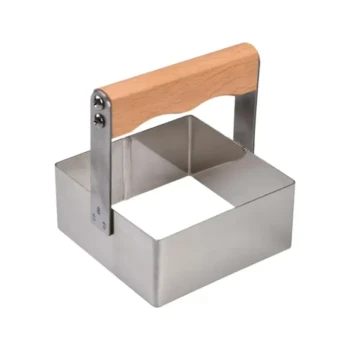
- Heavy Duty Stainless Steel Honeycomb Cutter
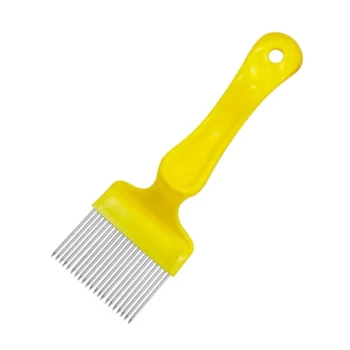
- Professional Customizable Honey Uncapping Fork with Adjustable Tine Options
- Professional Wide Blade Honey Scraper for Beekeeping and Honey Processing
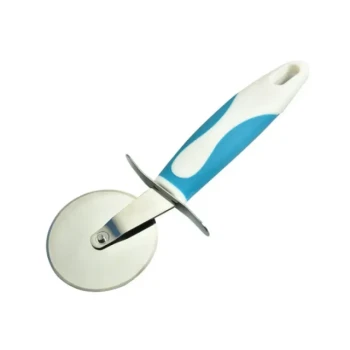
- Professional Rolling Wax Cutter with Ergonomic Handle
People Also Ask
- What is the specific design and purpose of a frame lifter hive tool? Master Gentle Hive Inspections
- How does the frame lifter hive tool function? Master Safe and Gentle Frame Removal
- What are the technical benefits of using a frame lifter? Maximize Hive Safety and Inspection Efficiency
- What are the roles of frames and combs in a beehive? Essential Infrastructure for Healthy Apiaries
- What is the function of specialized beekeeping tools and hive frames? Enhance Efficiency & Yield in Your Apiary