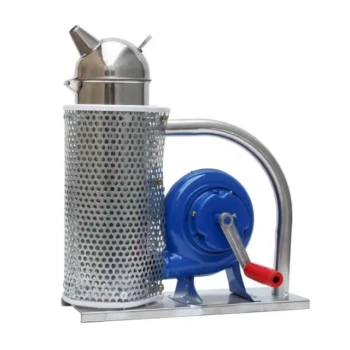
A professional beekeeping smoker is the linchpin of sustainable honey harvesting, acting as the primary defense against colony loss and aggression. It functions by generating cool, low-temperature smoke that temporarily disrupts the bees' communication mechanisms. This ensures the safety of the operator and, more importantly, prevents the colony from abandoning the hive—a frequent consequence of primitive harvesting methods.
Core Insight While primitive techniques like burning straw can result in a 100 percent rate of colony absconding (abandonment), the use of a professional smoker maintains a colony retention rate of approximately 96.9 percent. By masking alarm pheromones and keeping the smoke temperature low, it transforms harvesting from a destructive event into a sustainable management practice.
The Mechanism of Action
Disrupting Chemical Communication
Honeybees rely heavily on pheromones to communicate threats. When a hive is opened, guard bees release alarm pheromones to signal an attack.
A professional smoker produces controlled smoke that masks these chemical signals. By blocking the transmission of alarm pheromones, the collective defensive response of the colony is inhibited, keeping the bees calm.
Triggering the "Fire Instinct"
Beyond masking signals, the presence of smoke triggers an evolutionary survival response known as the "fire instinct."
Sensing potential danger, bees instinctively begin consuming stored honey to prepare for potential evacuation. This gorging behavior makes the bees physically heavier and significantly less aggressive, allowing the harvester to work without triggering a swarm attack.
Sustainability and Colony Retention
Preventing Colony Absconding
The most critical metric for a beekeeper is colony retention. According to field data, using primitive methods like open-flame burning often results in a 100 percent absconding rate, effectively destroying the apiary's future productivity.
In stark contrast, professional smokers ensure that nearly 97 percent of colonies remain in their hives post-harvest. This high retention rate is essential for long-term commercial viability.
Eliminating Environmental Risks
Traditional harvesting often involves open fires or burning straw, which poses significant risks to the surrounding ecosystem.
Professional smokers contain the combustion source within a metal canister, producing smoke without an open flame. This design mitigates the risk of accidental forest fires and protects the bees from being singed or killed by uncontrolled heat.
Understanding the Trade-offs
The Importance of Temperature Control
Not all smoke is beneficial; the temperature of the smoke is the deciding factor between calming a hive and damaging it.
A professional smoker is designed specifically to produce cool, white smoke. If the fuel is packed incorrectly or the device is misused, it may emit hot smoke or sparks. High-temperature smoke can burn the bees' delicate wings and bodies, inducing panic rather than calm, which defeats the purpose of the tool.
Over-Smoking the Hive
While smoke is a sedative, excessive use can be counterproductive.
Over-smoking can taint the flavor of the honey or stress the colony unnecessarily. The goal is to use the minimum amount of smoke required to mask pheromones and induce feeding, maintaining a balance between operator safety and hive health.
Making the Right Choice for Your Operation
For beekeepers aiming to professionalize their operations, the smoker is not optional equipment—it is a prerequisite for stability.
- If your primary focus is Colony Sustainability: Prioritize a smoker to prevent absconding and ensure your livestock remains productive for the next season.
- If your primary focus is Operator Safety: Use the smoker to mask alarm pheromones, significantly reducing the likelihood of stings during hive inspections and harvest.
- If your primary focus is Honey Quality: Ensure the smoker produces cool, clean smoke to avoid contaminating the honey with soot or ash.
By mastering the use of a professional smoker, you ensure that the honey harvest is a safe, repeatable procedure rather than a destructive event.
Summary Table:
| Feature | Professional Smoker | Primitive Methods (e.g., Burning Straw) |
|---|---|---|
| Colony Retention Rate | ~96.9% | 0% (100% Absconding) |
| Bee Behavior | Calm, gorging on honey | Panic, aggressive, or dead |
| Temperature Control | Cool, low-temperature smoke | High-heat open flames |
| Pheromone Impact | Effectively masks alarm signals | Triggers extreme alarm/defense |
| Environmental Risk | Contained, fire-safe | High risk of accidental fires |
Maximize Your Apiary Productivity with HONESTBEE
At HONESTBEE, we specialize in empowering commercial apiaries and distributors with the high-performance tools necessary for professional success. From precision-engineered beekeeping smokers that ensure 96.9% colony retention to advanced honey-filling machines and specialized hive-making hardware, our comprehensive wholesale offering covers your entire production cycle.
Don't let primitive methods compromise your yields or colony health. Partner with HONESTBEE for a full spectrum of industry-leading beekeeping machinery, consumables, and cultural merchandise designed to scale your business.
Ready to upgrade your operation? Contact us today to explore our wholesale solutions!
References
- NIGON Marie, HELLOW Géraud. Analysis of Beekeeping and Agricultural Practices on the Bee Apismellifera in the Central Region of Togo. DOI: 10.5281/zenodo.17630670
This article is also based on technical information from HonestBee Knowledge Base .
Related Products
- Professional Bee Smoker with Elongated Spout and Durable Bellows for Beekeeping
- Professional Replacement Bee Smoker Bellows for Beekeeping Equipment
- Stainless Steel Honey Bee Smoker Hive and Honeycomb Smoker for Beekeeping
- Miniature Stainless Steel Bee Smoker for Beekeeping
- Electric Bee Smoker European Style Bee Hive Smoker for Beekeeping
People Also Ask
- What roles do bee smokers and precision tools play in honey harvesting? Master Safety and Quality Control
- Why is the use of professional bee smokers and specialized fuel essential? Protect Honey Purity & Colony Safety
- Why is a professional bee smoker considered an essential tool for hive management and safety? Master Colony Control.
- Why is a professional bee smoker essential for hive maintenance? Master Colony Control & Safety
- How do professional bee smokers facilitate bee management? Enhancing Forest Beekeeping Safety and Efficiency