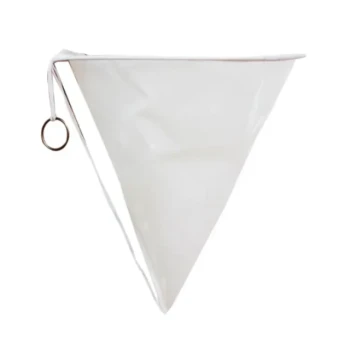
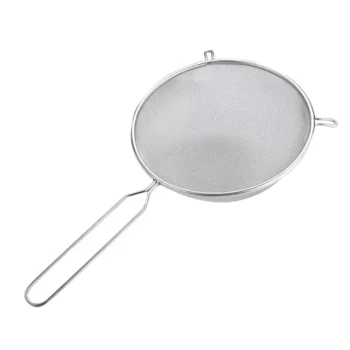
Micron-level filtration acts as the primary quality control checkpoint in the preparation of honeybee pathogen samples. Its specific function is to mechanically separate large biological byproducts—such as tissue debris and insect hairs—from the much smaller pathogen spores, ensuring only the target material remains in the suspension.
Achieving a high-purity inoculum is impossible without physical screening. Micron-level filters strip away the "biological noise" of the host, ensuring that sophisticated quantification tools measure the actual pathogen load rather than background impurities.
The Mechanics of Physical Screening
Targeting Size Differentials
The fundamental principle of this process is size exclusion. Honeybee pathogen spores are microscopic, typically small enough to pass freely through a 10-micron membrane.
Host material, however, is significantly larger. By utilizing this specific pore size, you create a physical barrier that intercepts unwanted material while acting as an open gate for the target spores.
Eliminating Biological Debris
When processing biological samples, contamination from the host is inevitable. The primary reference highlights that tissue debris and honeybee hairs are the most common impurities.
Without filtration, these contaminants remain in the suspension. A 10-micron filter effectively traps these larger structures, cleaning the sample without requiring harsh chemical treatments that might damage the spores.
Why Purity Dictates Accuracy
Enabling Precise Quantification
The ultimate goal of purification is often to create an inoculum for further study. The presence of debris is not just unsightly; it is statistically dangerous.
Techniques like flow cytometry rely on optical analysis of individual particles. If a sample is crowded with tissue fragments, the instrument may misidentify debris as spores, leading to inflated counts and flawed data.
Standardizing Inocula
For scientific results to be reproducible, the input must be consistent. Filtration ensures that the resulting liquid contains a high concentration of spores and a low concentration of variables.
This standardization allows researchers to compare results across different experiments with confidence, knowing that the "signal" (spores) is not being drowned out by "noise" (bee parts).
Understanding the Trade-offs
The Risk of Filter Clogging
While filtration is necessary, it introduces mechanical resistance. If a sample is exceptionally dense with tissue homogenate, the membrane pores can become occluded.
Clogging effectively stops the process. It can lead to the loss of the sample or require the use of multiple filters, increasing the cost and time required for preparation.
Balancing Purity vs. Yield
There is always a slight potential for sample loss during filtration. While the pores are designed to let spores pass, some may get trapped in the matrix of the filter or caught in the "cake" of debris that forms on the surface.
You are trading a small percentage of total spore yield for a massive increase in sample quality. For analytical methods, this is almost always the correct exchange to make.
Making the Right Choice for Your Goal
To ensure your purification process supports your specific research objectives, consider the following recommendations:
- If your primary focus is quantification accuracy (Flow Cytometry): Prioritize the use of 10-micron filters to remove all particulate noise that could interfere with optical sensors.
- If your primary focus is obtaining high-purity inocula: Use filtration as a mandatory step to eliminate host tissue and hairs that could degrade the sample or introduce bacterial contaminants.
Micron-level filtration is the bridge between a raw biological sample and a scientifically viable dataset.
Summary Table:
| Feature | Function in Spore Purification | Impact on Research Accuracy |
|---|---|---|
| Pore Size (10-micron) | Mechanically excludes host tissue and bee hairs. | High signal-to-noise ratio for quantification. |
| Size Exclusion | Separates smaller pathogen spores from larger debris. | Prevents misidentification during flow cytometry. |
| Debris Removal | Eliminates biological 'noise' without chemical damage. | Ensures a standardized and reproducible inoculum. |
| Sample Quality | Delivers a clean, concentrated pathogen suspension. | Reduces risk of bacterial contamination in samples. |
Elevate Your Bee Health Research and Operations with HONESTBEE
Precise pathogen purification is critical for maintaining the health of your apiaries and the quality of your products. At HONESTBEE, we specialize in supporting commercial apiaries and distributors with the high-performance tools and machinery required to thrive in the modern beekeeping industry.
How we add value to your business:
- Comprehensive Equipment Supply: From specialized hive-making and honey-filling machinery to high-precision laboratory tools.
- Wholesale Solutions: We provide a full spectrum of beekeeping hardware and essential industry consumables at scale.
- Industry Expertise: Whether you are scaling a commercial operation or distributing honey-themed cultural merchandise, we offer the technical support and product variety you need to succeed.
Don't let biological debris compromise your results or production efficiency. Contact HONESTBEE today to discover how our professional beekeeping equipment and wholesale services can optimize your workflow!
References
- Kaarel Pent, Reet Karise. Overlapping exposure effects of pathogen and dimethoate on honeybee (Apis mellifera Linnaeus) metabolic rate and longevity. DOI: 10.3389/fphys.2023.1198070
This article is also based on technical information from HonestBee Knowledge Base .
Related Products
- Professional Cone-Shaped Honey Filter with Reinforced Steel Ring
- Conical Nylon Honey Strainer Filter Bag for Beekeeping and Honey Filtration
- Professional Stainless Steel Honey Filter with Support Handle
- Professional Honey Filter with Tripod Support Stand
People Also Ask
- What role do professional honey filters play in enhancing the purity of raw honey? Achieve Market-Ready Clarity
- What role does a honey filter play in ensuring purity? Achieve Clean, Market-Ready Honey
- What is the role of a honey filter in ensuring honey purity? Enhance Clarity, Stability, and Shelf Life
- What are some cost-effective methods for filtering extracted honey? Low-Cost Filtration Hacks for Clear Honey
- What filter size for honey? A Beekeeper's Guide to Straining for Clarity and Quality