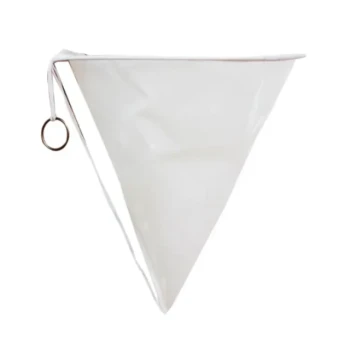
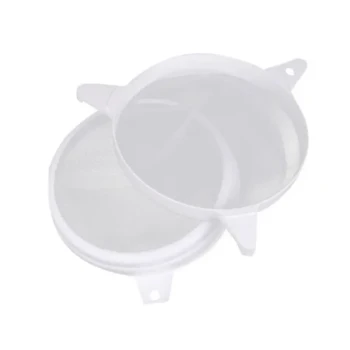
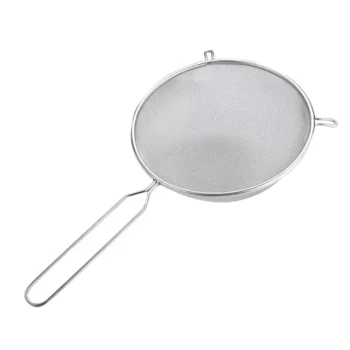
The primary function of professional honey straining equipment is to mechanically separate impurities such as beeswax, pollen, and hive debris from the raw harvest. Without this standardized filtration, honey frequently retains high levels of water-insoluble solids, causing it to fail critical quality benchmarks. Using this equipment is the only reliable method to maintain solid content below the required 0.5% threshold.
While raw honey is naturally rich in organic matter, achieving a marketable product requires balance. Professional straining equipment ensures the final product meets the 0.5% national standard for water-insoluble solids, securing both regulatory compliance and commercial quality.
The Mechanics of Purity Control
Managing Hive Debris
Honey harvested directly from traditional hives acts as a catch-all for hive materials. This includes beeswax particles, pollen grains, and general hive debris.
Without intervention, these elements remain suspended in the viscous liquid. This results in a product with a high concentration of water-insoluble solids.
Overcoming Traditional Harvest Limitations
Manual or traditional harvesting methods lack the precision to filter these solids effectively.
Consequently, honey processed without professional equipment often exhibits inconsistency. This lack of uniformity directly impacts the physical composition of the final batch.
Achieving Compliance and Grade
Meeting the National Standard
To sell honey commercially, producers must adhere to strict regulatory limits. The 0.5% threshold for water-insoluble solids is the critical national standard.
Professional equipment is calibrated to ensure solid content consistently stays below this limit. This turns a variable raw ingredient into a compliant product.
Enhancing Visual Clarity
Beyond mere compliance, filtration dramatically affects the aesthetic quality of the honey. High solid content creates cloudiness and visible particulate matter.
Removing these impurities improves the clarity of the honey. This directly elevates its commercial grade, making it more appealing to consumers and retailers.
The Risks of Inadequate Filtration
The Cost of Non-Compliance
The most significant pitfall in honey processing is underestimating the volume of invisible solids. Failing to remove these solids risks producing a batch that violates the 0.5% limit.
Non-compliant honey cannot be sold as a standard commercial grade product. This leads to wasted inventory or the need for costly re-processing.
Compromising Commercial Value
Even if honey is safe to eat, visible impurities perceive a lower quality product.
Neglecting professional straining allows beeswax and pollen to cloud the product. This reduces the honey's market value regardless of its flavor profile.
Making the Right Choice for Your Goal
To ensure your honey processing meets your specific objectives, consider the following focus areas:
- If your primary focus is Regulatory Compliance: Ensure your equipment is calibrated to filter solids strictly below the 0.5% national standard to avoid legal or sales barriers.
- If your primary focus is Marketability: Prioritize filtration that maximizes clarity, as removing visible debris directly correlates to a higher commercial grade.
Professional filtration is the bridge between a raw agricultural harvest and a high-value commercial product.
Summary Table:
| Feature | Traditional Harvesting | Professional Straining Equipment |
|---|---|---|
| Insoluble Solid Content | Frequently > 0.5% | Consistently < 0.5% |
| Impurity Removal | Minimal (leaves wax/debris) | High-precision filtration of wax & pollen |
| Product Clarity | Cloudy/Visible particulates | Crystal clear/High transparency |
| Market Readiness | Variable/Non-compliant | Ready for commercial retail |
| Regulatory Status | At risk of rejection | Guaranteed compliant |
Elevate Your Honey Quality with HONESTBEE
Don't let impurities devalue your harvest. HONESTBEE provides commercial apiaries and distributors with the professional-grade machinery needed to exceed global quality standards.
From high-precision honey straining and filtration systems to advanced honey-filling machines and specialized hive-making hardware, we supply the comprehensive wholesale tools your business needs to scale. Whether you are a large-scale distributor or a growing apiary, our equipment ensures your product meets the critical 0.5% solid threshold while maximizing visual appeal.
Ready to upgrade your production line? Contact HONESTBEE today for a custom quote and see how our beekeeping technology can drive your commercial success.
References
- Sileshi Yeserah, Desalegn Begna. Physiochochemical Properties of Honey Produced in Gozamen District, East Gojjam Zone, Amhara Region. DOI: 10.7176/fsqm/94-06
This article is also based on technical information from HonestBee Knowledge Base .
Related Products
- Stainless Steel Triangle Support Honey Strainer and Filters
- Professional Cone-Shaped Honey Filter with Reinforced Steel Ring
- Stainless Steel Double Layer Honey Strainer Sieve Filters
- Nylon Honey Strainer Square Filter Cloth for Honey Filters
- Conical Nylon Honey Strainer Filter Bag for Beekeeping and Honey Filtration
People Also Ask
- Why is stainless steel preferred for honey strainers? Ensure Purity and Durability for Your Honey
- What are the selection criteria for stainless steel filtration equipment used to enhance honey purity? Pro B2B Guide
- What can I use to strain honey? A Beekeeper's Guide to Choosing the Right Filter
- What is the easiest way to strain honey? A Simple Guide for Hobbyist Beekeepers
- What is the primary function of a honey strainer in beekeeping? Achieve Commercial Purity & Visual Clarity