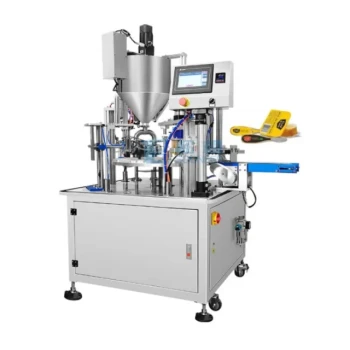
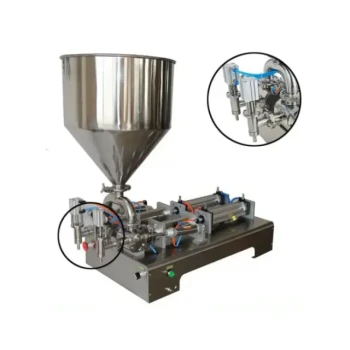
Professional industrial honey-filling machines are the critical infrastructure required to transition from small-scale beekeeping to competitive commercial production. These systems are essential because they ensure high-precision quantitative filling and sterile operations, which are mandatory for compliance with organic production standards. By automating the packaging process, producers guarantee standardized physical consistency and significantly reduce the risk of secondary contamination, satisfying the strict quality management requirements of modern retail chains.
The core value of industrial filling equipment lies in its ability to bridge the gap between raw agricultural output and consumer-ready retail products. It converts variable manual processes into a standardized, sterile, and scalable operation that meets the stringent demands of global markets.
Ensuring Regulatory Compliance and Quality
Precision in Quantitative Filling
To enter retail markets or institutional procurement systems (such as schools), products must meet exact weight and volume specifications. Industrial machines provide high-precision quantitative filling, ensuring every unit meets the label claim. This eliminates the variances inherent in manual labor and protects the producer from regulatory penalties regarding trade weights.
Achieving Sterile Operations
The primary barrier to entering the premium organic market is hygiene. Professional machines operate in a sterile environment, which is necessary to comply with organic production standards. This automated isolation prevents human contact during critical stages, thereby removing the risk of secondary contamination.
Standardization of Physical Consistency
Retailers demand uniformity across thousands of units. Automated equipment guarantees that the physical consistency of the honey—including its viscosity and purity—remains identical from the first bottle to the last. This standardization is a prerequisite for building brand trust and securing long-term distribution contracts.
Scaling Production for Commercial Viability
Overcoming Manual Limitations
Manual filling places a "glass ceiling" on production volume. Automated machines remove this bottleneck, allowing producers to overcome the volume limitations associated with human labor. This capability is the only way to meet the high-capacity orders required by supermarkets and wholesale distributors.
Reducing Labor Intensity and Costs
While the initial investment is higher, industrial machines significantly reduce long-term operational costs. By minimizing labor intensity, producers can reallocate workforce resources to hive management or sales. This efficiency is critical for maintaining healthy profit margins in a competitive market.
Enhancing Product Preservation and Presentation
Barriers Against Degradation
Honey is sensitive to environmental factors. Professional packaging equipment creates a standardized sealing process that acts as a critical barrier against oxidation and moisture. This preservation is vital for maintaining the honey's natural active ingredients and flavor profiles over extended shelf lives.
Meeting Consumer Preferences
Data indicates that approximately 62.3 percent of consumers prefer processed, clarified honey over raw, unfiltered variants. Professional equipment, often integrated with filtration systems, improves the product's transparency and fluidity. This directly boosts competitiveness in high-end retail markets where visual appeal drives purchasing decisions.
Differentiating via Professional Branding
Automated labeling systems provide a polished, professional appearance that distinguishes local products from low-cost imports. By clearly displaying brand identity, geographic origin, and botanical sources, producers can justify premium market pricing. This capability allows beekeepers to transition from selling low-margin raw materials to selling high-margin branded finished goods.
Common Pitfalls to Avoid
Misjudging the Maintenance Requirement
Industrial machines are complex systems that require technical oversight. A common error is assuming these machines are "set and forget." Producers must account for the need for regular calibration and cleaning protocols to maintain the sterile integrity mentioned earlier.
Over-Processing Risks
While consumers often prefer clarified honey, there is a risk of stripping too much character from the product if equipment is not utilized correctly. It is vital to balance the standardized production control with the preservation of the honey's unique flavor profile to avoid creating a sterile but bland product.
Making the Right Choice for Your Goal
To maximize your market competitiveness, align your equipment choice with your specific business objective:
- If your primary focus is Organic Certification: Prioritize machines with advanced sterile operation capabilities to eliminate secondary contamination and meet strict organic compliance standards.
- If your primary focus is Retail Distribution: Invest in high-speed automation with precise metering controls to ensure the standardized weight and packaging consistency required by supermarkets.
- If your primary focus is Brand Building: Focus on equipment with integrated labeling and multi-functional packaging options to create a premium, differentiated shelf presence.
Standardization is not just about efficiency; it is the gateway to market access and consumer trust.
Summary Table:
| Feature | Manual Filling | Industrial Machine Filling | Business Impact |
|---|---|---|---|
| Precision | High variance | High-precision quantitative | Regulatory compliance & trust |
| Hygiene | Risk of contamination | Sterile, automated operations | Organic certification ready |
| Consistency | Inconsistent volume/look | Standardized physical quality | Retailer & supermarket approval |
| Scalability | Limited by labor | High-volume automation | Meets large-scale wholesale demand |
| Preservation | Variable sealing | Airtight oxidation barrier | Extended shelf life & flavor |
| Appearance | Basic/Inconsistent | Polished & professional | Justifies premium market pricing |
Elevate Your Honey Production with HONESTBEE
Transitioning from small-scale beekeeping to a competitive commercial brand requires the right infrastructure. HONESTBEE specializes in empowering commercial apiaries and distributors with high-performance honey-filling machines, hive-making equipment, and essential beekeeping tools.
Our comprehensive wholesale solutions are designed to help you achieve standardized production, organic compliance, and premium branding. Whether you need specialized machinery to scale your operations or honey-themed cultural merchandise to differentiate your brand, we provide the expertise and hardware to drive your growth.
Ready to scale your business and dominate the market? Contact us today to discuss your customized equipment needs!
References
- Yevhen Kononets, Horst Treiblmaier. The potential of bio certification to strengthen the market position of food producers. DOI: 10.1108/mscra-05-2020-0013
This article is also based on technical information from HonestBee Knowledge Base .
Related Products
- Commercial Rotary Honey Filling Machine for Production
- Precision Durable Efficient HONESTBEE Rotary Honey Filling Machine
- Fully Automatic Honey Filling Packaging Machine for Processing Line
- Economy Small Honey Filling Machine Honey Bottle Filler Packaging Machine
- Precision Automated Packaging Turntable Honey Spoon Filling Sealing Packing Machine
People Also Ask
- What role do commercial honey filling machines play in honey distribution? Scaling Efficiency and Quality Control
- What technical support do commercial-grade filling machines provide? Convert Honey NTFPs into Marketable Commodities
- What is the significance of specialized honey filling equipment? Scaling from Beekeeping to Commercial Success
- Why is professional honey filling machinery critical for honey production? Scale Your Apiary's Profit & Efficiency
- Why is high-capacity honey filling machinery necessary for Giant Honey Bees? Solve the Apis dorsata Volume Crisis