Hygienic honey harvesting and packaging equipment is essential because it connects colony protection with commercial product quality. Sustainable apiaries must remove honey without destroying comb or unnecessarily disturbing the bees, then process and package it without introducing contaminants. Centrifugal extractors, sanitary stainless-steel equipment, filtration systems, and controlled filling machines help preserve honey quality, support food-safety compliance, and maintain production for future harvest cycles.
Sustainable hive management is not complete when honey is harvested responsibly. The entire workflow, from intact comb extraction to sealed, accurately filled packaging, must protect both the colony and the product.
Why Sustainable Apiaries Need Professional Equipment
Sustainable harvesting depends on intact comb
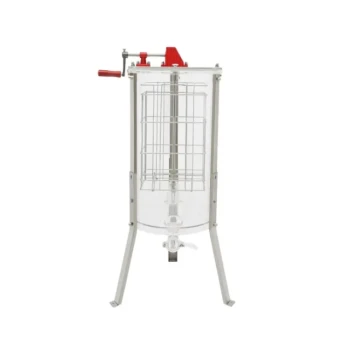
Centrifugal honey extractors separate honey from the comb while keeping the wax structure available for reuse. This reduces the need for bees to rebuild comb and minimizes disruption during future production cycles.
By contrast, destructive harvesting methods can damage nests, weaken colonies, and reduce the apiary’s long-term productivity.
Colony health and product hygiene are connected
Careful use of hive tools, smokers, and protective equipment helps beekeepers work with less disturbance. Clean handling also reduces the chance that dirt, debris, or other impurities enter the honey during harvest.
A controlled process supports both bee welfare and consistent product quality, which are central to sustainable commercial operations.
Sustainable production requires repeatable workflows
Commercial apiaries cannot rely on improvised tools when managing multiple colonies or processing large yields. Standardized equipment makes harvesting, inspection, extraction, filtration, and packaging more predictable.
This repeatability helps teams follow consistent Good Beekeeping Practices and identify quality problems before products reach distributors or retailers.
How Equipment Protects Honey Quality
Sanitary surfaces reduce contamination risks
Stainless-steel extraction and processing equipment provides a durable, cleanable surface for contact with honey. Proper cleaning and handling remain essential, but suitable equipment gives operators a more hygienic foundation than makeshift containers or poorly controlled manual processes.
This is especially important for wild, medicinal, and other premium honey varieties whose value depends on purity, traceability, and distinctive natural characteristics.
Filtration removes physical impurities
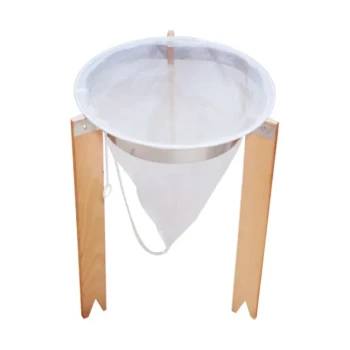
Professional filtration and clarification equipment can remove unwanted physical particles from extracted honey. When applied appropriately, this improves presentation and handling while helping preserve the honey’s characteristic flavor and quality.
Filtration should be managed carefully because processing choices can affect the properties that customers associate with a particular honey variety.
Controlled filling improves consistency
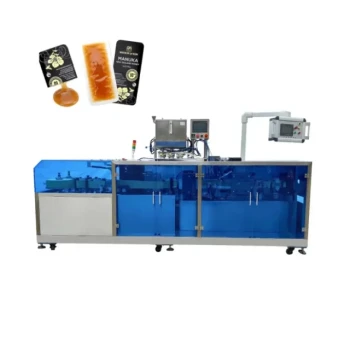
Automated or semi-automated filling equipment dispenses consistent quantities into containers and reduces unnecessary manual contact. Accurate filling supports net-weight requirements and helps distributors maintain dependable product specifications.
Reliable filling also makes it easier to scale production without allowing packaging inconsistencies to undermine the brand.
Sealing supports shelf stability
High-specification sealing equipment helps protect packaged honey from external contamination and moisture exposure. A properly sealed container gives the product a more reliable barrier during storage, transport, and retail handling.
Packaging equipment therefore supports both food safety and the commercial presentation expected in higher-value sales channels.
Why Standardization Matters for Commercial Apiaries
Uniform hive components simplify management
Standardized hive bodies and frames allow components to be exchanged between colonies when appropriate. This makes inspections, colony management, and honey harvesting more efficient.
Standard dimensions also create a more organized workflow when an apiary expands or multiple teams share equipment.
Equipment standardization reduces process variation
Consistent extractors, filters, containers, and filling systems reduce differences between production batches. Operators can work from defined procedures instead of adjusting every step manually.
Lower process variation makes quality control more practical and helps commercial buyers receive products with predictable specifications.
Efficiency improves the business case for sustainability
Professional extraction equipment can process larger volumes with less labor than entirely manual methods. Keeping comb intact also reduces the energy and biological effort bees would otherwise spend rebuilding it.
The result is a production model that uses colony resources more efficiently while improving throughput and commercial viability.
Why Packaging Equipment Matters to B2B Buyers
Accurate packaging supports trade requirements
Wholesalers, distributors, and retailers need products with dependable weights, closures, labeling surfaces, and batch consistency. Quantitative filling equipment helps apiaries meet these operational expectations.
A standardized package is easier to purchase, transport, warehouse, and sell across multiple channels.
Professional presentation strengthens market access
Premium honey is evaluated not only by taste and origin but also by cleanliness, packaging quality, and production reliability. Hygienic filling and sealing equipment helps an apiary present its products as commercially prepared goods.
This can support entry into high-end retail, foodservice, direct-to-consumer, and distributor-led markets.
Reliable fulfillment depends on scalable processing
A commercial apiary needs enough processing capacity to respond to seasonal harvests and customer orders. Equipment that supports efficient extraction and filling helps reduce bottlenecks between the hive and the finished shipment.
For distributors and resellers, dependable supply and rapid order fulfillment are as important as the product itself.
Understanding the Trade-offs
Equipment requires upfront investment
Professional extractors, filtration systems, filling machines, and stainless-steel processing equipment cost more than basic manual tools. The investment should be matched to colony count, harvest volume, product positioning, and expected sales channels.
Buying equipment that is too small can create bottlenecks, while excessive automation can leave capacity underused.
Automation does not replace sanitation procedures
A filling machine cannot compensate for poor cleaning, unsuitable storage, or careless handling. Operators still need documented sanitation routines, equipment inspection, pest control, and appropriate storage conditions.
Hygienic machinery is an enabling system, not a substitute for disciplined operations.
Processing choices can affect product characteristics
Honey should be handled in a way that protects its natural quality and the characteristics valued by buyers. Excessive or poorly controlled processing may affect flavor, texture, or other product attributes.
Apiaries should select filtration, clarification, and filling procedures according to the honey variety and applicable commercial requirements.
Standardization must leave room for product differences
Uniform workflows improve control, but different honey varieties may require different handling parameters. Wildflower, medicinal, and other specialty products should not be treated as interchangeable if their quality depends on distinct characteristics.
The strongest systems combine standardized equipment with product-specific operating procedures.
Making the Right Choice for Your Goal
The right equipment package should reflect both the apiary’s sustainability objectives and its commercial route to market.
- If your primary focus is colony preservation: Prioritize centrifugal extraction and careful hive-handling equipment that keep comb intact and minimize colony disturbance.
- If your primary focus is food safety: Choose cleanable stainless-steel processing equipment, appropriate filtration, controlled handling procedures, and reliable sealing systems.
- If your primary focus is premium honey quality: Select equipment and processing settings that remove physical impurities while protecting the variety’s natural flavor and defining characteristics.
- If your primary focus is wholesale distribution: Invest in standardized extraction, accurate filling, dependable closures, and repeatable packaging specifications.
- If your primary focus is production growth: Build a scalable equipment workflow that can increase throughput without compromising sanitation or colony health.
Sustainable commercial beekeeping succeeds when responsible hive management, hygienic processing, and dependable packaging operate as one controlled production system.
Summary Table:
| Equipment Category | Key Benefits | Impact on Sustainability & Business |
|---|---|---|
| Centrifugal Extractors | Preserves comb integrity, reduces colony disturbance | Supports colony health, boosts long-term productivity |
| Stainless-Steel Processing Equipment | Sanitary surfaces, easy to clean, reduces contamination | Ensures food safety, protects premium honey quality |
| Filtration Systems | Removes physical impurities, improves clarity | Enhances product presentation, preserves natural flavor |
| Automated Filling Machines | Consistent quantities, reduces manual contact | Meets net-weight requirements, scales production efficiently |
| Sealing Equipment | Provides protective barrier against contamination | Maintains shelf stability, supports brand reliability |
Upgrade your apiary with HONESTBEE's comprehensive range of hygienic harvesting and packaging equipment. Our one-stop sourcing ensures you get reliable, scalable solutions that protect your colonies and meet distributor demands. From centrifugal extractors to precision filling machines, we empower your sustainable transition with rapid delivery and dedicated support. Contact us today to optimize your honey production and lock in dependable supply for your business.
Related Products
- Double Nozzle Small Honey Filling Machine Honey Sachet Packing Packaging Equipment
- Small Honey Filling Machine Sachet Packing Equipment Single Nozzle
- Fully Automatic Honey Filling Packaging Machine for Processing Line
- Stainless Steel Pivoting Honey Uncapping Fork with Plastic Handle
- Automatic Single-Dose Snap & Squeeze Honey Sachets Packing Machine
People Also Ask
- How does industrial honey-filling machinery support Robinia pseudoacacia stands? Maximize Your Acacia Honey Yield
- What value do retail packaging equipment and filling technologies provide in the honey distribution process? Maximize ROI
- How does high-precision honey filling equipment protect honey's biological activity? Safeguard Purity & Premium Value
- Why is high-precision honey filling equipment necessary? Secure the medicinal value and ROI of stingless bee honey.
- How does specialized honey filling equipment contribute to honey distribution? Scale Your Wholesale Efficiency Today