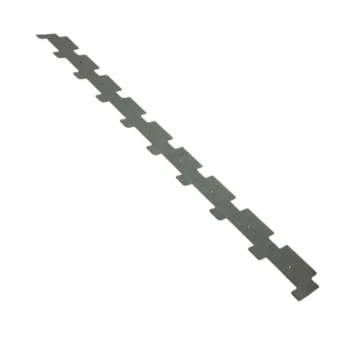
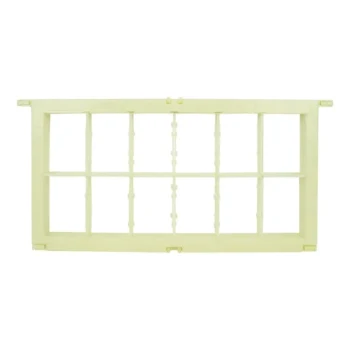
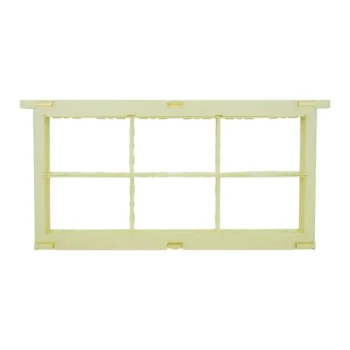
For beekeepers focusing on cut-comb honey, precise frame spacing is a critical production variable. A ten-frame configuration is preferred because it maximizes the total surface area of available honeycomb while restricting the depth of the cells. This specific spacing ensures the comb remains thin enough to slice cleanly, resulting in a higher yield of marketable product.
Core Takeaway While wider spacing is advantageous for extracted liquid honey, cut-comb production relies on the standard ten-frame spacing to prevent bees from drawing out overly thick combs. This approach prioritizes total square inches of surface area and structural manageability, ensuring clean cuts and uniform packaging.
Optimizing for Yield and Quality
Increasing Total Surface Area
The primary economic driver for using ten frames is the yield of cuttable product. Using ten frames creates more individual faces of honeycomb compared to a nine-frame setup.
This configuration generates more total square inches of comb honey across the super. For a producer selling honey by the "cut" or square, maximizing surface area directly correlates to maximizing inventory.
Controlling Comb Thickness
Bees naturally fill available space. If frames are spaced widely (fewer frames per box), bees will elongate the cell walls to bridge the gap, resulting in "fat" or thick combs.
By retaining ten frames, you physically restrict the space available for comb expansion. This forces the bees to cap the honey at a standard, narrower depth.
Facilitating Clean Cuts
The physical act of processing cut-comb honey requires slicing through the wax structure without crushing it.
A standard, thinner comb produced in a ten-frame setup allows for cleaner, neater cuts. Excessively thick combs are difficult to slice through uniformly and may not fit into standard cut-comb packaging molds, potentially damaging the aesthetic appeal that commands a premium price.
Understanding the Trade-offs
The "Nine-Frame" Strategy
It is common for beekeepers to run nine frames in a ten-frame box, but this is a technique specifically for extracted liquid honey, not cut comb.
In an extraction scenario, the resulting thicker combs are easier to uncap and contain more honey per frame for the centrifuge. However, this thickness is exactly what makes them unsuitable for cut-comb production.
Operational Efficiency vs. Product Integrity
Using ten frames can make hive inspections slightly more tedious, as the tighter spacing increases the risk of rolling bees or damaging comb during frame manipulation.
However, for cut-comb producers, this operational inconvenience is a necessary trade-off. The priority is the structural integrity and "sliceability" of the final wax product, rather than the ease of mechanical extraction.
Making the Right Choice for Your Goal
To select the correct equipment configuration, you must define your end product before adding supers.
- If your primary focus is Cut-Comb Honey: Use ten frames to ensure the comb remains thin, easy to cut, and maximizes the number of harvestable squares.
- If your primary focus is Extracted Liquid Honey: Use nine frames (spaced evenly) to encourage bees to build deep, thick combs that are easy to uncap and spin.
Success in cut-comb production comes from controlling the bees' building instincts to favor surface area over comb depth.
Summary Table:
| Feature | 10-Frame Spacing (Cut-Comb) | 9-Frame Spacing (Extracted) |
|---|---|---|
| Primary Goal | Maximize surface area and thin comb | Deep cells for easy uncapping |
| Comb Thickness | Standard/Thin (Uniform) | Thick/Deep ("Fat" combs) |
| Cutting Ease | High (Fits standard packaging) | Low (Difficult to slice/mold) |
| Honey Yield | More square inches of comb | More liquid volume per frame |
| Best Use Case | Cut-comb & Chunk honey | Centrifugal extraction |
Elevate Your Commercial Honey Production with HONESTBEE
Precision is the difference between a premium harvest and wasted effort. At HONESTBEE, we specialize in supporting commercial apiaries and distributors with the high-quality tools required for professional-grade results. Whether you are optimizing for cut-comb yield or large-scale liquid extraction, our comprehensive wholesale portfolio has you covered.
How we add value to your business:
- Industrial Machinery: From advanced hive-making equipment to precision honey-filling machines.
- Wholesale Supplies: A full spectrum of beekeeping tools, durable hardware, and essential industry consumables.
- Cultural Merchandise: Unique honey-themed products to diversify your retail offering.
Ready to scale your operations with a reliable manufacturing partner? Contact HONESTBEE today to discuss our wholesale solutions and machinery specifications.
Related Products
- Heavy Duty Castellated Iron Frame Spacer for Honey Supers
- Rapid Bee Feeder White Plastic 2L Round Top Feeder for 8 or 10-Frame Bee Hives
- Durable 16 Way Circular Bee Escape for Efficient Honey Harvesting
- Professional Sectional Comb Honey Frame with 250g Cassette System for Beekeeping
- Professional 500g Sectional Comb Honey Frame System for Beekeeping
People Also Ask
- What are honey super frames and what foundation options are available? Choose the Best Support for Your Bees
- What are the reasons and drawbacks of using nine frames in a ten-frame honey super? Boost Extraction Speed Today
- What are honey super frames and how many are needed per box? A Beekeeper's Essential Guide
- What are honey super frames and their foundation options? Choose the Best Support for Your Hive's Honey Production
- Why might a beekeeper use fewer than the standard number of frames in a honey super? Boost Extraction Efficiency