The First Principle: A Tool of Persuasion, Not Force
In the quiet, focused world of the apiary, the most overlooked tools often carry the most weight. We see a simple brush. We think of the simple act of moving bees off a frame.
But the bees experience something entirely different.
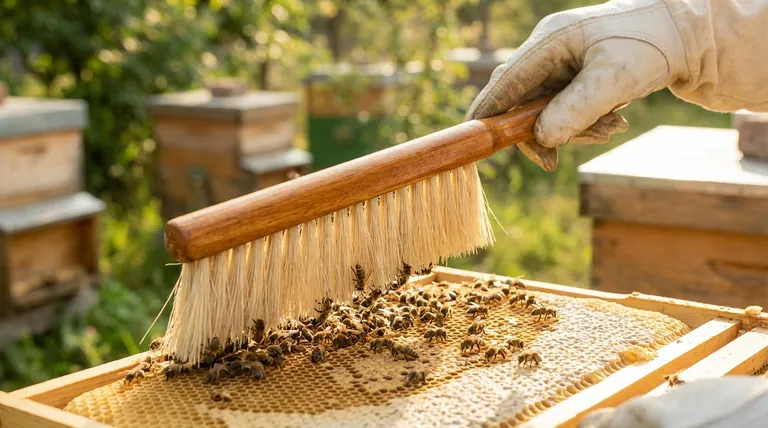
To them, it is a sudden, colossal event. The choice of tool dictates whether this event is a gentle nudge or a catastrophic assault. This isn't an exaggeration; it's a matter of biology. A bee’s wing is a marvel of delicate engineering. A stiff bristle, like from a hardware store paintbrush, can tear it in an instant, grounding the bee for life.
A properly engineered bee brush is therefore an instrument of persuasion. Its design begins and ends with the well-being of the bee.
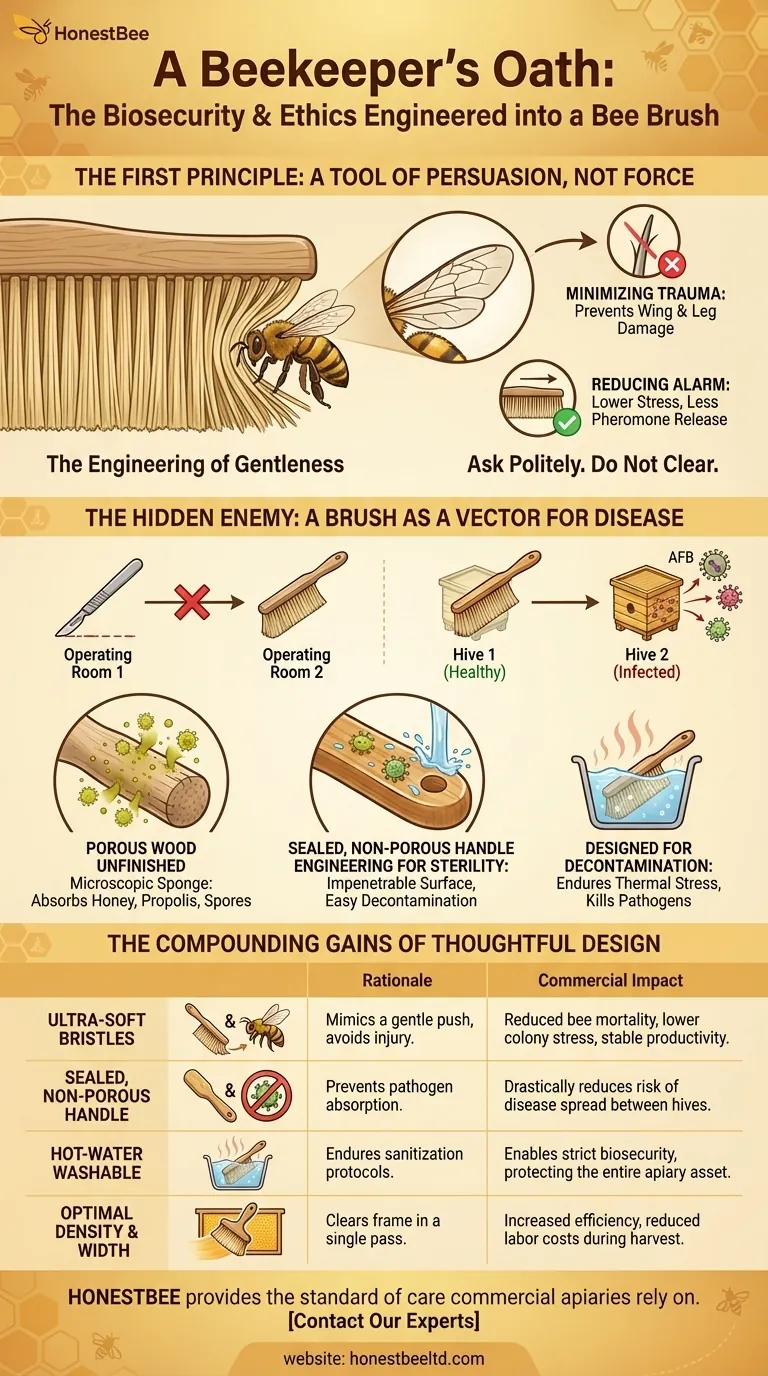
The Engineering of Gentleness
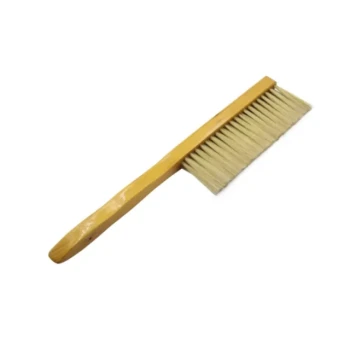
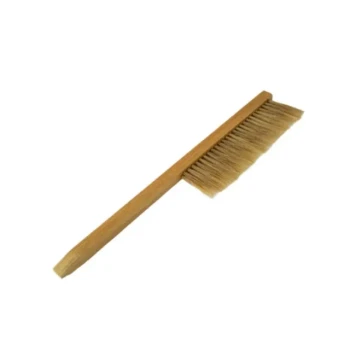
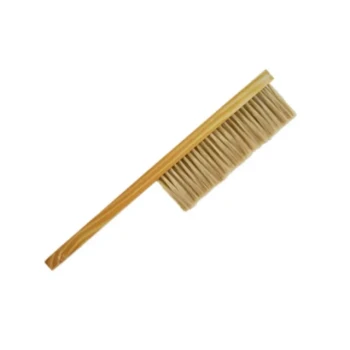
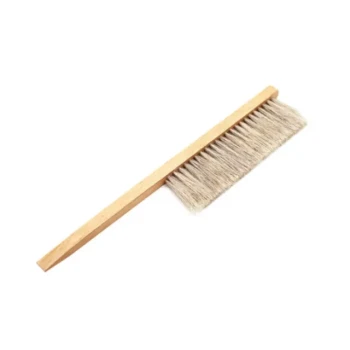
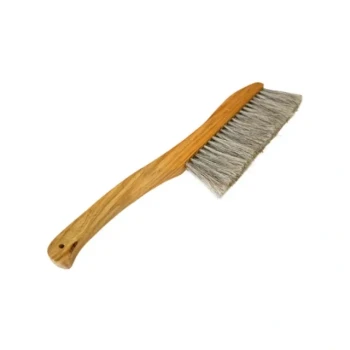
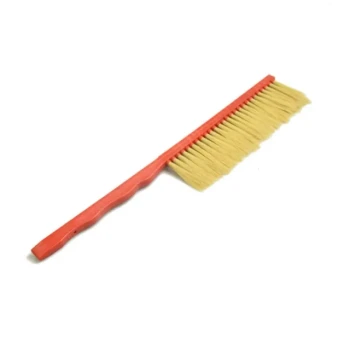
The core of this design is the bristles. They are not merely soft; they are intentionally long, flexible, and natural. The goal is to create a pressure wave that encourages movement, not a scraping force that inflicts injury.
- Minimizing Trauma: Soft bristles bend around the bees' bodies, preventing damage to fragile wings and legs.
- Reducing Alarm: A single, slow sweep with a dense brush is less stressful than multiple, frantic passes with an inadequate one. It keeps alarm pheromones from flooding the colony.
The psychology is simple: you are not clearing a surface. You are asking a thousand tiny, vital creatures to please step aside. The tool must be designed to ask politely.
The Hidden Enemy: A Brush as a Vector for Disease
Imagine a surgeon moving between operating rooms but using the same scalpel without sterilizing it. The consequences would be disastrous.
For a commercial beekeeper, the apiary is a series of operating rooms. Each hive is a distinct patient, a superorganism with its own health profile. Diseases like American Foulbrood (AFB) are microscopic, invisible, and devastatingly contagious.
A contaminated tool is one of the fastest ways to spread that contagion from a single infected hive to an entire operation, threatening the whole investment. The humble bee brush, moving from frame to frame, hive to hive, can become the silent vector.
Engineering for Sterility: The Non-Porous Handle
This is why the handle of a professional bee brush is sealed with varnish. It’s not an aesthetic choice; it’s a critical biosecurity feature.
Raw, unfinished wood is porous. It's a microscopic sponge, absorbing honey, propolis, and, invisibly, bacterial spores and viral particles. Once absorbed, they are nearly impossible to remove.
A sealed, non-porous handle creates an impenetrable surface. Contaminants rest on the outside, where they can be washed away completely. It turns the brush from a potential biohazard into a sanitized instrument.
Designed for Decontamination
The final piece of the biosecurity puzzle is washability. A professional brush is built to withstand repeated washing in hot water, the cornerstone of any effective sanitation protocol. Glues, bristles, and finishes are all selected to endure the thermal stress required to kill pathogens, ensuring the tool you use in Hive 50 is as clean as it was for Hive 1.
The Compounding Gains of Thoughtful Design
For commercial apiaries and equipment distributors, bee welfare and biosecurity are not just ethical concerns; they are economic imperatives. Healthy colonies are productive colonies. Preventing disease outbreak is the ultimate form of risk management.
Every feature of a well-designed bee brush contributes directly to the bottom line by safeguarding the operator's primary asset: the bees.
| Feature | Engineering Rationale | Commercial Impact |
|---|---|---|
| Ultra-Soft Bristles | Mimics a gentle push, avoids injury | Reduced bee mortality, lower colony stress, stable productivity. |
| Sealed, Non-Porous Handle | Prevents pathogen absorption | Drastically reduces risk of disease spread between hives. |
| Hot-Water Washable | Endures sanitization protocols | Enables strict biosecurity, protecting the entire apiary asset. |
| Optimal Density & Width | Clears frame in a single pass | Increased efficiency, reduced labor costs during harvest. |
A bee brush, then, is not a commodity. It is a piece of professional equipment that reflects a beekeeper's commitment to excellence. It signals an understanding that small details, when multiplied across thousands of hives and millions of bees, have a profound impact.
Choosing the right equipment is the first step. For tools engineered with the health of your bees and the efficiency of your operation in mind, HONESTBEE provides the standard of care commercial apiaries rely on. Contact Our Experts
Visual Guide
Related Products
- Wooden Bee Brush with Triple Row Artificial Fiber for Beekeeping
- Classic Wooden Bee Brush with Double-Row Boar Bristles
- Double Row Artificial Fiber Bee Brush for Beekeeping
- Wooden Bee Brush with Double-Row Horsehair Bristles
- Premium Triple-Row Horsehair Bee Brush
Related Articles
- Your Bee Brush Is Slowing You Down. Here’s What Commercial Apiaries Use Instead.
- The Silent Profit Killer: Why a Simple Bee Brush Can Make or Break Your Harvest
- The Gentle Command: Why the Bee Brush is a Masterclass in Hive Psychology
- Gentleness Has a Price: The Engineering Trade-off in Bee Brushes
- How to Master Bee Brush Techniques for Stress-Free Hive Inspections