The Sealed Fortress
A beehive, to the uninitiated, looks like a simple set of wooden boxes. The new beekeeper's first instinct is often to treat it as such—a container to be opened.
This is a fundamental misunderstanding. A beehive is not a box; it's a fortress. The bees have sealed every crack, every seam, and every joint with a potent, resinous substance called propolis. This "bee glue" is their immune system, their weatherproofing, and their structural engineer all in one.
To enter this fortress without an invitation is to declare war. To enter with brute force is to guarantee a battle.
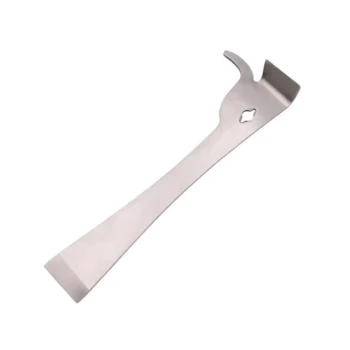
The hive tool is the key. It is not a crowbar; it is a simple, elegant piece of steel designed to speak the physical language of the hive.
The Grammar of Leverage
The effectiveness of this tool lies not in its sharpness or its weight, but in the beekeeper's understanding of its purpose. Its use is a form of communication, and like any language, it has a grammar.
The First Word: Breaking the Seal
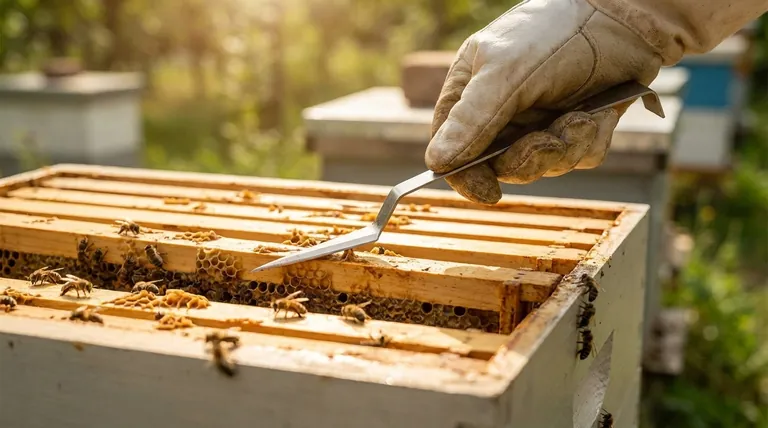
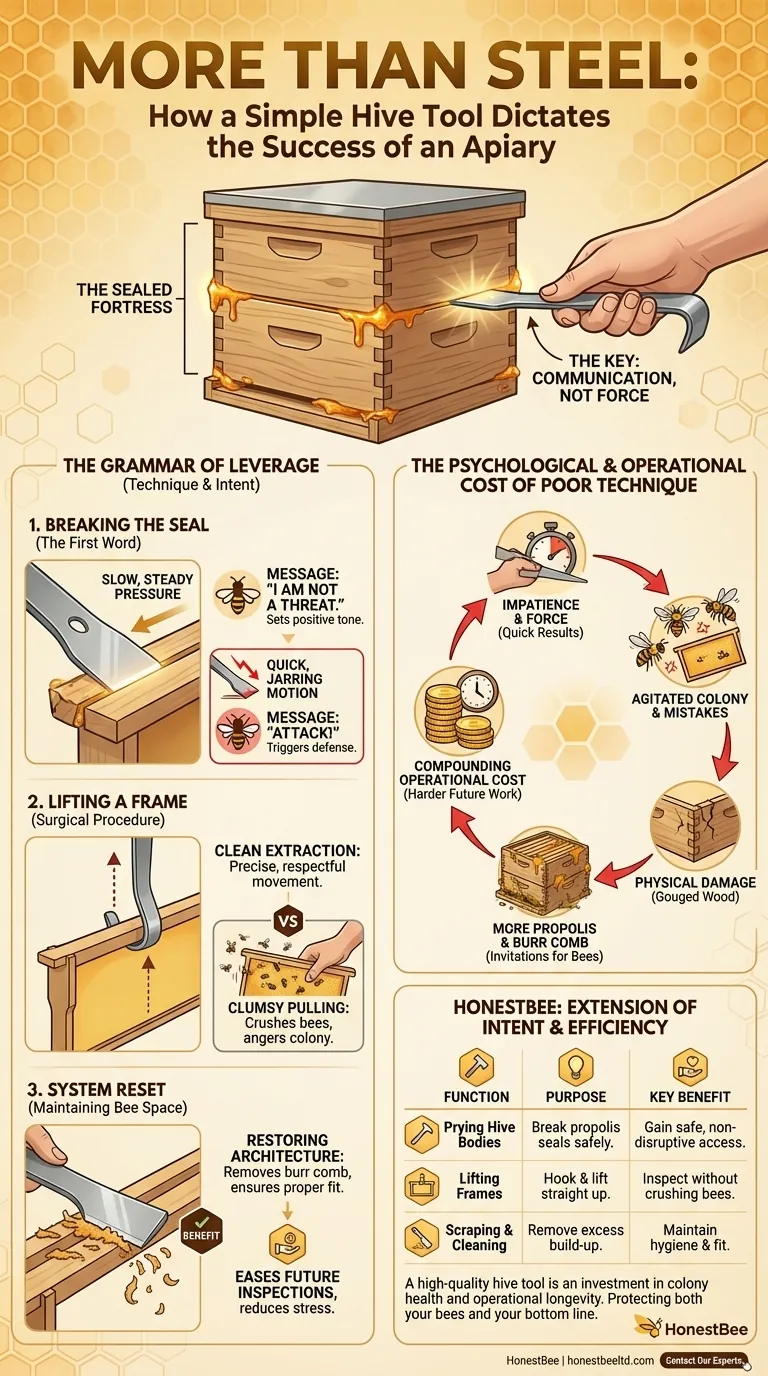
The first action in any inspection is using the tool's flat end as a lever between hive bodies. The goal is not to pop the lid open, but to apply slow, steady pressure.
There is a moment—a gentle give—when the propolis seal breaks. A quick, jarring motion screams "attack" to the colony's guards. A slow, deliberate movement says, "I am here, and I am not a threat." This simple act sets the psychological tone for the entire inspection.
The Surgical Procedure: Lifting a Frame
Inside, every frame is glued in place. Pulling on them with your fingers is clumsy, often crushing bees and angering the colony. This is where the J-hook end of the hive tool becomes a surgical instrument.
By hooking it under the frame's ear and lifting straight up, you perform a clean extraction. You move with precision, respecting the life within the hive. This calm, controlled action keeps the colony's defensive instincts dormant.
The System Reset: Maintaining Bee Space
Bees build excess "burr comb" in any gap that doesn't conform to the precise "bee space" they require. The straight edge of the hive tool is a scraper, used to remove this comb and excess propolis.
This is not just cleaning. It is a system reset. By scraping the frame rests and box edges, you are restoring the hive's intended architecture. This makes future inspections easier, reducing stress on both the colony and the beekeeper.
The Psychological Cost of Poor Technique
Why do we resort to force? Impatience. Inexperience. The desire for a quick result.
But in beekeeping, the quick, forceful approach creates a negative feedback loop. An agitated colony is harder to work with. A rushed inspection leads to mistakes. And the physical damage compounds.
Prying too aggressively gouges the wood of your boxes and frames. These new, irregular spaces are invitations for bees to add more propolis and more burr comb, making your next inspection even more difficult. Your impatience today creates a harder job for your future self. For a commercial apiary, this is a compounding operational cost.
| Function | Purpose | Key Benefit |
|---|---|---|
| Prying Hive Bodies | Break propolis seals between boxes and covers. | Gain safe, non-disruptive access to the colony. |
| Lifting Frames | Hook under frame ears to lift them straight up. | Inspect comb without rolling or crushing bees. |
| Scraping & Cleaning | Remove excess burr comb and propolis build-up. | Maintain hive hygiene and ensure proper component fit. |
The Right Tool is an Extension of Intent
A beekeeper's intent should be to work with the colony, not against it. A high-quality hive tool is a physical extension of that intent.
A tool that bends under pressure or has a poorly finished edge frustrates good technique. It turns a potential act of finesse into one of force. For commercial apiaries and equipment distributors, the quality and reliability of this single tool are magnified across hundreds or thousands of colonies. It is a critical investment in efficiency, colony health, and the longevity of your woodenware.
At HONESTBEE, we supply durable, well-designed beekeeping equipment built for the demands of commercial operations. Our tools are crafted to enable the calm, efficient work that healthy apiaries depend on, protecting both your bees and your bottom line.
Visual Guide
Related Products
- HONESTBEE Professional Long Handled Hive Tool with Precision Cutting Blade
- Professional Multi-Function Stainless Steel Hive Tool
- HONESTBEE Premium Italian Style Hive Tool with Hardwood Handle
- Ergonomic Plastic Frame Spacer Tool for Rapid Hive Management Beekeeping
- Professional Grade Foldable Beehive Handles
Related Articles
- Force and Finesse: The Hive Tool as the Beekeeper's Critical Interface
- The Essential Guide to Hive Tools in Modern Beekeeping
- The Apiary as a System: Why Your Hive Tool is More Than Just Steel
- How to Choose Hive Tools That Match Your Beekeeping Workflow
- The Beekeeper's Scalpel: How a Simple Hive Tool Governs Apiary Health