The Illusion of a Clean Tool
We have a cognitive bias for visible threats. We see a hornet, we act. We see varroa mites, we treat. But the most devastating threats to an apiary are often invisible.
A hive tool, wiped clean of propolis and wax, looks safe. This is a dangerous illusion. To the naked eye, it’s a simple lever. At the microscopic level, it’s a ferry for pathogens, transporting doom from one colony to the next with silent efficiency.
Just as a surgeon understands their scalpel can either heal or infect, a beekeeper must recognize their hive tool is a critical instrument of biosecurity.
The Strongest Hive Can Be the Greatest Threat
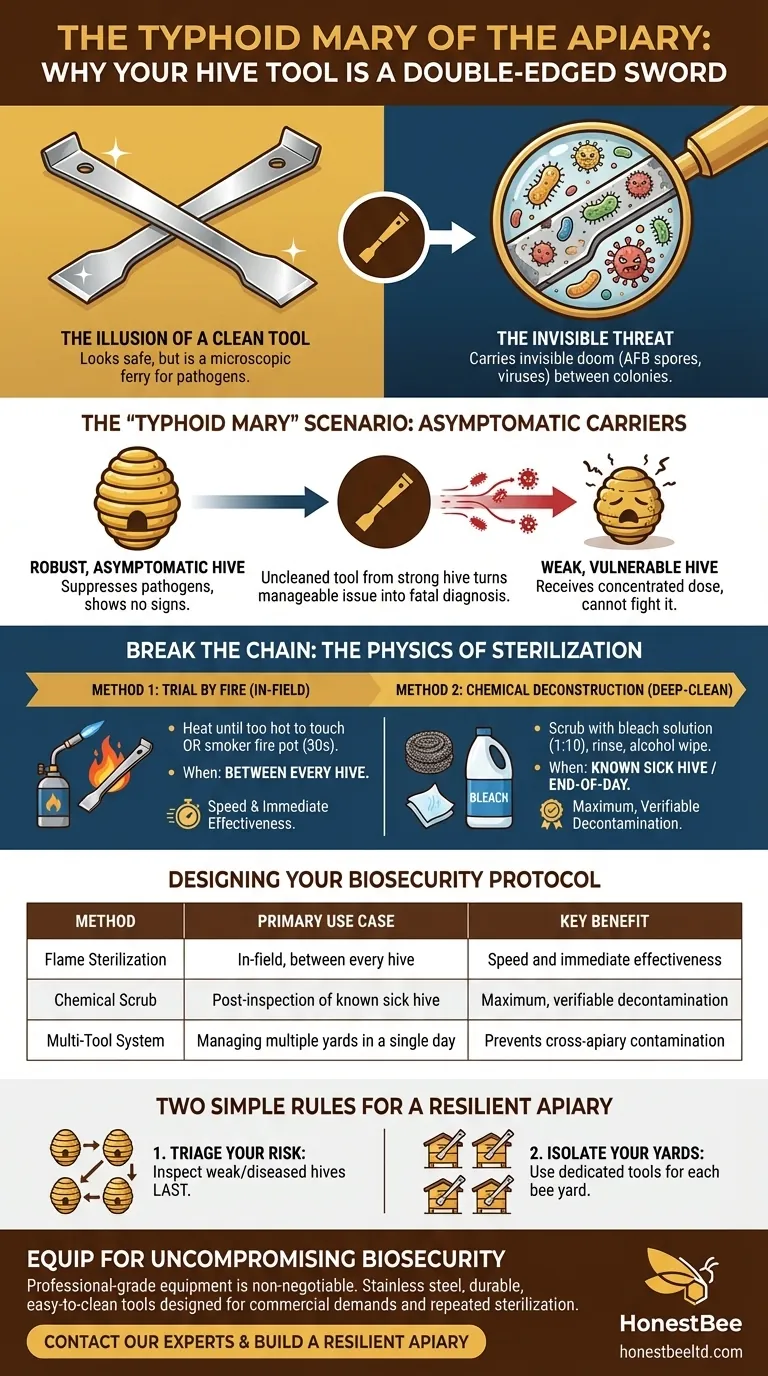
The biggest risk in an apiary isn't always the weak, struggling colony. It's the robust, seemingly healthy hive that is silently carrying a low-level infection. This is the "Typhoid Mary" scenario.
A strong colony can often suppress pathogens like American Foulbrood (AFB) spores, showing no outward signs of sickness. It manages its problem.
But when you use your uncleaned tool from this asymptomatic hive and move to a smaller, weaker colony, you are delivering a concentrated dose of the pathogen to a population that cannot fight it off. You unknowingly turn one hive's manageable issue into another's fatal diagnosis.
A Network of Invisible Risk
Your hive tool connects every colony you manage into a single, vulnerable network. It breaks the isolation that would naturally protect them.
The sticky residue of propolis, wax, and honey on your tool is the perfect transport medium for bacterial spores and viruses. AFB spores, in particular, are incredibly resilient. They can survive on equipment for decades, waiting for the right opportunity to activate and destroy a colony.
Wiping your tool on your jeans does nothing. You are simply giving yourself a false sense of security while the invisible threat remains.
The Physics of Sterilization
Effective biosecurity is not about complex procedures. It's about applying simple, robust principles consistently. It is an act of engineering discipline.
Method 1: Trial by Fire
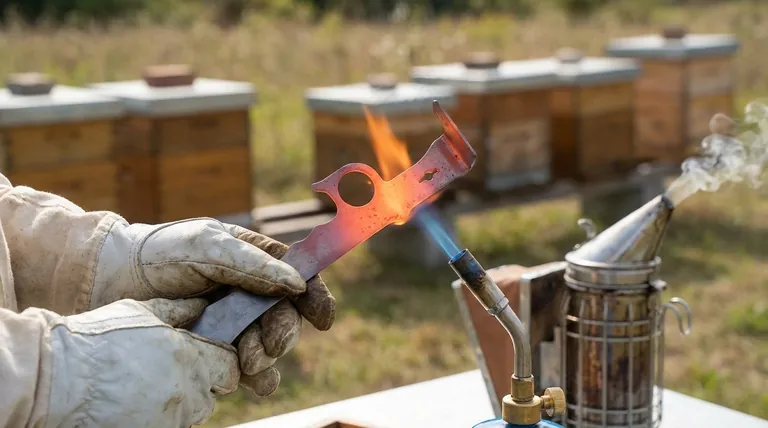
Flame sterilization is the gold standard for in-field efficiency. It's a simple application of physics: intense heat denatures the proteins and destroys the cellular structures of bacteria, viruses, and fungi.
- How: Use a propane torch to heat the entire surface of the hive tool until it's too hot to touch. Alternatively, place it in the hot fire pot of your smoker for at least 30 seconds.
- When: Between every single hive during routine inspections.
This is the fastest, most effective way to break the chain of transmission as you work.
Method 2: The Chemical Deconstruction
A chemical scrub is the deep-clean protocol. It’s for situations that demand absolute certainty, such as after inspecting a known sick hive or at the end of the day.
- How: Vigorously scrub the tool with a steel scrubber and a bleach solution (1:10 ratio with water). A final rinse and wipe with isopropyl alcohol adds another layer of security.
- When: After handling a diseased colony or for end-of-day decontamination.
This method is more thorough but too time-consuming for use between every hive in a commercial operation.
Designing Your Biosecurity Protocol
Your choice of method isn't about which is "best," but which is right for the context. A professional beekeeper operates not on habit, but with a clear, risk-based protocol.
| Method | Primary Use Case | Key Benefit |
|---|---|---|
| Flame Sterilization | In-field, between every hive | Speed and immediate effectiveness |
| Chemical Scrub | Post-inspection of a known sick hive | Maximum, verifiable decontamination |
| Multi-Tool System | Managing multiple yards in a single day | Prevents cross-apiary contamination |
Two simple rules form the foundation of an effective protocol:
- Triage Your Risk: Always inspect hives you know to be weak, struggling, or diseased last. This simple change in workflow contains the most obvious threat.
- Isolate Your Yards: If you manage multiple bee yards, carry several hive tools. Use a different, clean tool for each yard to prevent spreading a localized problem across your entire operation.
The Right Tool for a System-Critical Job
Your hive tool is not just a piece of metal; it is the most critical interface in your biosecurity system. The quality of that tool directly impacts the effectiveness of your protocol.
Commercial operations require equipment that can withstand the rigors of daily use and repeated, intense sterilization. This is where professional-grade equipment becomes non-negotiable. HONESTBEE supplies durable, easy-to-clean stainless steel hive tools specifically designed for the demands of commercial apiaries. The non-porous surface resists pathogen adhesion and is built to endure the repeated heat of flame sterilization without degrading.
Protecting your livelihood means investing in a system where every component is reliable. It begins with acknowledging the invisible threat and ends with having the right tool for the job.
Building a resilient, productive apiary is a matter of discipline and design. Contact Our Experts to equip your operation with the tools built for uncompromising biosecurity.
Visual Guide
Related Products
- HONESTBEE Professional Long Handled Hive Tool with Precision Cutting Blade
- Professional Multi-Function Stainless Steel Hive Tool
- HONESTBEE Premium Italian Style Hive Tool with Hardwood Handle
- Ergonomic Plastic Frame Spacer Tool for Rapid Hive Management Beekeeping
- Professional Grade Foldable Beehive Handles
Related Articles
- Force and Finesse: The Hive Tool as the Beekeeper's Critical Interface
- The Essential Guide to Hive Tools in Modern Beekeeping
- The Apiary as a System: Why Your Hive Tool is More Than Just Steel
- How to Choose Hive Tools That Match Your Beekeeping Workflow
- The Beekeeper's Scalpel: How a Simple Hive Tool Governs Apiary Health


















