The Manager's Dilemma
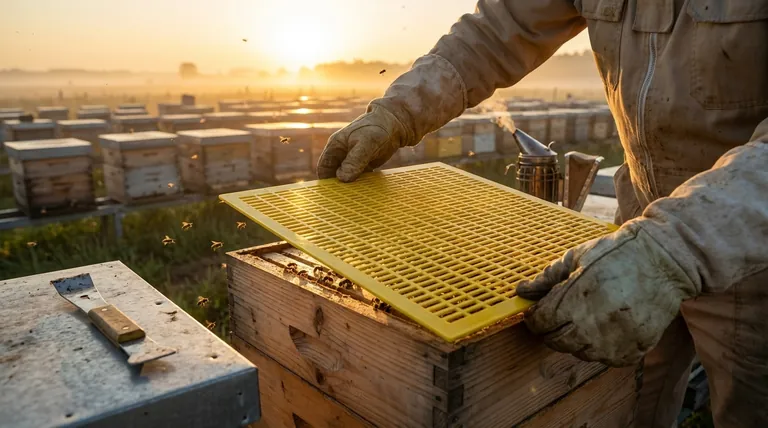
Imagine a commercial apiary at dawn. Rows of hives stretch into the distance, each a humming engine of production. For the beekeeper managing this operation, success is a game of margins. It's measured in minutes saved per hive, in the purity of the wax, and in the predictability of the harvest.
In this world of calculated inputs and outputs, a simple piece of equipment presents a profound strategic choice: the queen excluder. It is not just a tool; it's the physical manifestation of a management philosophy.
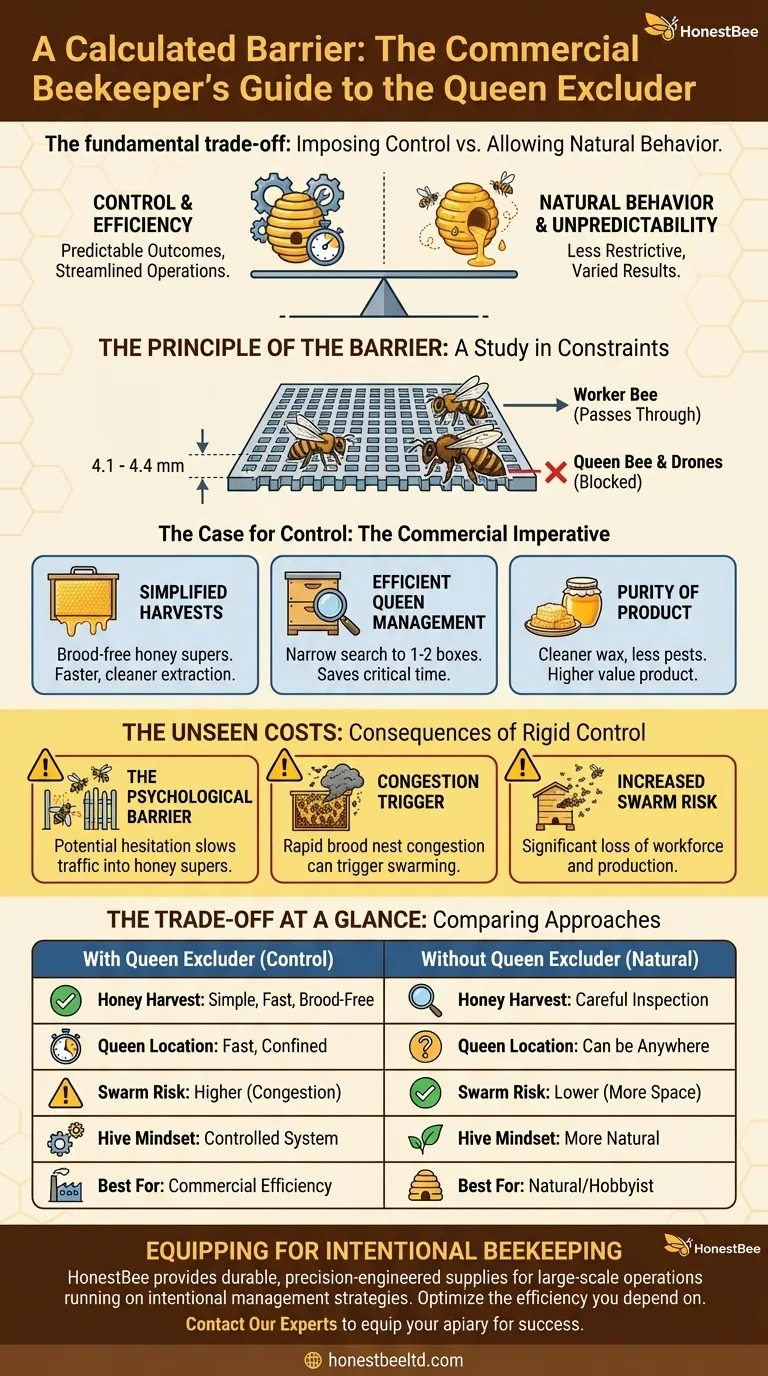
The decision to use it boils down to a fundamental trade-off: imposing control for the sake of efficiency, or allowing natural behavior at the cost of predictability.
The Principle of the Barrier: A Study in Constraints
The queen excluder is an elegant piece of engineering. It operates on a single, unchangeable biological fact: the queen bee is larger than her workers.
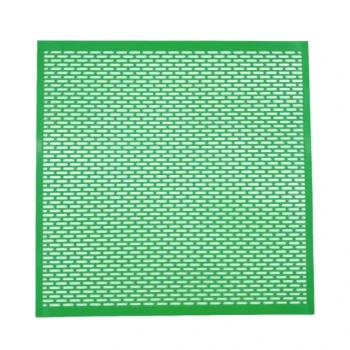
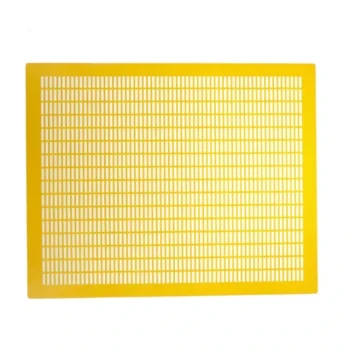
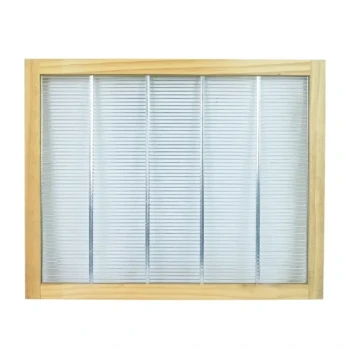
The slots in an excluder are precisely measured—typically between 4.1 and 4.4 millimeters. This creates a permeable barrier. It’s a gate wide enough for the nimble worker bees to pass through into the honey supers, but too narrow for the queen and her drones.
This simple constraint fundamentally reorganizes the hive. It separates the nursery (the brood chamber) from the factory (the honey supers). The implications of this single decision ripple through the entire colony's productivity and behavior.
The Case for Control: The Commercial Imperative
For commercial beekeepers, predictability isn't a luxury; it's a cornerstone of the business model. The queen excluder is a powerful tool for enforcing that predictability.
Simplified Harvests
With an excluder, honey supers are guaranteed to be free of eggs, larvae, and pupae. This transforms harvesting from a meticulous, frame-by-frame inspection into a swift, streamlined process. Labor hours are reduced, and extraction is cleaner and faster.
Efficient Queen Management
When a queen needs to be found for health checks or replacement, time is critical. An excluder narrows the search field from ten or more boxes down to just one or two. This isn't just convenient; it's a critical risk management tool in a large-scale operation.
Purity of Product
By keeping the brood chamber separate, beekeepers harvest honey and wax of a higher purity. The resulting wax cappings are cleaner and less attractive to pests like wax moths, preserving the value of the final product.
The Unseen Costs of a Perfect Barrier
However, imposing such rigid control on a complex natural system is not without consequences. The most efficient path on paper can sometimes create unintended friction in reality.
The Psychology of the Hive
Some colonies seem to view the excluder as an obstacle. This "barrier effect" can create a psychological hesitation in worker bees, slowing traffic into the honey supers. This friction, multiplied across thousands of trips, can potentially reduce the overall rate of honey storage.
The Congestion Trigger
By restricting the queen's laying area, the brood nest can become congested with honey, pollen, and brood much faster. This feeling of being "honey-bound" is a primary trigger for swarming—the colony's natural impulse to reproduce. For a beekeeper, a swarm represents a sudden and significant loss of workforce and production.
The Trade-Off at a Glance
| Aspect | With Queen Excluder | Without Queen Excluder |
|---|---|---|
| Honey Harvest | Simple, fast, and brood-free | Requires careful frame inspection |
| Queen Location | Fast and confined to brood boxes | Can be anywhere in the hive |
| Swarm Risk | Higher due to potential congestion | Lower, queen has more space |
| Hive Mindset | Controlled and predictable system | More natural, less restrictive |
| Best For | Commercial-scale efficiency | Natural beekeeping, hobbyists |
Equipping for Intentional Beekeeping
There is no single right answer. The queen excluder is not a universally necessary tool, but a strategic one. The choice to use it is a conscious decision to prioritize efficiency, control, and predictability.
For commercial apiaries and equipment distributors who serve them, this decision makes the quality of the equipment paramount. A poorly manufactured excluder with sharp edges or inconsistent spacing can injure bees and amplify the "barrier effect," negating its benefits.
This is why HONESTBEE provides durable, precision-engineered beekeeping supplies. We support large-scale operations that run on intentional, well-equipped management strategies. Our wholesale equipment, from excluders to entire hives, is built to optimize the efficiency you depend on.
Let us help you equip your apiary for success based on your strategic goals. Contact Our Experts
Visual Guide
Related Products
- High Performance Plastic Queen Excluder for Beekeeping and Apiary Management
- Professional Plastic Queen Excluder for Modern Beekeeping
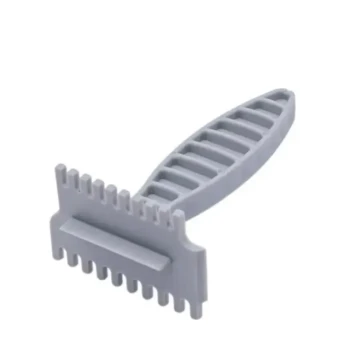
- Lightweight Durable Plastic Queen Excluder Scraper for Beekeeping
- Metal Queen Bee Excluder for Beekeeping
- Premium Wood Framed Metal Wire Queen Bee Excluder
Related Articles
- How Plastic Queen Excluders Improve Hive Longevity and Colony Health
- Plastic Queen Excluders vs. Alternatives: A Beekeeper’s Guide to Smarter Hive Management
- Why Plastic Queen Excluders Outperform Metal and Wood: Science, Savings, and Hive Protection
- How to Choose Queen Excluders Based on Colony Behavior and Queen Traits
- The Geometry of Order: Why the Queen Excluder is a Beekeeper's Most Strategic Tool