The Illusion of Simplicity
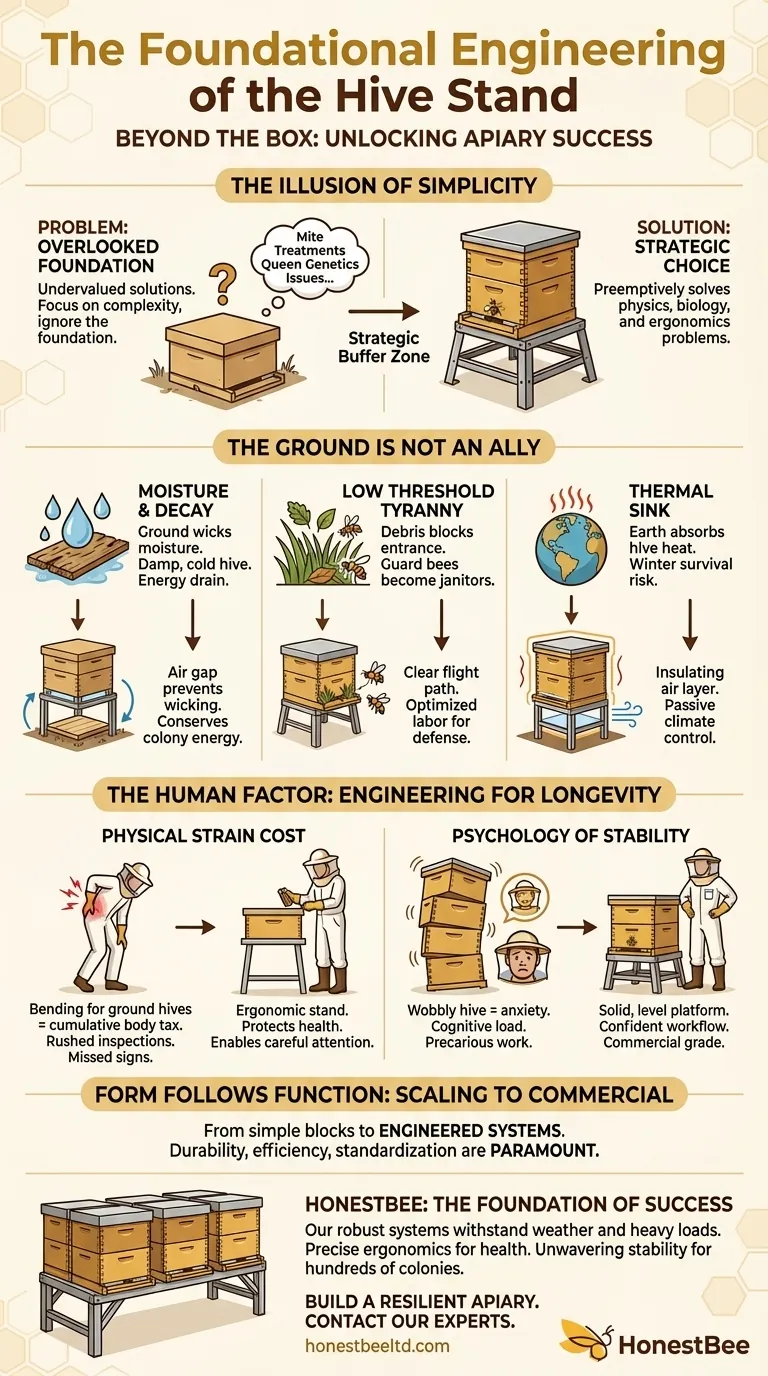
In any complex system, the most critical components are often the most overlooked. In beekeeping, that component is the hive stand.
It appears to be nothing more than a simple platform, a piece of furniture for the hive. This deceptive simplicity leads to a common psychological bias: we undervalue foundational solutions. We focus on the complexities of mite treatments and queen genetics, yet we often place our colonies on a foundation that invites failure from day one.
The hive stand is not an accessory. It is the first, and perhaps most important, decision in apiary architecture—a strategic choice that preemptively solves a cascade of problems related to physics, biology, and human ergonomics.
The Ground is Not an Ally
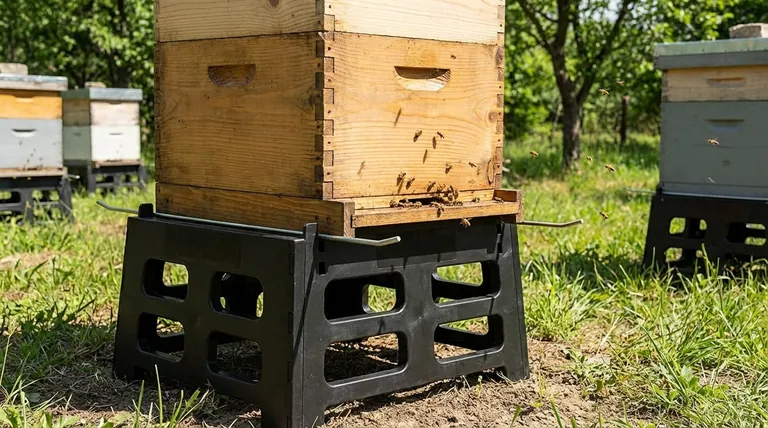
Placing a hive directly on the ground initiates a quiet, relentless war on multiple fronts. Elevation isn't just about lifting the box; it's about creating a strategic buffer zone.
The Battle Against Moisture and Decay
The ground is a reservoir of moisture. Through direct contact, this moisture persistently wicks into the fibers of a wooden bottom board.
This isn't just a risk of rot. It creates a perpetually damp, chilly environment inside the hive. The colony must burn precious energy—nectar that could have become honey or fuel for raising brood—just to fight the cold and humidity. An elevated hive with a pocket of air beneath it stays dry, preserving the equipment and conserving the colony's finite energy reserves.
The Tyranny of a Low Threshold
A ground-level entrance is a constant logistical challenge for a colony. Grass grows over it, falling leaves block it, and heavy rain splashes mud against it.
This forces the guard bees, the colony's dedicated soldiers, to become janitors. Every moment they spend clearing debris is a moment they aren't watching for robbing wasps or predatory hornets. A raised entrance ensures a clear flight path and a defensible perimeter, optimizing the colony’s labor force for its most critical tasks.
Escaping the Thermal Sink
Physics is unforgiving. The earth is a massive thermal sink, constantly pulling heat away from any warmer object it touches. In winter, this drain of energy can be the difference between survival and collapse.
A hive stand creates a layer of insulating air. This simple air gap dramatically reduces thermal transfer, allowing the bees to maintain their winter cluster temperature with far less effort. It's a foundational piece of passive climate control.
The Human Factor: Engineering for Longevity
Beekeeping is a physical pursuit. The design of our workspace directly impacts not only our comfort but the quality of our husbandry.
The Hidden Cost of Physical Strain
Bending over a ground-level hive for weekly inspections is more than an inconvenience; it's a cumulative tax on your body.
Back pain and knee strain lead to rushed inspections. We become less likely to lift a heavy super to check the brood box below. We might miss the subtle signs of a failing queen or the first traces of disease because we are physically uncomfortable. An ergonomic, waist-high hive stand is an investment in your most important piece of beekeeping equipment: your own body and its capacity for careful attention.
The Psychology of a Stable Workspace
A wobbly, uneven hive creates a low level of subconscious anxiety. The beekeeper is constantly aware that the stack of boxes, heavy with honey and bees, could tip.
A solid, level platform removes this cognitive load. It creates a calm, controlled environment where the beekeeper can work with confidence. This is especially true for commercial-grade stands, which provide a stable foundation capable of supporting hundreds of pounds, turning a precarious task into a predictable workflow. For large-scale operations, this stability isn't a luxury; it's a core requirement for safety and efficiency.
Form Follows Function: From Cinder Blocks to Commercial Systems
The fundamental principle is elevation. Simple solutions like cinder blocks or sturdy pallets are perfectly functional and represent a massive improvement over no stand at all. They honor the core engineering goal: get the hive off the ground.
But when beekeeping scales from a hobby to a commercial operation, the demands on equipment change. Durability, workflow efficiency, and standardization become paramount. This is where engineered solutions become essential.
At HONESTBEE, we supply beekeeping equipment designed for the rigors of commercial apiaries. Our hive stands are not just platforms; they are robust systems built from durable materials to withstand years of weather and heavy loads. They are designed for the precise ergonomics that protect a beekeeper's health over a long career and provide the unwavering stability required when managing hundreds of colonies.
The Foundation of Success
The hive stand is the silent partner in a colony's success and a beekeeper's sustainability. It is a simple machine that solves complex problems—a small investment that pays compounding dividends in hive health, equipment longevity, and the joy of the craft.
For commercial operations where every detail impacts the bottom line, investing in the right foundation is non-negotiable. To build a more resilient and efficient apiary from the ground up, Contact Our Experts.
Visual Guide
Related Products
- Metal Hive Feet Bee Hive Stand for Ant Protection
- Plastic Bee Hive Stand for Beekeeping
- Metal Bee Hive Stand Bee Box Stand for Beekeeping
- Professional Ant-Proof Beehive Stand with Integrated Moat for Beekeeping
- Plastic Bee Frame Beekeeping Hive Frames for Wholesale
Related Articles
- How to Stabilize Beehive Stands in Wet Soil: Proven Techniques for Beekeepers
- How to Choose and Install a Beehive Stand for Pest Control and Colony Health
- The Unseen Foundation: Why a Beehive Stand Dictates Your Apiary's Success
- Beyond the Box: How a Simple Stand Prevents Compounding Failures in Beekeeping
- The Unseen Architecture of a Productive Apiary: Why Your Beehive Stand Height is a System Design Choice